
Are Expensive Jeans Worth the Price? What to Know
Table of Contents
- What Actually Makes Expensive Jeans Cost More?
- The Real Cost Breakdown: Materials vs. Labor vs. Markup
- How to Tell if Jeans Are High Quality Before You Buy
- Do Expensive Jeans Last Longer? Durability and Longevity
- Best Jeans for Hourglass Figure: Where Fit Meets Price
- The Value of the Mid-Range Sweet Spot
- How to Care for Premium Jeans to Extend Their Life
- Conclusion: Is the Investment Worth It for You?
- Frequently Asked Questions
Last Updated: September 4, 2026
What Actually Makes Expensive Jeans Cost More?
The question of whether expensive jeans are worth the price comes down to what you are actually paying for: higher-grade materials, more meticulous construction, and the brand's reputation.
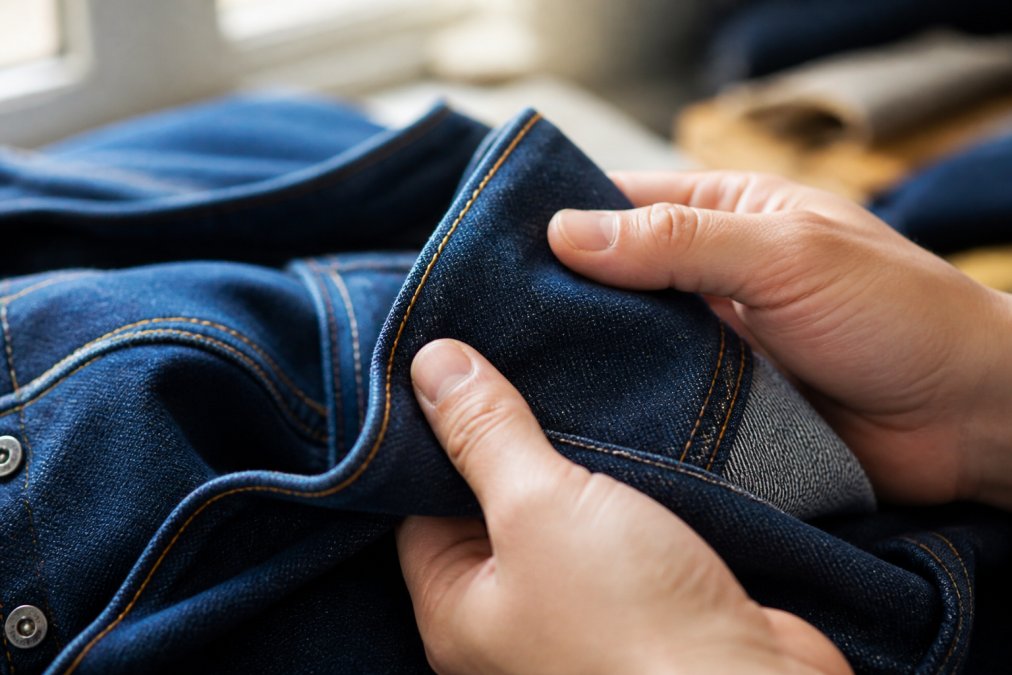
At AVERA7, the fabric itself is the foundation. Premium denim typically uses longer-staple cotton fibers, creating a denser, smoother weave that resists stretching out of shape. Cheaper jeans often rely on synthetic fibers blended in to cut costs, compromising breathability and comfort over time.
Beyond the fabric, construction quality separates the best from the rest. A well-made pair uses reinforced seams and durable metal buttons that will not corrode. These details add to the manufacturing overhead, but they are the difference between a pair that lasts three years and one that lasts three months.
The Real Cost Breakdown: Materials vs. Labor vs. Markup
Most people assume the price of expensive jeans is mostly brand equity, but the reality is more balanced. The cost structure splits into raw materials, labor, and retail markup. High-quality denim fabric costs significantly more per yard than mass-produced alternatives.
Labor is the second major component. Small-batch manufacturing, where skilled workers cut and sew each pair with care, costs more than mass production lines. This is where fit consistency and stitching integrity are decided.
The remaining portion is retail markup, which covers marketing, distribution, and the brand's reputation. While some of this is pure prestige, a portion funds research into better fits and fabrics. According to industry analysis on denim pricing structures, the gap between production cost and shelf price is widest at the extreme low and high ends, with the mid-range offering the most transparent value.
How to Tell if Jeans Are High Quality Before You Buy
Knowing how to tell if jeans are high quality saves you from wasting money on overpriced mediocrity. The first test is the fabric. A quality pair should feel substantial and have a tight weave. Look for a denim weight around 10 to 14 ounces, which balances durability with comfort.
The second test is the construction. Turn the jeans inside out and examine the seams. Look for flat, even stitching with no loose threads. Check the rivets and buttons for solid metal construction rather than cheap plated alternatives. The denim care and quality guidelines emphasize that how a garment is stitched matters as much as the fiber content.
A third indicator is the wash process. High-quality jeans often use more sophisticated indigo dyeing techniques that allow for beautiful denim fade over time. Cheaper options may use shortcuts that result in a flat, lifeless color.
Do Expensive Jeans Last Longer? Durability and Longevity
The durability argument for expensive jeans holds up, but only when you measure it correctly. The common mistake is comparing a $40 pair against a $200 pair and assuming the expensive one automatically wins. In reality, the gap between a $40 fast-fashion jean and a $100 mid-range pair is often larger than the gap between that $100 pair and a $300 designer option.
Here is the honest math, with real variables. A $40 pair of jeans made with a 60% cotton / 40% polyester blend and barely reinforced flat-felled seams will typically show fraying at the inner thighs and waistband within 6 to 9 months of weekly wear, roughly $0.74 to $1.11 per wear (peer-reviewed research). A $120 pair made from 100% cotton with a 12-ounce denim weight, bar-tacked stress points, and a YKK or Talon zipper will often last 2 to 3 years under the same conditions, about $0.77 to $1.15 per wear. The numbers converge because the expensive pair lasts three to four times longer.
But the math only works if you care for the jeans properly. The single biggest variable that destroys expensive denim is improper washing. Most practitioners in denim care recommend washing jeans every 10 to 15 wears, not after every use. Over-washing breaks down the cotton fibers, fades the indigo, and causes the fabric to lose its structure.
There is also a durability threshold worth understanding. Denim weight matters, but heavier is not always better. A 14-ounce denim will resist abrasion better than a 10-ounce, but it will also be stiffer and require a longer break-in period. The sweet spot for most people is 11 to 13 ounces.
The other durability factor is hardware. A cheap zipper that jams or a button that corrodes will kill a pair of jeans long before the fabric gives out. Look for zippers from YKK or Talon, which are industry standards for reliability.
Finally, consider the resale angle. Premium denim from brands like Levi's Vintage Clothing, Nudie Jeans, or 3sixteen holds value on the secondary market. A pair of raw selvedge jeans that has been properly broken in can sell for 50% to 70% of its original price on resale platforms like Grailed or eBay. Fast-fashion jeans have essentially zero resale value.
Best Jeans for Hourglass Figure: Where Fit Meets Price
When you have an hourglass figure, the fit is the single most important feature, and it directly affects whether expensive jeans are worth the price. The best jeans for hourglass figure are high-waisted styles that cinch at the natural waist and accommodate the hips and thighs without gaping.
This is where premium construction pays off. Cheaper jeans often cut corners on the waistband, which can bunch or roll down. A quality pair uses a structured waistband that stays in place, providing both tummy control and a smooth line under clothing.
AVERA7's High-Waisted Wide Leg Jeans are designed with this exact silhouette in mind. The high-waisted design provides a flattering shape with built-in tummy control, while the hip-lifting effect enhances curves for a sculpted look. The relaxed, vintage-inspired fit balances proportions, so you do not look overwhelmed by fabric. At $39.99, they sit in the accessible end of the premium spectrum, proving that you do not need to spend hundreds for thoughtful design.

The Value of the Mid-Range Sweet Spot
The most compelling argument for expensive jeans is not found at the luxury end, but in the mid-range sweet spot. This zone, typically between $60 and $150, offers the best balance of construction quality, fabric, and price. Above this range, you are often paying for brand prestige rather than tangible improvements in durability or fit.
What exactly do you get in that $60-to-$150 band that you do not get at $30? Start with the fabric. At this price point, you can expect 100% cotton or a cotton blend with a small percentage of elastane (usually 1% to 2%) for stretch. The cotton is typically longer-staple, creating a smoother, denser weave. At the $30 level, you are often getting a higher synthetic blend, sometimes 20% to 30% polyester, which feels slick, pills over time, and loses its shape after a few washes.
Construction is the second differentiator. In the mid-range, you will find bar-tacked stress points at the pockets and fly, which prevent tearing at the most vulnerable spots. The seams are typically flat-felled or at least reinforced with a double stitch. These details are invisible when you try the jeans on, but they are the difference between a pair that survives two years and one that fails at the six-month mark.
There is a point of diminishing returns, and it sits around $150 to $200. Above that, you are paying for selvedge denim woven on vintage shuttle looms, which produces a tighter edge and a more authentic fade pattern, but the average wearer will not notice the difference. A $250 pair of designer jeans is not twice as durable as a $125 pair.
The mid-range market has disrupted the old assumption that you must choose between fast fashion and designer prices. Brands like Levi's (especially their Premium line), Wrangler, and Everlane now offer selvedge denim and reinforced stitching at accessible price points. Even AVERA7's High-Waisted Wide Leg Jeans at $39.99 sit at the entry point of this range. This shift has made the value proposition of expensive jeans much clearer: you pay more than fast fashion, but you get a garment that performs and lasts.
For the fashion-conscious shopper, this means the decision is less about "can I afford it" and more about "what am I getting for the difference." The mid-range is where the math works in your favor, where the quality per dollar is highest and the brand markup is lowest.
How to Care for Premium Jeans to Extend Their Life
How to care for premium jeans is the final piece of the value equation. Even the best denim will fail early if subjected to harsh washing and drying. The first rule is to wash less frequently. Over-washing is the primary cause of premature fading and fiber breakdown.
When you do wash, turn the jeans inside out and use cold water. This protects the indigo dye and reduces friction on the outer surface. Skip the dryer entirely; air drying prevents shrinkage and preserves the fabric's integrity. If you must use a dryer, choose the lowest heat setting and remove the jeans while slightly damp.
Storage also matters. Hang jeans by the belt loops or fold them flat to maintain the shape of the waistband. With proper care, a quality pair of jeans can serve you for years, dramatically lowering the cost-per-wear and making the initial investment in expensive jeans a sound financial choice.
Conclusion: Is the Investment Worth It for You?
The answer to whether expensive jeans are worth the price depends on your priorities. If you value durability, ethical manufacturing, and a fit that flatters your specific body shape, then yes, investing in quality denim pays off.
For those seeking the best jeans for hourglass figure with tummy control and a hip-lifting effect, AVERA7 offers a solution that balances premium construction with an accessible price point. The high-waisted wide-leg design delivers the sculpted silhouette you want with all-day comfort, available in versatile colors to update your wardrobe.
Frequently Asked Questions
How much should a good quality pair of jeans cost?
A good quality pair of jeans with solid construction and durable fabric generally costs between $80 and $200. This range typically covers better cotton, reinforced stitching, and more ethical labor practices. Above $200, you are mostly paying for brand name, unique washes, or exclusive selvedge denim. Below $50, you are likely sacrificing fabric weight or construction quality. Rather than fixating on a single number, focus on the cost-per-wear. A $150 pair worn twice a week for two years costs less per wear than a $50 pair that fades or tears within six months.
What is the actual difference between $30 jeans and $300 jeans?
The main differences are fabric, construction, and labor. $30 jeans usually use thinner cotton blends with synthetic fibers to cut costs, which affects stretch recovery and durability. $300 jeans often use heavier, premium cotton or selvedge denim that molds to your body and develops unique fades. Construction quality also improves with price: stronger rivets, denser stitching, and better quality control. At the $300 level, you are also paying for brand equity and smaller-batch production. The $30 pair may last a year; the $300 pair can last a decade with proper care.
How does fabric weight affect the price of jeans?
Fabric weight, measured in ounces per square yard, is a strong indicator of denim quality. Budget jeans often use 8-10 oz denim, which feels thin and wears out faster. Premium jeans typically use 12-14 oz denim, offering better structure and durability. Heavier denim costs more to produce because it requires more cotton and more robust weaving equipment. For everyday wear, 11-13 oz is a comfortable range that balances durability with flexibility. Above 14 oz, jeans feel stiff initially and require a break-in period, which some denim enthusiasts prefer for the long-term fit and fade potential.
Is $100 too much for a pair of jeans?
No, $100 is a reasonable price for a quality pair of jeans that will hold their shape and last. This price point sits in the mid-range sweet spot where you get meaningful upgrades over fast fashion: heavier fabric, better stitching, and more consistent sizing. A $100 pair with a high-waisted, sculpting design can offer the comfort and fit benefits of more expensive brands without the luxury markup. The real question is whether the jeans fit your body and lifestyle. If you wear them weekly, the cost-per-wear drops quickly, making the investment practical.
Finding jeans that make you feel confident is a challenge, but it does not have to mean spending a fortune. AVERA7 combines premium quality with thoughtful design to give you the flattering fit you deserve. Get started with AVERA7 and discover jeans that lift, sculpt, and last.
This article was written using GrandRanker