
Best Soft Denim Fabrics for Sensitive Skin
Table of Contents
- What Makes Denim Soft Enough for Sensitive Skin
- Soft Denim Fabric Types Ranked by Skin Comfort
- Denim Blends for Sensitive Skin: What to Look For and Avoid
- Irritating Fabrics and Finishes That Trigger Itching and Friction
- How to Soften Denim Before You Wear It
- Choosing the Best Soft Denim for Your Skin Type
- Frequently Asked Questions
Last Updated: October 6, 2026
What Makes Denim Soft Enough for Sensitive Skin
Denim softness comes down to three things: fiber type, weave, and post-weaving treatment. The best soft denim for sensitive skin combines smooth fibers, a loose or stretch-friendly weave, and finishes that remove harsh chemical residue rather than add it.
If you have sensitive skin, jeans can look perfect on the hanger and still leave your waistband red and itchy by mid-afternoon.
Below, we cover which fabrics deliver that, which to avoid, and how to prep any pair before it touches your skin.
How Denim Construction Affects Skin Comfort
Two jeans can share the same fiber content and feel completely different against your skin.
Woven denim uses a tight over-under interlacing for the classic rigid look.
Knitted denim interlocks loops of yarn instead of weaving them tight.
Weight matters too. Heavier denim (ounces per square yard) holds its shape but takes longer to break in and traps more heat.
A quick way to judge construction before you buy:
- Hold the fabric up to light. Slight gaps in the weave mean looser, more breathable fabric.
- Stretch it gently sideways. Good recovery means the fabric won't sag and rub.
- Check the inside seam. Flat-felled or taped seams sit smoother than bulky overlocked edges.
- Feel the waistband interior. A lined or soft-touch waistband reduces the ridge that causes itching.
Soft Denim Fabric Types Ranked by Skin Comfort
Not all soft denim is built the same.
1. Tencel and lyocell blends. These semi-synthetic wood-pulp fibers have an exceptionally smooth surface.
2. Bamboo-cotton blends. Bamboo is naturally smooth and breathable; blended with cotton, it stays soft after repeated washing and regulates temperature well.
**3.
4. 100% cotton, rigid. Durable and classic, but the stiffest option out of the box.
5. High-polyester blends. Polyester resists wrinkles and holds color, but it traps heat and moisture.
Cotton, Tencel, and Bamboo: What Each Fiber Does for Your Skin
Cotton is breathable, hypoallergenic, and gets softer with every wash. Its weakness is moisture: once damp, it stays damp, which can aggravate sensitivity over a long day.
Tencel (lyocell) manages moisture far better.
Bamboo behaves similarly: soft, breathable, and naturally resistant to the clinging that causes chafing.
If your skin reacts to almost everything, start with a Tencel or bamboo blend.
Denim Blends for Sensitive Skin: What to Look For and Avoid
The right blend balances softness, stretch, and breathability. The wrong one looks fine on the label and fails on your skin.
| Blend | Skin Feel | Breathability | Best For |
|---|---|---|---|
| Cotton + Tencel | Very smooth | High | Eczema-prone skin |
| Cotton + bamboo | Soft, cool | High | Sensory sensitivity |
| Cotton + 2% elastane | Soft with stretch | Medium | All-day wear |
| Cotton + polyester | Grippy, warm | Low | Occasional wear only |
| 100% rigid cotton | Stiff at first | Medium | Those who break jeans in |
What to look for:
- Tencel, lyocell, or bamboo listed in the first two fiber positions
- Stretch content under 3% so the fabric doesn't feel synthetic
- A "garment washed" or "softened" note on the care label
What to avoid:
- Polyester above 20% if your skin is reactive
- Raw, unwashed denim with no softening treatment
- Blends with wool, a common irritant for eczema-prone skin
Irritating Fabrics and Finishes That Trigger Itching and Friction
Most denim irritation doesn't come from the fiber at all, it comes from what's been added to it, how the garment is built, and how it fits.
Dyes, Residues, and Chemical Finishes
Denim is one of the most chemically processed garments in a typical closet. The indigo warp is dyed separately from the undyed weft, then the fabric passes through sizing (starch), sanforizing (shrink control), and often resin or silicone finishing.
- Sulfur dyes are common on dark and black denim. They can leave residue that reacts with sweat and friction, especially in the waistband and inner thigh.
- Reactive dyes bond more tightly to cellulose fibers and generally rinse cleaner, but incomplete rinsing still leaves surface dye that transfers onto skin.
- Formaldehyde-based resins for wrinkle resistance are a recognized contact irritant, and residue is highest on brand-new, unwashed denim.
- Silicone and cationic softeners improve hand-feel but can leave a coating that traps sweat against the skin.
The takeaway: a new pair that itches within an hour is usually reacting to surface residue, not the cotton itself. Wearing new jeans unwashed in hot weather is the worst-case scenario for reactive skin.
Weave, Weight, and Surface Texture
Identical fiber content can still irritate differently because of construction.
- Rigid 3x1 twill (classic right-hand twill) has a pronounced diagonal rib; on the inside face, that rib is a series of ridges that rub with every step.
- Broken twill and left-hand twill reverse or flatten the diagonal, producing a smoother inner face.
- Lighter weights (8-11 oz) flex with the body; heavyweights (13-16 oz) hold a stiff shape and generate more friction until broken in.
- Brushed or peached finishes raise a fine inner nap that reduces fiber-to-skin contact and cuts friction noticeably.
Hardware, Seams, Labels, and Waistbands
Mechanical irritation is often the real trigger, and it's the part most fabric-focused guides skip.
- Nickel in rivets, shanks, and zipper pulls is a common contact allergen. Choose nickel-free or coated hardware if you've reacted to jewelry or belt buckles.
- Bulky serged (overlocked) inner seams create a scratchy ridge along the inner thigh and crotch. Flat-felled seams lie flat, the single biggest construction upgrade for sensitive skin.
- Woven brand labels at the back waist are a classic pressure point. Cut them out or choose printed or tagless labeling.
- Rigid waistbands with heavy interfacing dig in and don't flex; a lined or soft-touch interior distributes pressure instead.
- Zipper garages and button backs sit against the stomach; a smooth placket or covered button reduces the pressure point.
Fit as a Friction Variable
Fit is a mechanical variable that determines where friction happens.
- Too tight concentrates pressure at the waist and thighs and creates constant shear against skin.
- Too loose lets fabric slide and chafe, especially at the inner thigh.
- High-rise vs. mid-rise changes where the waistband sits; one landing on the soft tissue above the hip bone digs in more than one sitting on the hip or natural waist.
- Stretch recovery matters: a 2% elastane blend that has lost recovery sags and rubs, while fabric that snaps back stays in place without pressing.
Don't assume "hypoallergenic" on a label guarantees comfort. The term isn't tightly regulated for apparel, and a garment can still carry dye residue or nickel hardware. Check the fiber content, look for flat-felled seams and nickel-free hardware, and wash new jeans before wearing them.
Turn the jeans inside out and run your hand along the inner thigh seam, the back waistband, and the button back before buying. Any raised, scratchy ridge you can feel now is the exact spot that will rub all day. Flat-felled seams and a lined waistband solve this; bulky serged seams and exposed hardware don't.
How to Soften Denim Before You Wear It
New denim holds starch, dye residue, and finishing agents that make it stiff and more likely to irritate.
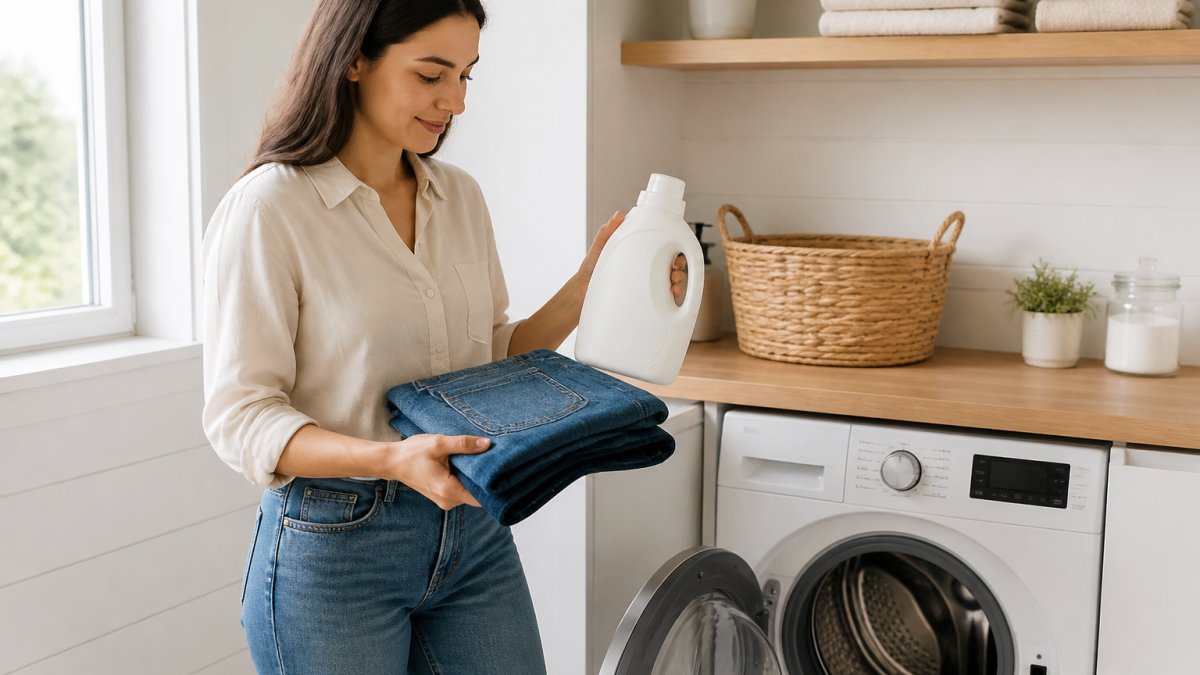
Step 2: Add a cup of white vinegar to the rinse cycle. Vinegar sets dye and removes alkaline manufacturing residue.
Step 3: Air dry or tumble on low. High heat sets wrinkles and can lock in stiffness.
Step 4: Repeat for stubbornly stiff pairs. Some rigid denims need two or three cycles before they soften noticeably.
Choosing the Best Soft Denim for Your Skin Type
Most guides tell you which fiber is "best" and stop there, not useful in a fitting room or on a product page. What you need is a repeatable way to evaluate a specific pair against your specific skin.
A Transparent Selection Method
Use these five criteria in order: the first two are measurable from the label, the last three require handling the garment.
- Fiber content (measurable). Read the label, not the marketing copy, the FTC requires accurate fiber disclosure. Prioritize Tencel/lyocell, bamboo, or cotton in the first two positions; treat polyester above 20% as a yellow flag for reactive skin.
- Weight in ounces per square yard (measurable). Most product pages list it. Under 12 oz is easier on skin out of the box; 13-16 oz needs real breaking-in.
- Inner-face texture (subjective but consistent). Rub the inside of the leg against your forearm. You want a smooth, slightly napped surface; a pronounced diagonal rib means more friction points.
- Seam construction (visible). Look at the inner thigh and crotch. Flat-felled or taped seams = good. Bulky serged seams = friction ridge.
- Hardware and labels (visible). Check the button back, rivets, and back waist label. Nickel-free hardware and printed or tagless labels reduce irritation.
Matching Denim Construction to Your Skin Type
Different sensitivities respond to different denim builds. Match the construction, not just the fiber.
For eczema-prone skin: Prioritize smooth fibers (Tencel, lyocell, bamboo) with minimal surface residue.
For sensory sensitivity (tactile defensiveness): Construction matters more than fiber.
For friction-driven irritation: A soft cotton blend with 1-3% elastane, mid-weight fabric (10-12 oz), and a close-but-not-pressing fit works best.
For all-day wear and heat: Breathability and moisture management dominate.
A Side-by-Side Comparison of Denim Options
Use this as a decision aid, not a ranking. The "best" option depends on which column matters most for your skin.
| Denim type | Softness out of box | Breathability | Stretch | Likely irritation risk |
|---|---|---|---|---|
| Rigid 100% cotton, 12-14 oz | Low until broken in | Medium | None | Medium (friction, stiffness) |
| Cotton + 2% elastane, 10-12 oz | Medium | Medium | Moderate | Low-medium |
| Cotton + Tencel/lyocell blend | High | High | Low-moderate | Low |
| Cotton + bamboo blend | High | High | Low | Low |
| Knitted denim | Very high | High | High | Low |
| Brushed or peached denim | High | Medium | Varies | Low |
| High-polyester blend (>20%) | Medium | Low | High | Medium-high (heat, moisture) |
What to Check Before You Buy
A pre-purchase checklist that works in a store or on a product page:
- Fiber content: Tencel, lyocell, or bamboo in the first two positions
- Stretch content under 3% unless you specifically need multi-directional stretch
- Weight listed or estimated under 12 oz for first-wear comfort
- Flat-felled or taped inner seams (visible in product photos or in person)
- Nickel-free hardware and printed or tagless labeling
- A "garment washed," "rinsed," or "softened" note on the care label
- Return policy that lets you test comfort before committing
According to guidance from the American Academy of Dermatology on clothing and skin irritation, people with sensitive skin should favor smooth, breathable fabrics and wash new garments before wearing them. The FTC's guidance on textile labeling also requires accurate fiber content disclosure, so always check the label rather than trusting marketing language.
The single most reliable rule for sensitive skin: choose smooth fibers (Tencel, bamboo, soft cotton), verify flat seams and nickel-free hardware, keep the weight under 12 oz for first-wear comfort, and wash before first wear. Get those four right and most irritation disappears.
Frequently Asked Questions
What is the softest denim fabric for sensitive skin?
Tencel lyocell blends rank among the softest denim fabrics for sensitive skin. Lyocell fibers are smoother than cotton, which reduces friction and itching. Bamboo denim is another gentle option with natural breathability. If you prefer cotton, look for combed or ring-spun cotton denim, which removes short fibers that can feel rough. Modal blends also feel very soft against the skin and resist pilling, making them a strong choice for atopic eczema or sensory sensitivity.
Which denim blends feel softest against sensitive skin?
Blends with a high percentage of Tencel lyocell, modal, or bamboo mixed with cotton tend to feel softest. These fibers have a smooth surface that minimizes friction and irritation. A cotton-lyocell blend with a small amount of elastane offers softness and flexibility without triggering itching. Always check the fabric content label before buying online.
How can you make new denim softer before wearing it?
Wash new denim inside out in cold water with half a cup of white vinegar. The vinegar helps break down stiff sizing and excess dye without harsh chemicals. Air dry or tumble on low heat. Repeat this process once more if the denim still feels stiff against your skin.
Is stretch denim more comfortable for sensitive skin?
Stretch denim can be comfortable because it moves with your body and reduces friction from tight areas. However, high stretch content (above 3% spandex) may cause the fabric to cling and rub, which can irritate sensitive skin. A moderate stretch of 1-2% elastane paired with soft fibers like lyocell or modal gives flexibility without excessive rubbing.