
Best Wide Leg Jeans for Women 2026: Top Picks & Styling
Table of Contents
- Why Wide Leg Jeans Dominate 2026
- How to Style Wide Leg Jeans for Work and Weekends
- High-Waisted Wide Leg Jeans with Tummy Control
- Best Shoes for Wide Leg Jeans by Hem Width
- Fit Guide: Petite, Tall, and Curvy Sizing
- Fabric and Wash: What Actually Lasts
- Conclusion
- Frequently Asked Questions
Last Updated: September 11, 2026
Why Wide Leg Jeans Dominate 2026
The best wide leg jeans for women 2026 deliver what a decade of skinny denim never could: room to move, a waistline that stays put, and a silhouette that flatters instead of squeezes. Wide leg jeans are a denim cut where the leg opening measures roughly the same width from the thigh to the hem, creating a straight, flowing line rather than a tapered one (masterclass.com).
The appeal goes beyond comfort. Fashion search data tracked by Google Trends denim silhouette reporting shows sustained interest in relaxed and wide cuts, and retail buyers have responded by pushing skinny styles to the back of the shelf. For anyone who has spent years tugging at a tight ankle, that is welcome news.
What most guides get wrong is treating "wide leg" as one single fit.
A high-waisted wide leg jean with structured fabric reads tailored; a low-rise, soft stretch version reads casual and slouchy. Knowing which one you are buying is the difference between a pair you reach for weekly and a pair that sits in the drawer.

How to Style Wide Leg Jeans for Work and Weekends
Styling wide leg jeans comes down to balance: keep the top half closer to the body so the volume in the leg reads intentional. Tuck in a fitted tee, add a structured blazer, and the same pair that works on Saturday handles a Tuesday meeting.
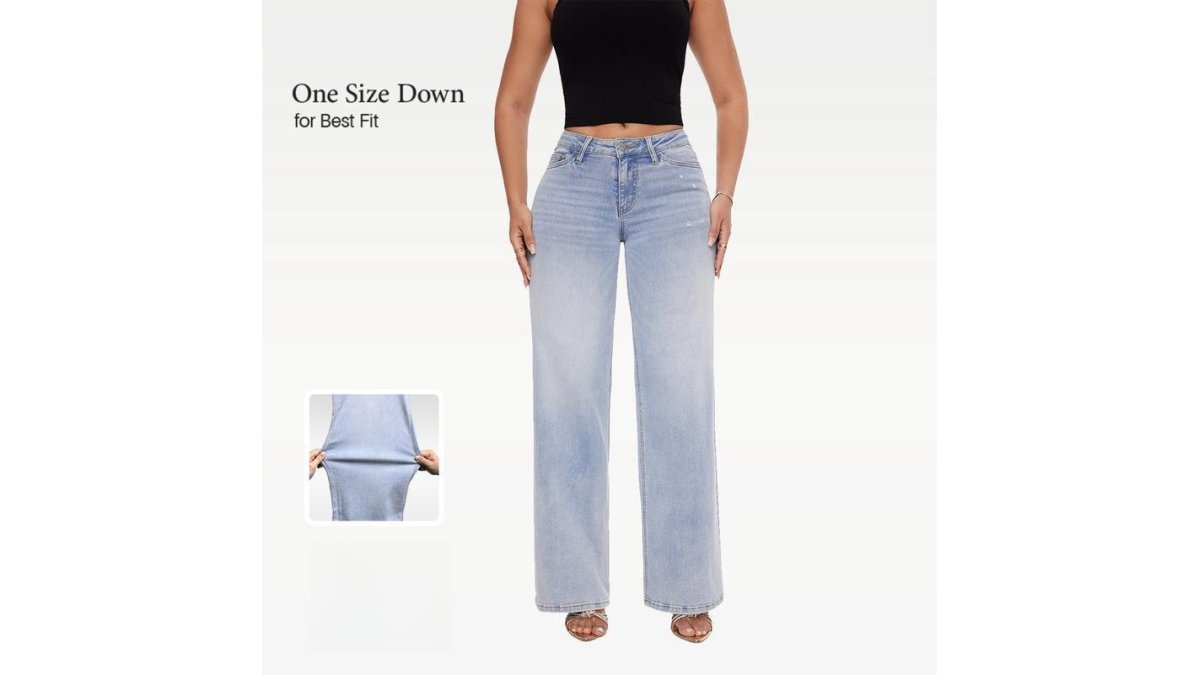
A few rules that hold up in practice:
- Tuck or half-tuck your top to define the waist
- Choose a shoe with some visual weight so the hem does not swallow your foot
- Keep outerwear cropped or tailored rather than long and loose
- Add a belt when the waistband sits high for a cleaner line
The Proportion Rule Behind Every Good Outfit
The reason a tucked top works is proportion, not trend. A wide leg jean adds visual weight from the hip down, so the eye needs a defined waist to anchor the silhouette. A long, loose top over a wide leg makes the body read as one continuous column; a fitted or tucked top reads as an hourglass.
A simple way to test this before you leave the house: stand sideways in a mirror. If you cannot see where your waist is, the outfit needs a tuck, a belt, or a shorter layer.
Shoe Pairing by Hem Width
The most common styling complaint about wide leg jeans is footwear. The fix is matching the shoe to the hem, not the season's trend list.
| Hem Width and Length | Best Shoe | Why It Works |
|---|---|---|
| Full-length, wide hem | Block heel or platform | Adds height so the hem clears the floor |
| Cropped, wide hem | Ankle boot or loafer | Shows the ankle, keeps the line clean |
| Full-length, moderate hem | Pointed flat or sneaker | Extends the leg without bulk |
| Raw hem, any width | Chunky sneaker | Balances the casual, undone finish |
A pointed toe lengthens the leg because the eye follows the point (britannica.com). A round, chunky toe shortens it. That single detail changes how tall you look in the same pair of jeans.
Office-Appropriate Wide Leg Denim
Office-appropriate wide leg denim means dark washes, minimal distressing, and a fabric with enough body to hold its shape through a full workday. Pair black, dark blue, or gray with a blazer and a pointed or block-heel shoe for a professional look that isn't pretending to be a suit.
The mistake is paper-thin stretch denim for the office: it clings, wrinkles, and looks tired by lunch. A denim with more weight holds a crisp line all day.
Three office-ready combinations that work in most business-casual settings:
- Dark indigo wide leg + tucked white button-down + structured blazer + block heel
- Black wide leg + fine-knit turtleneck + longline cardigan + pointed flat
- Gray wide leg + silk shell + cropped trench + loafer
Weekend Styling Without Losing the Shape
The weekend version of the same jean should feel looser but still balanced. Swap the blazer for a cropped denim or leather jacket, the heel for a chunky sneaker or platform, and add a graphic tee or cropped sweater, keeping the top tucked or knotted at the waist.
For warmer weather, a cropped wide leg with a tank and a flat sandal keeps the silhouette light. For cooler months, a full-length wide leg with a fitted long-sleeve tee, a cropped puffer, and a boot balances volume above and below the waist.
High-Waisted Wide Leg Jeans with Tummy Control
High-waisted wide leg jeans with tummy control combine a higher rise with a supportive waistband and a fabric that smooths rather than pinches. The rise sits at or above the natural waist, containing the midsection while the wide leg balances the hip and thigh.
Volume below the waist and a defined waist above it create an hourglass read, which is why the cut flatters so many body types.
What to Look for in Sculpting Denim
Sculpting denim earns its name through construction, not marketing. Check these details before you buy:
- A waistband that stays flat when you sit, not one that rolls or gaps
- Enough stretch to move but enough recovery to snap back
- A front panel or lined waistband if you want extra smoothing
- Pocket placement slightly angled to lift the eye upward
AVERA7's High-Waisted Wide Leg Jeans are built around exactly this brief: a high rise for tummy control, a hip-lifting effect for a sculpted look, and a straight wide leg with a relaxed, vintage feel.
Best Shoes for Wide Leg Jeans by Hem Width
The best shoes for wide leg jeans depend on how wide the hem actually is. A hem that grazes the floor needs a heel or platform; a cropped hem shows the ankle and works with almost anything flat.
| Hem Width and Length | Best Shoe | Why It Works |
|---|---|---|
| Full-length, wide hem | Block heel or platform | Adds height so the hem clears the floor |
| Cropped, wide hem | Ankle boot or loafer | Shows the ankle, keeps the line clean |
| Full-length, moderate hem | Pointed flat or sneaker | Extends the leg without bulk |
| Raw hem, any width | Chunky sneaker | Balances the casual, undone finish |
A pointed toe lengthens the leg because the eye follows the point. A round, chunky toe shortens it. That single detail changes how tall you look in the same pair of jeans.
Fit Guide: Petite, Tall, and Curvy Sizing
Fit is where wide leg jeans are won or lost, and inseam and rise matter more than the number on the tag.
Petite frames need a shorter inseam so the wide leg does not pool at the ankle. A cropped wide leg is often the easiest win, since it hits at the right spot without hemming. If you buy full-length, budget for a tailor.
Tall frames need a longer inseam and often a higher rise so the waist sits where it should. Look for full-length styles described as long or tall, and check the inseam measurement rather than trusting the size label.
Curvy fits need a waistband that does not gap at the back and a hip that has room without pulling. A high-waisted wide leg with stretch denim tends to work better here than rigid cotton, because it moves with the body instead of fighting it.
Fabric and Wash: What Actually Lasts
Fabric composition decides how a pair of jeans ages, and it is the detail most shoppers skip. Stretch denim blends cotton with a small amount of elastane for give and recovery; rigid cotton holds a sharp line but takes time to break in. Heavier denim resists sagging at the knee and seat; lighter denim feels cooler but loses shape faster.
For wash, darker indigo and black hide wear and read more polished. Vintage-inspired light and washed blues show character but fade faster. If you want a pair that works for both the office and the weekend, start with a dark or medium blue and add a lighter wash second.
Denim recovery is the quiet metric nobody mentions: a good pair springs back after a day of wear, a poor one stays stretched at the knee and seat by evening.
Fabric Composition, Decoded
Most wide leg jeans fall into one of three composition brackets, each behaving differently over time:
- 100% cotton (rigid): Holds a crisp, structured line and develops fades and creases unique to your body. It does not stretch, so it can feel stiff for the first few wears and requires a break-in period. Best for tailored, polished looks.
- Cotton with 1-2% elastane or spandex: The most common blend. Adds enough give to sit, bend, and move comfortably while still recovering to its original shape. This is the sweet spot for all-day wear.
- Cotton with 3% or more elastane, plus polyester or viscose: Feels softest on day one but loses shape fastest. The higher the stretch percentage, the more likely the knee and seat will bag out by afternoon. These are the jeans that feel great in the fitting room and disappointing by month three.
A useful rule: the higher the stretch percentage, the lower the long-term shape retention. If you want a pair that still looks sharp after a year, stay at or below 2% elastane.
Denim Weight and Why It Matters
Denim weight, measured in ounces per square yard, directly affects how a wide leg drapes:
- Lightweight (under 10 oz): Cool and comfortable in warm weather, but drapes softly and can cling. Better for cropped or relaxed fits.
- Midweight (10-13 oz): The most versatile range. Holds a clean line without feeling heavy, works year-round, and is the standard for most high-quality wide leg jeans.
- Heavyweight (14 oz and up): Structured, durable, and slow to fade. Excellent for a tailored wide leg, but can feel stiff in summer and takes longer to break in.
For a wide leg specifically, midweight denim is usually the best choice because it has enough body to hold the leg opening away from the ankle without looking rigid.
Wash, Fading, and Longevity
Wash affects both the look and lifespan of the denim:
- Raw or dark indigo: The most versatile and the slowest to show wear. Expect noticeable fading only after many months of regular wear.
- Medium blue: The everyday workhorse. Fades gradually and reads casual or polished depending on the styling.
- Light and vintage washes: Show character immediately but fade faster and can look worn out sooner. Best as a second or third pair.
- Black and gray: Hide stains and wear well, but can fade to a dull charcoal over time if washed frequently.
How to Make Denim Last
A few habits extend the life of any pair:
- Wash less often, every 5 to 10 wears is a common guideline for denim
- Turn jeans inside out and wash cold to slow fading
- Skip the dryer; air-drying preserves elastane and prevents shrinkage
- Store folded rather than hung to avoid stretching the waistband
These small changes matter more than the price tag: a well-cared-for midweight pair outlasts a cheap high-stretch pair by a wide margin.
Conclusion
The right pair of wide leg jeans comes down to three things: a rise at your natural waist, a fabric that recovers, and a hem width that matches your shoes. Get those right and the silhouette does the rest.
That is the standard AVERA7 builds to. The High-Waisted Wide Leg Jeans pair a tummy-control high rise with a hip-lifting effect, a relaxed vintage-inspired cut, and all-day soft comfort in a range of versatile colors, backed by a 4.8 out of 5 rating and a 30-day money-back guarantee. Get started with AVERA7 and find the pair that makes getting dressed the easy part.
Frequently Asked Questions
Are wide leg jeans still trending in 2026?
Yes, wide leg jeans remain a dominant silhouette in 2026. The relaxed, vintage-inspired cut continues to appear across street style and seasonal runways. High-waisted versions with a straight leg are especially popular because they balance volume with structure. Look for washes like light blue, black, and washed blue to stay current. The style works year-round and transitions easily from casual to office settings.
What are the best wide leg jeans for tummy control?
The best wide leg jeans for tummy control combine a high waistband with a structured but comfortable fabric. AVERA7's High-Waisted Wide Leg Jeans are designed with a tummy control panel and hip-lifting effect that smooths the midsection without bunching. Look for a wide waistband that sits at or above the belly button and a fabric blend with enough stretch to move with you but enough weight to hold its shape all day.
What shoes look best with wide leg jeans in 2026?
The best shoes for wide leg jeans depend on hem width. A full-length wide leg pairs well with platform sneakers, block heels, or pointed-toe boots to elongate the leg. Cropped wide leg styles work with ankle boots, loafers, or ballet flats. Avoid very thin soles that disappear under the hem. A slight heel or platform adds height and keeps the denim from dragging.
How should wide leg jeans fit at the waist?
Wide leg jeans should fit snugly at the waist without digging in. The waistband should sit flat against your body and stay in place when you move. If you can fit more than two fingers between your waist and the band, size down. If the fabric bunches or rolls, size up. A high-waisted cut that hits at or just above the belly button gives the most flattering, secure fit for most body types.