
Flattering Jeans for Curvy Figures: 2026 Fit Guide
Table of Contents
- Why Most Jeans Fail Curvy Bodies (And How to Fix It)
- The 4 Measurements That Determine If Jeans Fit Curves
- What Makes Jeans with Tummy Control Technology Different
- Best Jeans for Hourglass Body Shape: Rise and Cut Science
- How to Style Wide-Leg Jeans for Curves Without Bulk
- Fabric Science: Why Elastane Content and Denim Weight Matter
- Common Fit Mistakes That Create Waist Gap and Bunching
- Final Verdict: What to Look for When Shopping
- Frequently Asked Questions
Last Updated: September 8, 2026
Why Most Jeans Fail Curvy Bodies (And How to Fix It)
Finding truly flattering jeans for curvy figures often feels impossible, but the problem usually isn't your body; it is the way mass-market denim is cut. Most brands build jeans on a straight, athletic fit model, leaving curvier shapes with gaping waistbands, strained thigh seams, and bunching fabric.
The core issue is proportion. When your waist is significantly smaller than your hips, a standard straight-cut jean cannot accommodate both, so many women buy a larger size and deal with excess fabric at the waist. We have analyzed how denim construction, fabric blends, and rise heights interact with natural curves.
The solution combines science and styling, from construction features like a contoured waistband to fabric composition. Below, we decode denim specifications so you can find jeans that fit like they were made for you.
The 4 Measurements That Determine If Jeans Fit Curves
Before you shop, you need to know your numbers. The most critical factor in finding flattering jeans for curvy figures is understanding your waist-to-hip ratio, the mathematical difference between the narrowest part of your torso and the widest part of your hips.
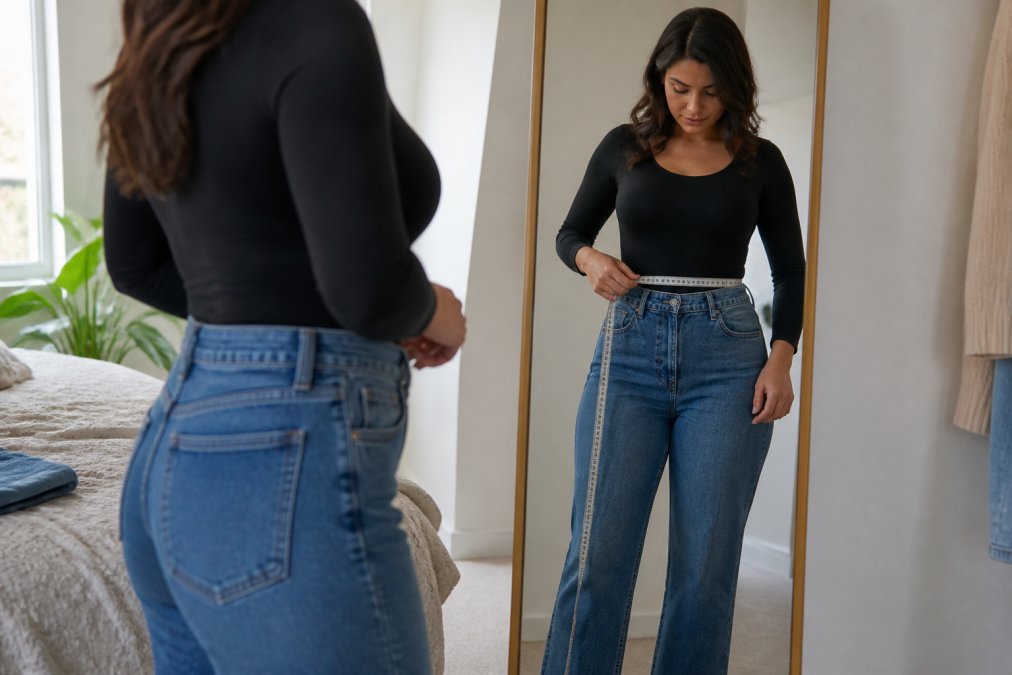
Take these four measurements with a soft tape measure, keeping it snug but not tight:
- Natural Waist: Bend to the side; the crease is your natural waistline.
- Hips: Measure around the fullest part of your seat.
- High Hip: Measure about 3 inches below your waist; this determines thigh room.
- Inseam: Measure from the crotch seam to the hem; this determines leg length.
A difference of roughly 10 inches or more between waist and hips signals you need a curvy-specific cut (peer-reviewed research). According to sizing guidelines from the American Apparel & Footwear Association, consistent measurement is the first step to matching any brand's size chart accurately. Once you have these numbers, you can ignore the arbitrary size on the tag and focus on the actual geometry of the jean.
What Makes Jeans with Tummy Control Technology Different
Many shoppers are skeptical of tummy control claims, recalling stiff, shapewear-like fabrics that pinch and roll down. Modern jeans with tummy control technology are different: the purpose is not to compress you but to provide a smooth, sculpted foundation that prevents "muffin top" and waistband digging.
The secret lies in the front panel. High-quality designs use a hidden inner panel or higher-stretch fabric in the tummy area for a firm yet flexible hold, providing smoothing without the restrictive feel of traditional shapewear.
For postpartum mothers or those with sensitive stomachs, comfort is non-negotiable. A common mistake is buying a smaller size for more compression, which causes rolling and bulges. Instead, look for a jean that fits your hips and relies on internal structure for control. The High-Waisted Wide Leg Jeans are engineered with this technology, offering a hip-lifting effect while the high waist keeps you tucked in. You can find them here: [https://avera7.com/products/high-waisted-wide-leg-jeans]

Best Jeans for Hourglass Body Shape: Rise and Cut Science
Curvy bodies come in multiple distinct shapes, each with different fit priorities. Treating all curves the same is why many women struggle to find flattering jeans. Here is the cut science for the three most common curvy silhouettes.
Hourglass (Balanced Bust and Hips, Defined Waist)
For an hourglass silhouette, the goal is balance between shoulders and hips while accentuating the waist. The best jeans for hourglass body shape are typically high-rise, as this cut cinches the smallest part of your torso and lengthens the legs.
Rise measurement is the distance from the crotch seam to the top of the waistband. Here is how different rises affect the figure:
- High-Rise (10-12 inches): Best for defining the waist and providing tummy control.
- Mid-Rise (8-9 inches): Sits at the belly button; good for longer torsos but offers less support.
High-rise styles work best for curvy figures because they cover the widest part of the hip, preventing a gap at the lower back. Paired with a wider leg opening, they create a long, unbroken line that visually lengthens the body. This is why the wide-leg cut is a staple for hourglass figures; it balances hip width without clinging to the thigh.
Pear Shape (Hips Wider Than Shoulders)
If your hips and thighs are the widest part of your body, your priority is finding a cut that does not add bulk below the waist. Look for a mid-rise or high-rise jean with a slight bootcut or a straight leg. The subtle flare of a bootcut balances the hip-to-shoulder ratio by adding visual weight to the lower leg, drawing the eye downward and creating a more proportional line. Avoid skinny jeans with heavy fading on the thigh area, as this highlights the widest part of the silhouette. Instead, opt for a darker, uniform wash that minimizes visual volume.
Apple Shape (Carry Weight in the Midsection)
For those who carry weight primarily in the stomach, the waistband is the critical decision point. A rigid, non-stretch high-rise waistband will dig in and create discomfort. The better choice is a mid-rise jean with a wide, contoured waistband that sits below the natural waist but above the fullest part of the belly, preventing the 'cutting in' effect. Look for fabrics with a higher elastane content (2-3%) to allow for movement and a smooth line (peer-reviewed research). A straight or wide leg cut helps balance the midsection, while a skinny leg can emphasize the stomach area by contrast. The goal is to avoid any waistband that creates a horizontal line across the fullest part of the torso.
The 'Curvy' Label Is Not Enough
A common pattern in the denim industry is to label any jean with a high waist and stretch fabric as 'curvy.' However, true curvy fits are graded differently. They offer a higher hip-to-waist ratio in the pattern itself, often adding 2-3 extra inches in the seat and thigh compared to a straight-size equivalent. When shopping, do not just look for the word 'curvy' on the tag; check the actual measurement guide on the brand's website. Compare the waist and hip measurements for your size. If the difference is less than 9 inches, it is likely a standard cut with a curvy label, not a true curvy fit.
How to Style Wide-Leg Jeans for Curves Without Bulk
A frequent concern is that wide-leg jeans will make you look larger, which happens when the fabric is too stiff or the fit is too loose through the hip. The goal is to style wide-leg jeans for curves so they drape elegantly rather than add volume.
The trick is proportion. If you are wearing a voluminous bottom, your top must be fitted or tucked in. Here are three styling rules that work:
- Balance the Volume: Pair wide-leg jeans with a fitted bodysuit, a cropped knit, or a tucked-in blouse to show the waistline.
- Add Height: Wear a shoe with a slight heel or platform. The extra height prevents the hem from dragging and keeps the vertical line clean.
- Check the Length: The hem should hover just above the floor without breaking too much, creating a continuous line from hip to toe.
Fabric weight matters. Denim that is too heavy stands away from the body, creating a boxy look; denim with comfortable stretch and smooth drape follows your hips and falls straight, which is far more flattering. The relaxed, vintage feel of the wide-leg cut offers this drape.
Fabric Science: Why Elastane Content and Denim Weight Matter
You cannot judge a jean's fit by looks alone; you must read the fabric composition. The two most important factors are elastane content (stretch) and denim weight (oz per square yard).
The Role of Elastane vs. Spandex vs. Lycra
While often used interchangeably, these are not identical. Elastane is the generic term for the synthetic fiber known for elasticity. Spandex is the common name used in the United States. Lycra is a brand name for a specific elastane fiber manufactured by Invista. The practical difference lies in quality control: Lycra has a consistent polymer structure known for high recovery, while a generic elastane blend may use a lower-grade fiber that breaks down faster after repeated washing.
Stretch Percentage and Shape Retention
Stretch determines shape retention. Too little elastane (under 1%) restricts movement; too much (over 5%) causes bagging at the knees by midday. The sweet spot for curvy figures is a 'comfort-stretch' fabric with 2% to 3% elastane, allowing movement while snapping back into place.
The percentage alone is not the full story; the 'recovery' rate matters. A high-quality stretch denim returns to its original dimensions after being stretched; a lower-quality one does not. Stretch the fabric horizontally in the store: if it snaps back immediately without rippling, it has good recovery. If it stays stretched or feels 'baggy,' it will sag in the seat and knees within hours.
The Cotton Blend: The Unsung Hero
Most discussions focus on elastane, but the cotton blend is equally critical. Cotton provides structure and the classic denim look. A higher cotton content (over 90%) means a stiffer, more durable jean that holds its shape longer but requires a break-in period. A lower content (around 70-80%) with added polyester or rayon feels softer and drapes more fluidly but may lose structure faster.
For curvy figures, a blend of approximately 80% cotton, 18% polyester, and 2% elastane is often ideal. Polyester adds durability and resists wrinkles and fading, while cotton provides breathability. Avoid blends with a high percentage of rayon or viscose, as these absorb moisture and cause the jean to stretch out and sag in the seat area.
Denim Weight and Structure
Denim weight dictates structure and durability. Heavy denim (12 oz and up) holds its shape but is difficult to break in. Light to medium weight (8-11 oz) is softer, drapes better, and is more comfortable for all-day wear. For a jean that transitions from office to weekend, a mid-weight fabric (10-11 oz) with high stretch recovery is ideal, providing enough structure for a wide-leg cut without feeling like cardboard.
The 'Knee Bag' Test
The 'knee bag' phenomenon, where fabric stretches out at the knees after a few hours, is not just a function of elastane percentage; it is also about the weave. A tighter twill weave resists bagging better than a looser weave. When shopping, look at the texture: a smooth, tightly woven fabric holds its shape better than a loosely woven one, regardless of stretch percentage.
Common Fit Mistakes That Create Waist Gap and Bunching
Waist gap is the space between your lower back and the jeans' waistband, and it is the number one sign that a jean is not cut for your body. It occurs when the hip measurement is correct, but the waistband is cut too straight.
This is where a contoured waistband becomes essential. Unlike a straight band, a contoured band dips slightly in the front and rises in the back, following the natural curve of the spine. This eliminates the need to constantly pull your jeans up and prevents bunching under belts.
Another common mistake is ignoring the "hip-to-thigh ratio." If you have a fuller seat but slimmer thighs, a regular cut might gap at the back of the knee or bunch at the crotch. Curvy cuts offer extra room in the seat and thigh while tapering back in at the waist. Do the "sit test": sit down for a minute to see if the waistband digs in or the fabric strains across the hips. If you feel pressure points immediately, the cut is wrong.
Final Verdict: What to Look for When Shopping
Shopping for denim should not require a compromise between comfort and style. When you know what to look for, you can spot a winner immediately. The checklist below summarizes the key points for your next shopping trip.
| Feature | What to Look For | Why It Matters |
|---|---|---|
| Rise Height | High-rise (10-12 inches) | Defines waist, offers tummy control |
| Waistband | Contoured or curved | Prevents waist gap and bunching |
| Fabric Stretch | Comfort-stretch with high recovery | Prevents bagging, holds shape all day |
| Leg Cut | Wide-leg or bootcut | Balances hips, elongates the silhouette |
| Denim Weight | Mid-weight (8-11 oz) | Drapes well without losing structure |
Finding flattering jeans for curvy figures comes down to prioritizing construction over trends. Look for a high waist, a contoured band, and a fabric blend designed for shape retention. The goal is a jean that supports you, enhances your natural shape, and feels soft enough to wear from morning commute to evening out.
Frequently Asked Questions
What type of jeans are most flattering for curvy figures?
High-rise jeans with a contoured waistband are the most reliable choice for curvy figures. The higher rise prevents gapping at the back while providing support across the midsection. Look for cuts with generous thigh room that taper or widen below the knee. Wide-leg and bootcut silhouettes balance the hip-to-thigh ratio naturally, while skinny fits work best when they contain at least 2% elastane for stretch recovery.
How do I prevent waist gap in curvy fit jeans?
Waist gap happens when the waistband is cut straight instead of contoured to match the natural curve between your waist and hips. Look for jeans labeled as having a contoured waistband or curved yoke. Check that the back rise measurement matches your torso length, and size for your hips rather than your waist. If the gap persists, the jeans lack sufficient curve through the seat, not because your measurements are unusual.
Are high-waisted jeans better for curvy figures?
Yes, high-waisted jeans typically perform better for curvy figures because they provide coverage and support across the midsection while preventing the waistband from digging in. A true high-rise measures 10 inches or more from the crotch seam. This rise length helps smooth the stomach area and creates a longer leg line. Mid-rise options can work, but the waistband should still follow your natural waist curve rather than cutting straight across.
What features should I look for in jeans for an hourglass figure?
Prioritize four features: a contoured waistband that curves to match your waist-to-hip ratio, elastane content between 2 and 4 percent for shape retention, a rise height that matches your torso, and a leg cut that balances your proportions. Wide-leg and flare styles with a hip-lifting effect enhance the hourglass silhouette. Check the size chart measurements rather than relying on dress size, since curvy fits vary significantly between brands.
The challenge is that most denim brands design for a narrow range of body types, leaving curvier women to settle for ill-fitting options. AVERA7 changes that with a high-waisted, wide-leg cut featuring tummy control technology and a hip-lifting effect. The premium fabric provides all-day soft comfort, while the vintage-inspired silhouette transitions easily from the office to weekend plans. Get started with AVERA7 and find the pair that finally fits your curves the way they deserve.