
How to Prevent Jeans From Stretching Out: 7 Easy Steps
Table of Contents
- Why Your Jeans Stretch Out (and How to Stop It)
- How to Wash Jeans to Keep Shape: Cold-Water Protocols
- The Rest Period: Why Your Jeans Need a Break
- Best Denim Fabric for Shape Retention: What to Look For
- How to Shrink Jeans That Have Already Stretched
- Preventing Knee Bagging and Sagging: Fit and Storage Tips
- Frequently Asked Questions
Last Updated: September 29, 2026
Why Your Jeans Stretch Out (and How to Stop It)
Jeans stretch out because cotton fibers lose their memory over time and stretch materials relax under body heat and movement, which is why knowing how to prevent jeans from stretching out matters so much. Learning how to prevent jeans from stretching out comes down to three things: what your jeans are made of, how you wash and dry them, and how often you rest them.
Here's the part most guides skip: fiber recovery is real. Cotton and stretch fibers bounce back when given time, cool temperatures, and low stress, but most people never give their denim that chance.
The Role of Spandex and Elastane Percentages
Elastane, also called spandex, gives stretch denim its flex. Most stretch denim uses 1% to 3% elastane, and that tiny percentage decides how well your jeans snap back.
- 1% elastane: Minimal stretch, strong shape retention, feels more like traditional denim
- 2% elastane: The sweet spot for comfort and recovery in most jeans
- 3%+ elastane: Maximum stretch, but the fabric relaxes faster with wear
The higher the elastane count, the more the denim depends on you to protect it.
How Denim Weight and Weave Affect Stretch
Denim weight is measured in ounces per square yard. Lighter denim (under 10 oz) stretches out faster because there's less structure to hold its shape. Mid-weight denim (10-14 oz) balances comfort and shape retention, while heavyweight denim (14 oz and up) holds its form best but takes longer to break in.
How to Wash Jeans to Keep Shape: Cold-Water Protocols
Cold water is the single most effective way to wash jeans without losing fit. Heat is the enemy of elastane, and hot water speeds up fiber fatigue. A cold-water routine protects elasticity, reduces shrinkage risk, and keeps color richer longer.
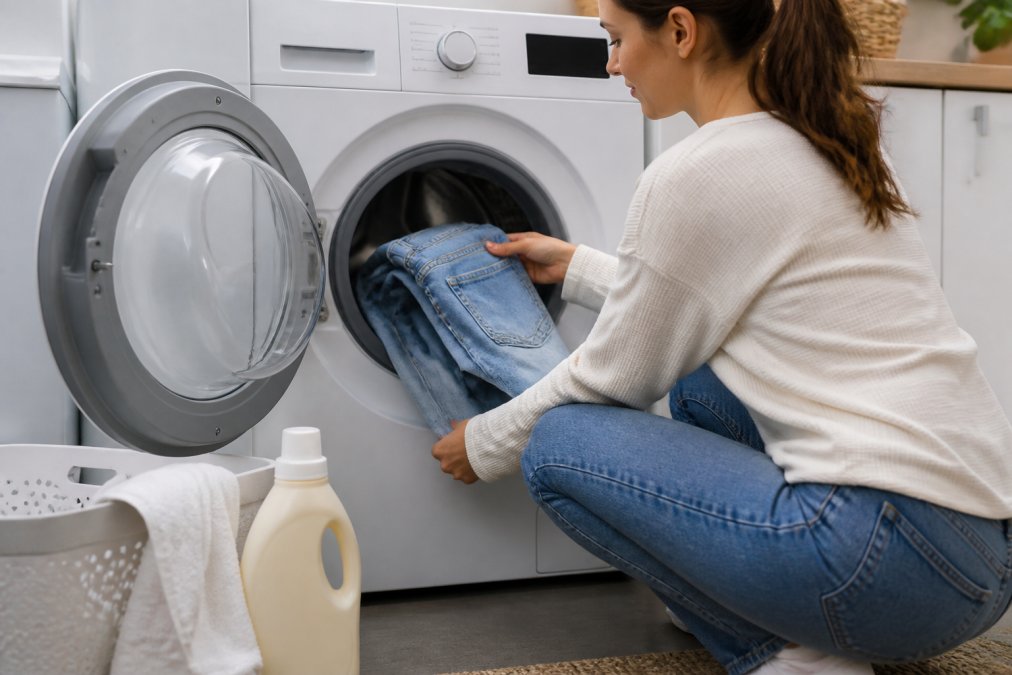
Step-by-Step: Washing Without Losing Fit
- Turn jeans inside out. This protects the outer surface and reduces friction on the fibers.
- Set the machine to cold water. Choose the delicate cycle or permanent press setting.
- Use a gentle detergent. Harsh formulas strip fibers over time.
- Skip the fabric softener. It coats fibers and reduces their ability to recover.
- Wash with similar colors only. This limits abrasion from zippers and buttons.
- Wash less often. Every two to three wears is plenty for most denim.
Drying Methods That Protect Elasticity
Air drying is the gold standard: hang jeans by the waistband in a shaded spot and let them air dry completely. If you must use a machine, choose the lowest heat setting and pull them out while still slightly damp.
The Rest Period: Why Your Jeans Need a Break
Giving your jeans a rest day is the most overlooked trick in denim care. Here is what actually happens while your jeans hang in the closet.
What Happens to Fibers During Wear
Cotton fibers are naturally crimped, tiny coiled springs under a microscope. When you sit, squat, and walk, you pull those coils straight. Elastane filaments do the same, holding their stretched position as long as the load stays on them.
Rotation Math: How Many Pairs You Actually Need
The number of pairs you need depends on how many days per week you wear denim:
- Wear denim 2-3 days a week: Two pairs is enough. Each pair gets 2-3 rest days between wears.
- Wear denim 4-5 days a week: Three pairs is the practical minimum. This gives every pair at least one full rest day.
- Wear denim 6-7 days a week: Four pairs. Anything less and at least one pair never fully recovers, which is how knee bagging becomes permanent.
Matching Rest to Wear Intensity
If you wear the same jeans five days a week, buy a second and third pair in similar washes. They'll last noticeably longer and fit better on day 100 than they would without the rotation.
Best Denim Fabric for Shape Retention: What to Look For
The best denim fabric for shape retention combines high cotton content, low elastane, and a mid-to-heavy weight. Raw denim and rigid denim hold their shape best because they have little to no stretch, while stretch denim with 1-2% elastane is a good middle ground for comfort and fit retention.
Fabric Blends and Fiber Content
Check the label before you buy. Here is what to look for:
| Fiber Content | Stretch Level | Shape Retention | Best For |
|---|---|---|---|
| 100% cotton | None | Excellent | Structured, vintage fits |
| 98% cotton, 2% elastane | Moderate | Good | Everyday comfort |
| 92% cotton, 6% polyester, 2% elastane | High | Fair | Soft, flexible wear |
| 70% cotton, 28% polyester, 2% elastane | Very high | Fair | Budget stretch denim |
Recovery Testing: How to Predict Stretching Before You Buy
This is the step almost no guide covers, and the most useful thing you can do in a fitting room. Recovery testing tells you how a pair will behave after weeks of wear, before you spend money on it.
The two-hand stretch test:
- Grab the fabric at the knee or upper thigh with both hands, about 4 inches apart.
- Pull firmly, enough to feel the fabric give, not enough to strain the seams.
- Hold for five seconds, then release.
- Watch how fast the fabric returns to its original position.
How to read the result:
- Snaps back almost instantly, with a slight snap sound: Excellent recovery. This pair will hold its shape well.
- Returns within a second or two, no snap: Good recovery. Expect normal relaxation over time.
- Returns slowly, or leaves a visible stretched patch: Poor recovery. This pair will bag out at the knees and seat within weeks.
Weighing the Trade-Offs
No fabric wins on every axis. Choose based on what you actually want:
- Maximum shape retention: 100% cotton or rigid denim, 12 oz and up. Expect a break-in period and less give at the waist.
- Everyday comfort with good retention: 98% cotton, 2% elastane, 10-14 oz. The most versatile choice for most people.
- Maximum stretch and softness: Higher polyester content with 2%+ elastane. Accept that recovery will be slower and the fit will relax more over the day.
How to Shrink Jeans That Have Already Stretched
You can shrink jeans that have stretched, but results depend on the fabric. Cotton-rich denim responds well to heat and water; stretch denim with high elastane may only recover slightly. Act before the fibers are permanently fatigued.
How to shrink jeans:
- Wash in the warmest water the care label allows.
- Tumble dry on low to medium heat, checking every 10 minutes.
- Remove while slightly damp and air dry the rest of the way.
- Repeat once if needed, but never more than twice.
Recovery Testing: Does It Work?
Recovery testing shows whether your jeans can bounce back. Stretch the fabric at the knee or thigh, then let go: if it snaps back quickly, the fibers are still healthy; if it stays stretched, the elastane is fatigued and shrinking won't help much.
Preventing Knee Bagging and Sagging: Fit and Storage Tips
Knee bagging happens when fabric at the knee stretches and can't recover. A snug but not tight fit prevents it, since loose fabric has more room to stretch out of shape. Sagging at the seat and waistband follows the same rule: the more the fabric moves, the faster it loses form.
For storage:
- Hang jeans by the waistband using clip hangers to avoid creases
- Fold wide-leg styles along the leg line if hanging causes stretching
- Keep them out of direct sunlight, which fades color and weakens fibers
- Never store damp denim, since moisture invites mildew and fiber damage
Frequently Asked Questions
Why do my jeans stretch out so much during the day?
Denim fibers, especially those blended with elastane or spandex, relax under body heat and movement. The waistband and knees take the most stress. A fabric with high elasticity, like the cotton-polyester blend in AVERA7's high-waisted wide-leg jeans, can stretch but recovers well if you follow cold-wash and rest protocols. Without rest, fibers stay elongated and bagging becomes permanent.
How can I shrink my jeans back to their original size?
Wash them in cold water and air dry, or use a short tumble on low heat. For a slight shrink, soak in hot water for 15 minutes, then air dry. Avoid high heat, which damages elastane and causes permanent loss of shape. If jeans have already stretched beyond recovery, tailoring or alteration may be needed. AVERA7 jeans are designed to retain shape with proper care.
What fabric compositions are most prone to stretching?
Denim with a high percentage of elastane (over 2%) or spandex stretches more easily. Stretch denim with a loose weave also sags. For shape retention, look for a fabric blend with at least 90% cotton and a small amount of polyester. Raw denim with no stretch holds shape best but feels rigid initially.
How often should you wash jeans to maintain their fit?
Wash jeans every 3 to 5 wears, or when they feel loose or soiled. Overwashing breaks down fibers, while under-washing lets oils and sweat weaken elasticity. Between washes, air them out and use the rest period method. Cold wash and air dry are key to preserving the fit of your favorite high-waisted wide-leg jeans.