
Find Jeans That Fit Your Body Type: A Step-by-Step Guide
Table of Contents
- How to Measure Yourself for Jeans
- Understanding Body Shapes and Jeans Fit
- How Jeans Should Fit at the Waist and Hips
- Choosing Rise and Leg Shape for Your Silhouette
- Best Jeans for a Petite Pear Shape
- Fit Troubleshooting: Common Problems and Solutions
- Fabric, Stretch, and Long-Term Fit
- Try-On Checklist and Online Shopping Strategy
- Frequently Asked Questions
Last Updated: October 12, 2026
How to Measure Yourself for Jeans
Accurate measurements are the foundation for finding jeans that fit body type. Skip this step and you'll wonder why jeans never fit right.
Taking Your Waist and Hip Measurements
Start with your waist. Wear fitted clothing or no shirt so the tape sits on your skin.
Next, measure your hips. Stand with your feet together and wrap the tape around the fullest part of your hip area, about 7-9 inches below your waist, snug but not constricting.
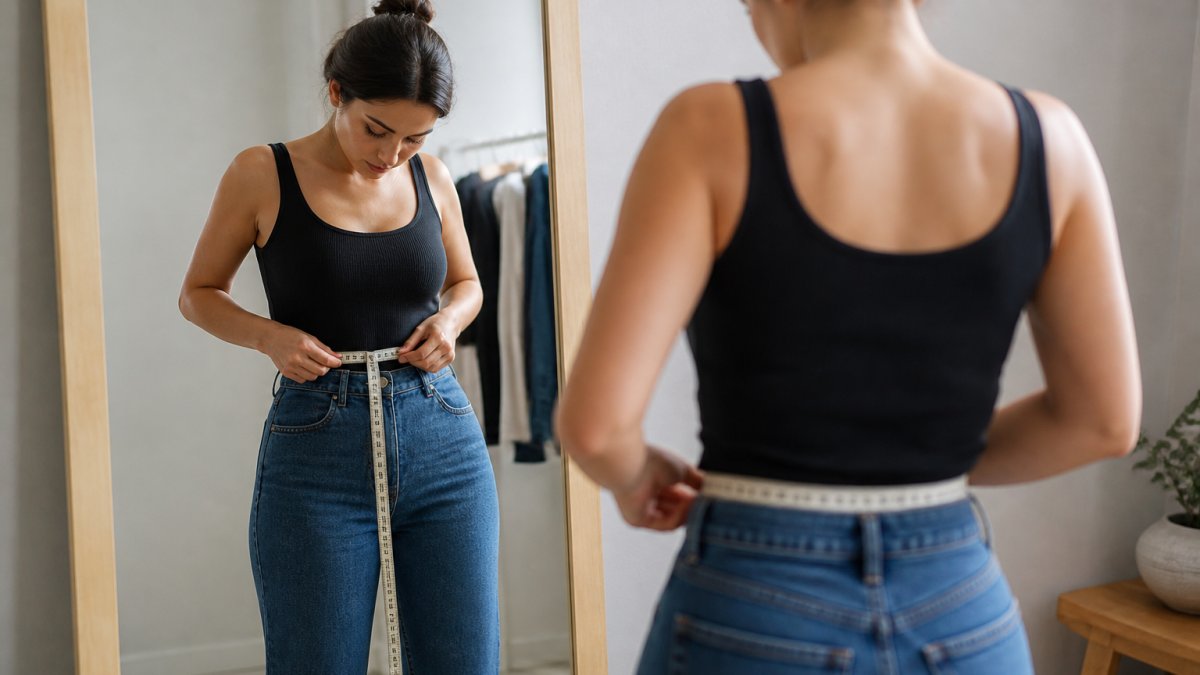
The gap between your waist and hip measurements reveals your proportions: significantly larger hips mean curves, similar numbers mean a rectangular silhouette. This gap is crucial for choosing the right jean cut.
Finding Your Inseam Length
Inseam length determines whether jeans stack awkwardly or hit the right spot on your shoe. Wear flat shoes, stand straight against a wall, and have someone measure from your inner thigh to your ankle bone.
You can also lay a well-fitting pair flat and measure from the crotch seam to the hem for a reliable online-shopping reference.
Understanding Body Shapes and Jeans Fit
Your body shape influences which jean cuts look and feel best. The goal isn't to hide your shape but to balance your proportions.
Pear-Shaped Bodies
Pear-shaped bodies have smaller shoulders and a fuller lower half, with hips and thighs noticeably wider than the waist. Jeans should balance these proportions.
Wide-leg and bootcut styles work well because they don't cling to your thighs, and a high-rise waistband draws attention upward. Avoid skinny and tapered cuts, which emphasize lower-body width.
Look for a structured waistband and minimal stretch around the hip and thigh for support without bulk. Dark washes and solid colors also simplify your silhouette.
Apple-Shaped Bodies
Apple-shaped bodies carry weight in the midsection with slimmer legs and hips. The goal is to support the waist while letting your legs shine.
High-rise jeans with tummy control are ideal: they smooth the midsection and define the waistline. Pair them with straight-leg or bootcut styles to show off thinner legs.
Avoid low-rise jeans and anything too loose at the waist, which adds bulk. Medium to dark washes beat light colors that highlight the midsection, and structured fabrics with gentle compression work best.
Hourglass Figures
Hourglass bodies have balanced curves, a defined waist, and shoulders and hips roughly equal in width. Choose styles that emphasize the waist while accommodating curves.
Mid-rise and high-rise both work for hourglass shapes as long as the waist sits at your true waist. Bootcut and straight-leg styles complement these proportions nicely.
Avoid loose or baggy cuts that hide your shape. Fabrics with some stretch hug curves without restriction, letting your natural proportions shine.
Rectangle and Straight Body Shapes
Rectangle body types have similar waist, hip, and shoulder measurements, with a straight silhouette and minimal curves. Jeans can create the appearance of more definition.
Bootcut and flared styles add volume at the hip and thigh, creating the illusion of curves, while high-rise waistbands define the waist. Avoid straight-leg styles, which can look boxy.
Horizontal stripes, light washes, and textured fabrics add dimension, while cuffed hems and cropped lengths break up the straight line of your silhouette.
How Jeans Should Fit at the Waist and Hips
Waist and hip fit determines whether jeans are comfortable and flattering, and where most fit problems start.
Jeans should sit at your natural waist without gapping or pinching. When buttoned, one finger should fit between the waistband and your body, more space means too loose, less means too tight.
At the hips, jeans should follow your shape without pulling or bunching. Horizontal wrinkles mean too tight; pooling fabric means too loose. The fabric should skim without clinging or floating.
When you sit, the waistband shouldn't dig in or create a muffin top. High-waisted styles with tummy control distribute pressure evenly and smooth the midsection without restriction.
Choosing Rise and Leg Shape for Your Silhouette
Rise and leg shape are the two biggest style choices you'll make. They determine whether jeans balance your proportions or emphasize areas you'd rather downplay.
High-Rise Jeans for Tummy Control and Proportion Balance
High-rise jeans sit 2-3 inches above your natural waist, creating a longer leg line and drawing attention upward so legs appear longer and leaner.
For apple and pear shapes, high-rise is best: the extra coverage provides tummy control and visual balance. It also suits petite frames because it doesn't shorten proportions the way mid-rise can.
High-rise jeans pair well with crop tops, tucked shirts, and fitted tops that highlight the waistline, and work for casual or professional settings.
Straight-Leg vs. Bootcut Jeans
Straight-leg jeans have a consistent width from knee to hem, suit most body types, and pair easily with any shoe.
Bootcut jeans taper slightly from knee to hem, creating a subtle flare that balances hip width for pear and hourglass bodies and elongates the leg line.
For rectangles, bootcut creates curves; for apple shapes, straight-leg keeps focus on the legs rather than adding hip volume.
Wide-Leg and Flared Options
Wide-leg jeans have volume from hip to hem for a relaxed, vintage-inspired silhouette, and work beautifully for pear shapes because the extra fabric balances a fuller lower half.

Flared jeans taper at the knee then widen to the hem, flattering most body types and especially petite frames because the flare starts higher for better proportion.
Both styles move well, suit casual settings, and pair nicely with fitted or tucked tops to balance the volume below.
Best Jeans for a Petite Pear Shape
Petite pear-shaped bodies need jeans that don't overwhelm your frame while still balancing your hip width. This combination requires careful choices.
Look for petite-specific sizing, which shortens both inseam and rise.
Wide-leg styles work for petite pear shapes, but avoid too much volume, which swallows a smaller frame. Bootcut often works better, balancing without overwhelming bulk.
High-rise is still ideal for a longer leg line on a petite frame. Pair it with bootcut or straight-leg in a dark wash to elongate proportions while balancing hip width.
Our high-waisted wide-leg jeans provide the tummy control and hip-lifting effect that flatters pear-shaped bodies while the relaxed vintage-inspired fit keeps you comfortable all day.
Fit Troubleshooting: Common Problems and Solutions
Even with careful measurement, fit problems happen. Here's how to fix the most common issues.
Bunching and Ridging at the Waist
Bunching and ridging at the waist usually means the jeans are too tight in the hip or thigh, so the fabric can't lie flat.
Size up one size and have the waist tailored down if needed, giving hips and thighs room while keeping the waist fitted.
Alternatively, choose fabrics with 2-5% elastane, which move with your body instead of fighting it.
Gapping at the Waistband
Gapping happens when jeans are too loose in the waist but fit everywhere else, leaving a visible gap at the back.
Tailor the waist down: a good tailor can take in 1-2 inches without affecting the overall fit, usually the cheapest fix, taking a week or two.
If you'd rather not tailor, try a belt or a brand with a snugger waistband. High-waisted styles also sit higher, which can reduce gapping.
Thigh Tightness and Pulling
Pulling across the thighs means the jeans are too tight there, showing horizontal wrinkles or restriction when you sit or move.
Size up in the waist and hip for thigh room without pinching; if that creates waist gapping, tailor the waist down.
Choose straight-leg, bootcut, or wide-leg styles, which offer more thigh room than skinny or tapered cuts. Stretch fabrics also feel less restrictive.
Fabric, Stretch, and Long-Term Fit
Fabric affects how jeans fit today and after months of wear. Understanding composition helps you choose denim that lasts.
Cotton is the standard denim fiber: durable, breathable, and softer with washing. Pure cotton has no stretch, so it requires a perfect fit from day one.
Elastane (spandex or Lycra) adds stretch. Most modern jeans contain 2-5%, enough for comfort and recovery, so they feel less restrictive and bounce back after wearing.
The blend matters long-term: 3% elastane balances comfort and durability, while 5%+ feels softer but may lose shape faster with repeated washing.
Wash jeans inside out in cold water and air dry when possible, since dryer heat breaks down elastane over time. These steps keep jeans fitting well for years.
Try-On Checklist and Online Shopping Strategy
Use this checklist when trying on jeans in-store or when they arrive from an online order.
| Fit Element | What to Check | Pass or Fail |
|---|---|---|
| Waist | One finger fits between waistband and body | Pass or Fail |
| Hip | No horizontal wrinkles or pulling | Pass or Fail |
| Thigh | Fabric skims without bunching or pulling | Pass or Fail |
| Rise | Waistband sits at natural waist or hip bone | Pass or Fail |
| Inseam | Hem hits at top of shoe without stacking | Pass or Fail |
| Sit Down | No waistband dig or muffin top | Pass or Fail |
| Movement | Full range of motion without restriction | Pass or Fail |
When shopping online, check the return policy first. Many retailers offer 30-day returns, but some charge return shipping; free returns make trying multiple sizes easier.
Read customer reviews and look for photos of real people wearing the jeans, especially reviewers with your body shape, to see how the style actually fits.
When you find a fit that works, buy multiples in different washes. Once you know your size and style, you can order confidently without trying on.
AVERA7's high-waisted wide-leg jeans come with a 30-day money-back guarantee, so you can try them risk-free.
Finding jeans that fit body type takes measurement, honest assessment, and some trial and error.
Frequently Asked Questions
What type of jeans suits my body?
The best jeans for your body depend on your silhouette and proportions. Pear-shaped bodies benefit from high-waisted styles that balance wider hips. Apple shapes look best in mid-rise or high-rise jeans with structure at the waist. Hourglass figures work well with fitted styles that follow curves. Rectangle shapes gain dimension from wide-leg or bootcut styles. Measure your waist, hips, and inseam first, then try styles that complement your natural proportions rather than fight against them.
How should jeans fit at the waist, hips, and thighs?
Jeans should sit comfortably at your natural waist without gaps or excessive tightness. You should fit one finger inside the waistband when standing. The hip area should skim your body without pulling or bunching. Thighs should have enough room to move freely without pulling fabric tight across the widest part of your leg. If you notice bunching, ridging, or gapping, the rise or cut may not suit your body shape. A proper fit means you can wear your jeans all day without discomfort or visible lines under your clothing.
Is straight-leg or bootcut more flattering?
Straight-leg jeans work well for most body types and create a clean, elongating line from hip to ankle. Bootcut styles add a subtle flare that balances wider thighs and hips, making them flattering for pear and hourglass shapes. Straight-leg suits rectangle and apple shapes by creating visual continuity. Your choice depends on your leg shape and proportions. If you have fuller thighs or hips, bootcut can provide balance. If you prefer a modern, streamlined look, straight-leg offers versatility across body types and styling options.
What makes high-waisted jeans better for tummy control?
High-waisted jeans sit at or above your natural waist, providing structured support that smooths the midsection without bunching or creating ridges. They elongate the leg, balance proportions, and create a lifted effect through the hips and seat. The higher waistband distributes fabric evenly across your midsection rather than concentrating pressure at one point. Quality fabrics with stretch recovery maintain their shape throughout the day. High-waisted styles like AVERA7's High-Waisted Wide Leg Jeans combine this support with a relaxed, comfortable fit so you get a sculpted silhouette without restriction or discomfort.