
Old Navy vs Premium Denim: 2026 Jeans Comparison
Table of Contents
- Price Per Pair: What You Actually Pay at Each Tier
- Denim Weight, Fabric Composition, and Stretch Recovery
- Fit Consistency, Rise Height, and Inseam Accuracy
- Jeans With Tummy Control and Hip Lifting: What Changes at the Premium Level
- Premium High-Waisted Wide-Leg Jeans: Construction, Hardware, and Stitching
- Best Affordable Denim Alternatives That Still Hold Their Shape
- Cost-Per-Wear and Longevity: When Premium Denim Pays Off
- Frequently Asked Questions
Last Updated: September 24, 2026
Price Per Pair: What You Actually Pay at Each Tier
The gap between mass-market denim and premium denim shows up fastest at the register, and it is wider than most shoppers assume. Old Navy sits at the budget end of the market, while premium labels routinely price a single pair in the triple digits. That spread buys real differences in fabric, construction, and how long the jeans survive.
At AVERA7, we offer premium high-waisted wide-leg jeans for $39.99. The table below breaks down what each tier typically delivers.

| Tier | Typical Price Per Pair | Fabric Focus | Expected Lifespan |
|---|---|---|---|
| Budget (Old Navy) | Low | Higher synthetic blends | 1-2 seasons |
| Mid-premium (AVERA7) | $39.99 | Cotton-poly blend, high elasticity | |
| Designer premium | Triple digits | Heavier denim, selvedge options | 3+ seasons |
The Federal Trade Commission's guidance on textile labeling requires brands to disclose fiber content, which is why the tag inside the waistband is the most honest document in the store.
Denim Weight, Fabric Composition, and Stretch Recovery
Denim weight is measured in ounces per square yard, and it determines how a pair drapes, breathes, and holds shape. Most mass-market jeans sit in a light-to-mid range, while premium denim often pushes heavier. The trade-off is real: heavier fabric resists bagging at the knee, but it takes longer to break in.
Fabric composition matters just as much. Elastane content drives stretch recovery, the ability of a jean to snap back after a full day of wear. A common mistake is assuming more stretch equals more comfort. In practice, too much elastane causes sagging by mid-afternoon.
AVERA7's premium high-waisted wide-leg jeans use a cotton and polyester blend with high elasticity, which balances softness against shape retention. That combination is what keeps the silhouette intact from morning meetings through evening errands.
Fit Consistency, Rise Height, and Inseam Accuracy
Fit consistency is where budget denim stumbles most, and the reason is mechanical rather than mysterious. When a brand cuts the same size across dozens of factories, a size 8 in one wash can fit like a size 10 in another. Premium denim brands control this through three levers most shoppers never hear named: pattern grading, block consistency, and shrinkage allowance.
Pattern grading is how a brand scales a single base pattern up and down across sizes. A sloppy grade adds or subtracts the same amount at every size, so the waist-to-hip ratio drifts as sizes get larger. A tight grade adjusts the waist, hip, and thigh independently, which is why a premium size 8 and a premium size 14 both sit correctly on their intended bodies.
Block consistency means the same base block is used across colorways and washes. When a brand switches factories or blocks between a light wash and a black wash, the fit shifts even though the size tag does not. Premium labels lock the block, so a size 8 stays a size 8 across every colorway in the line.
Shrinkage allowance is the fabric buffer built into the cut. Cotton denim relaxes and shrinks with washing, and a brand that does not pre-shrink or compensate will ship a jean that fits in the store and bags out or tightens after the first wash. This is the single most common complaint in budget denim reviews, and it is a cutting-room decision, not a fabric flaw.
Rise height and inseam length then drive how a jean actually sits on the body. High-rise styles anchor at the natural waist, mid-rise lands below the navel, and low-rise sits on the hips. For anyone searching for jeans with tummy control and hip lifting, rise height is the single most important spec, because the rise determines where the sculpting panel and the waistband actually land on the torso.
- High rise: anchors at the natural waist, smooths the midsection, works with tucked shirts
- Mid rise: lands below the navel, casual, pairs with crop tops
- Low rise: sits on the hips, trend-driven, less forgiving on the waistline
Inseam accuracy is the second half of the fit equation, and it is where online ordering most often goes wrong. A 30-inch inseam and a 32-inch inseam can look completely different on the same frame, and the difference is not just length at the hem. A longer inseam stacks at the ankle and changes the break of the leg line, which reads as a different silhouette even though the waist and hip are identical. Measure a pair you already own from the crotch seam to the hem, then match that number to the size chart rather than guessing from your height.
Jeans With Tummy Control and Hip Lifting: What Changes at the Premium Level
Tummy control and hip lifting come from pattern engineering, not from squeezing the body. Premium denim brands achieve this through panel placement, fabric recovery, and strategic seaming. Budget options often rely on stiff fabric that bunches and creates a ridge under a shirt, which is the exact complaint shoppers raise most often.
AVERA7 addresses this with a high-waisted design that provides tummy control and a hip-lifting effect that enhances curves. The relaxed, vintage-inspired wide-leg cut balances the sculpting effect so the leg line stays clean rather than compressed.
Premium High-Waisted Wide-Leg Jeans: Construction, Hardware, and Stitching
Construction quality separates jeans that survive two years from jeans that survive five, and the difference lives in four specific places you can inspect in under a minute. Most guides tell you to 'look for quality' without naming what to look at. Here is the actual checklist.
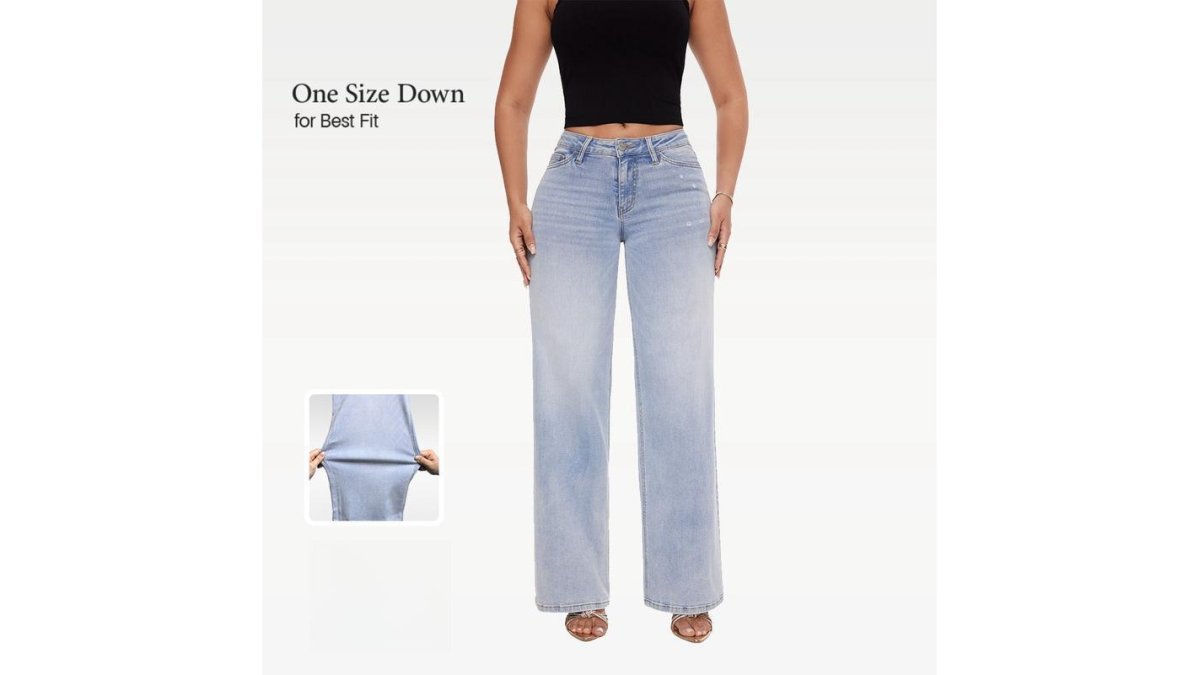
1. Stress-point reinforcement. The highest-failure zones on any jean are the pocket corners, the belt loops, the fly base, and the crotch seam. Quality construction bar-tacks these points, meaning a dense zigzag stitch locks the fabric so a tear cannot propagate. Cheaper denim skips the bar-tack and relies on a single straight stitch, which is why pocket corners are the first thing to blow out on a budget pair. Turn the jean inside out and look for the dense stitched rectangle at each pocket corner.
2. Hardware weight and finish. A zipper and button are the two metal parts that fail first.
Best Affordable Denim Alternatives That Still Hold Their Shape
Affordable denim alternatives work when they prioritize fabric recovery over trend chasing. The best affordable denim alternatives share three traits: a cotton-forward blend, reinforced stitching, and a rise that matches your body rather than the season's runway.
- Check the elastane percentage on the tag
- Squeeze the fabric and watch how fast it springs back
- Look for bar-tacked stress points
- Confirm the return window before ordering
Cost-Per-Wear and Longevity: When Premium Denim Pays Off
Cost-per-wear is the price of a garment divided by the number of times you actually wear it. A budget pair worn twice a week for one season can cost more per wear than a premium pair worn twice a week for three years. That math is why garment longevity matters more than sticker price.
| Factor | Budget Denim | Premium Denim |
|---|---|---|
| Wash durability | Fades faster | Retains color longer |
| Shrinkage | Higher risk | Controlled |
| Cost-per-wear | Rises quickly | Falls over time |
Frequently Asked Questions
Is there a noticeable difference in denim quality between budget and premium brands?
Yes, and it shows up in specific ways. Premium denim typically uses heavier fabric (12-14 oz versus 8-10 oz at budget tier), higher cotton content with less synthetic filler, and reinforced stitching at stress points. The elastane percentage matters too: premium brands often use 1-2% elastane for gentle stretch that recovers, while budget pairs sometimes push 3-5% for a stretchier feel that sags by afternoon. These differences affect how the jeans fit after 20 wash cycles, not just on day one.
What features should you look for in premium high-waisted wide-leg jeans?
Focus on four things: fabric weight (heavier denim holds its shape longer), elastane content (1-2% is the sweet spot for stretch recovery without sagging), rise height (10-12 inches for true high-waist coverage), and construction details like bar-tacked stress points and clean interior seams. A pair with tummy control and hip lifting should distribute compression evenly across the front panel rather than bunching at the waistband. Check the return policy before ordering online since fit varies by body type.
Are premium denim brands more durable than mass-market options?
In most cases, yes, but the gap depends on how you wash and wear them. Heavier fabric, tighter weave density, and reinforced stitching all extend garment life. Cold washing and air drying extend the lifespan of jeans.
How do fit and silhouette differ between Old Navy and boutique denim brands?
Old Navy sizes tend to run more generously through the hip and thigh, with a straighter leg profile. Boutique and premium brands often cut for a closer hip fit with more intentional leg drape, especially in wide-leg styles. Rise height is another difference: many premium high-waisted styles sit 1-2 inches higher than mass-market equivalents, which changes where the waistband lands and how tummy control panels function. Always check the brand's specific fit guide and measure your inseam before ordering.
The real challenge is finding denim that holds its shape, flatters your silhouette, and does not require replacing every season. AVERA7 builds premium high-waisted wide-leg jeans with tummy control, a hip-lifting effect, and all-day soft comfort in eight versatile colors, backed by a 4.8 out of 5 rating and a 30-day money-back guarantee. Get started with AVERA7 and build a wardrobe staple that earns its cost-per-wear.