
7 Steps to Wash Vintage Denim and Keep Its Fit
Quick Summary
To wash vintage denim and keep its fit, wash it as little as possible, inside out, in cold water with a mild detergent on a gentle cycle, and then air dry it flat after reshaping it by hand. Avoid hot water, bleach and the dryer, since they can shrink or stretch aged cotton permanently.
- Levi Strauss & Co. suggests washing jeans no more than once every 10 wears.
- Turn jeans inside out, close the zipper and button, then wash on a gentle cycle.
- Use cold water and a mild detergent with no bleach or strong enhancers.
- Never put vintage denim in the dryer; the heat and tumbling distort the fit.
- Lay jeans flat and reshape the waistband and legs before they dry.
Table of Contents
- Why Vintage Denim Needs Gentler Care Than Modern Jeans
- How Often to Wash Vintage Denim to Protect the Fit
- Step 1: Prepare Your Vintage Jeans Before Washing
- Step 2: Choose the Best Detergent for Vintage Denim
- Step 3: Wash Inside Out on a Gentle Cycle
- Step 4: Dry Vintage Denim Without Losing Its Shape
- How to Remove Odors from Vintage Denim Without Washing
- Booking Your Next Pair: Finding a Fit That Holds Up Over Time
- Frequently Asked Questions
Last Updated: November 4, 2026
Vintage denim is worth protecting, and most of the damage comes from washing it too often or too hard. Learning how to wash vintage denim to maintain fit starts with understanding that old jeans need gentler care than modern ones. Shoppers often ask how to clean denim without stretching it out or fading it unevenly.
The short answer is to wash less, wash inside out, use cold water and a mild detergent, and air dry flat. Levi Strauss & Co. recommends washing jeans no more than once every 10 wears to help them keep their fit and prevent excess "rebound" (Levi Strauss & Co. Definitive Denim Care Guide). The steps below walk through that process from start to finish.
Why Vintage Denim Needs Gentler Care Than Modern Jeans
Vintage denim is not just older fabric, it is structurally different from most jeans sold today. Understanding those differences explains why a wash that leaves modern jeans unfazed can permanently alter the fit of a vintage pair.
Most vintage jeans were woven from 100% cotton denim with no elastane or stretch fibers. Without stretch, the fabric has no built-in recovery mechanism. When cotton fibers are exposed to heat and agitation, they can shrink, and when they are stretched while wet, they stay stretched. Vintage pairs lack that safety net.
Fiber age matters too. Decades of wear and repeated washing thin the cotton yarns, especially at stress points like the waistband, seat, and thighs. Thinner yarns break down faster under mechanical action, and they are more susceptible to uneven shrinkage. A hot wash or a long tumble cycle can cause the waistband to contract while the legs remain loose, or vice versa, producing a distorted fit that cannot be reversed.
The type of vintage wash also dictates how much care the denim needs. Dark indigo and raw denim hold their shape better but are prone to crocking (color transfer) and uneven fading if washed aggressively. Light-wash and stonewashed vintage jeans have already been mechanically or chemically distressed, so their fibers are weaker and more prone to further thinning and stretching. Distressed pairs with rips or frayed areas are the most fragile, every wash cycle enlarges existing damage and can cause new tears at thin spots.
- 100% cotton vintage denim has no stretch recovery, so wet stretching becomes permanent
- Aged fibers at the waistband and seat are the first to distort under heat and agitation
- Dark washes risk uneven fading; light and distressed washes risk fiber breakage and tear enlargement
- Spot cleaning and airing out preserve fit far better than full immersion
Watch out: Assuming a gentle cycle is safe for all vintage denim ignores that distressed and light-wash pairs may need spot cleaning only, because even cold water can weaken already-compromised fibers.
How Often to Wash Vintage Denim to Protect the Fit
Washing less is the single biggest thing you can do for fit. Levi Strauss & Co. suggests washing jeans once every 10 wears at most, which helps them hold their shape (Levi Strauss & Co. care guidance).
A common approach is to wear jeans several times between washes. Spot clean stains in between, and air out the fabric after each wear.
Watch out: Washing vintage denim after every wear is the most common way to lose the fit you bought them for.
Washing less often is the biggest single change for keeping vintage denim's fit, as the guidance below shows.
| Factor | Guidance | Why it matters |
|---|---|---|
| Wash frequency | Once every 10 wears at most | Helps jeans keep their shape |
| Between washes | Spot clean stains and air out | Avoids unnecessary full washes |
| Washing after every wear | Not recommended | The most common way fit is lost |
Step 1: Prepare Your Vintage Jeans Before Washing
Before the jeans go near water, check them over. Look for loose threads, small holes and weak seams. Turn the pockets out and remove anything left inside.
Next, treat any stains. Use a damp cloth or an old soft toothbrush with a drop of mild soap, as the Levi Strauss & Co. guide suggests (Levi Strauss & Co. Definitive Denim Care Guide). Work gently and avoid scrubbing hard.
- Check for weak spots and loose seams
- Empty every pocket
- Spot treat stains with mild soap and a soft brush
Step 2: Choose the Best Detergent for Vintage Denim
Pick a mild, gentle detergent with no bleach and no strong enhancers. Harsh formulas strip color and weaken old cotton fibers faster than regular use would.
Liquid detergents designed for delicates or dark colors tend to work well. Use only the small amount the label recommends, since extra soap can leave residue that stiffens the fabric.
Watch out: Bleach and brightening products can fade indigo unevenly and weaken aged fabric.
Step 3: Wash Inside Out on a Gentle Cycle
Turn the jeans inside out to protect the outer surface from friction. Wash them on a gentle or delicate cycle with cold water. Hot water causes shrinkage and faster fading.
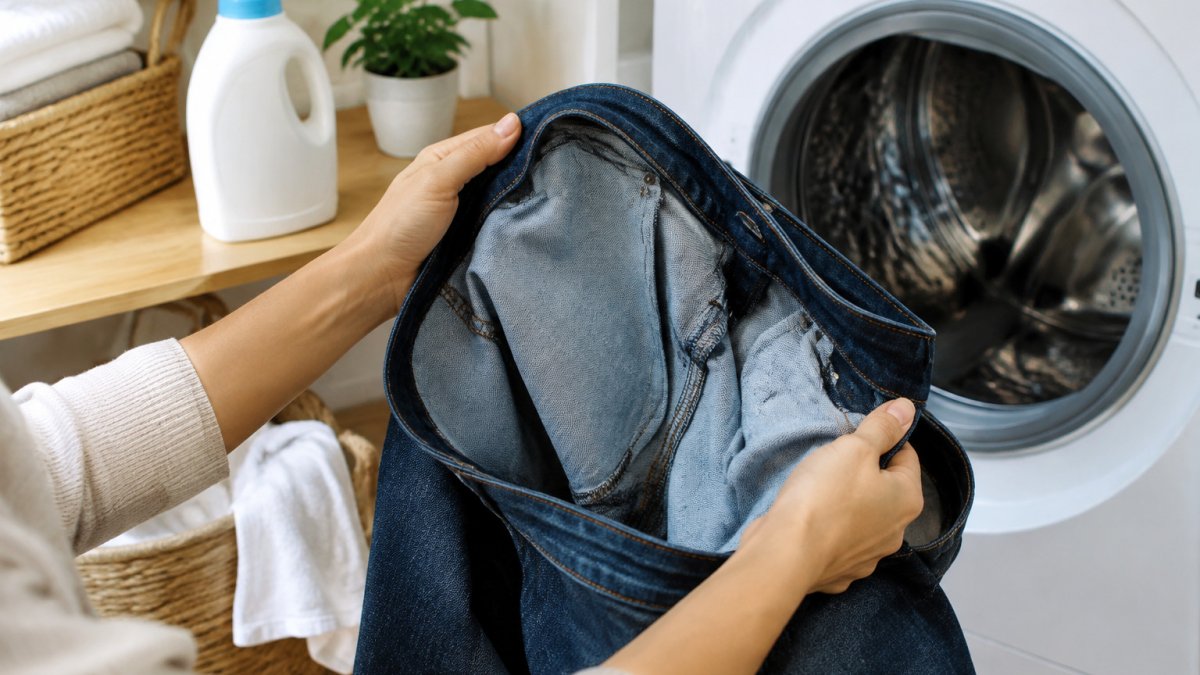
Close the zipper and fasten the button so the jeans keep their shape during the cycle. Wash them with similar dark colors, not with towels or heavy fabrics that create friction.
- Inside out, zipped and buttoned
- Cold water, gentle cycle
- Wash with dark or similar fabrics only
Step 4: Dry Vintage Denim Without Losing Its Shape
Drying is where fit is most often lost. Wet denim is heavier and more pliable than dry denim, so how you support it during drying determines whether the waistband, seat, and legs return to their original dimensions or stretch out permanently.
Never put vintage denim in a dryer. The heat alone can shrink cotton fibers unevenly, and the tumbling action agitates wet fabric in ways that stretch and distort it. Even a low-heat cycle exposes the jeans to repeated friction and heat that aged fibers cannot tolerate.
The safest method is to lay the jeans flat on a clean, dry towel or a mesh drying rack. Before laying them down, gently reshape them by hand: smooth the waistband back to its original circumference, flatten the seams, and arrange the legs so they are straight and untwisted. This step matters because wet cotton will dry in whatever shape it is left in. If the waistband is bunched or the legs are folded, the jeans will dry with creases and uneven dimensions.
Avoid hanging vintage denim by the waistband while wet. The weight of the wet fabric, often two to three pounds, pulls down on the waistband and can stretch it permanently. If you must hang them, drape them over a padded hanger or a wide bar so the weight is distributed across the entire waist and seat rather than concentrated at the center back. Better yet, hang them by the belt loops on a line with clothespins, which distributes weight more evenly than a single hanger point.
Air circulation and humidity control affect drying time and therefore fit. Dry the jeans in a room with good airflow, near an open window or a fan, but away from direct sunlight, which can fade indigo unevenly. High humidity slows drying and leaves the fabric damp longer, increasing the window during which the jeans can stretch under their own weight. A dehumidifier or a well-ventilated space shortens that window.
- Lay flat and reshape by hand before drying to lock in the original fit
- Never hang wet vintage denim by the waistband, use a padded bar or belt loops
- Keep out of direct sun and dry in a well-ventilated, low-humidity space
- Turn the jeans inside out while drying to protect the outer surface from fading
Watch out: Leaving wet jeans folded or bunched on a towel overnight can cause mildew and set permanent creases that alter the fit, so check them after a few hours and reposition if needed.
How to Remove Odors from Vintage Denim Without Washing
Sometimes the jeans only smell and do not need a full wash. Hang them outside or in a breezy room for a few hours to let the fabric air out.
For light odors, a fabric refresher spray works well. Mist the inside of the jeans lightly and let them dry completely before wearing. Avoid soaking the fabric, since that brings back the same wear you are trying to avoid.
Booking Your Next Pair: Finding a Fit That Holds Up Over Time
When it is time to replace a worn-out pair, look for denim built to keep its shape. AVERA7 offers high-waisted wide-leg jeans with a relaxed, vintage-inspired fit and built-in tummy control. Explore the product to see its silhouette, hip-lifting cut and fit details.

Browse our current collection to find the cut and color that suit your wardrobe. For current prices and availability, visit the AVERA7 website.
Frequently Asked Questions
How often should you wash vintage denim?
Washing jeans no more than once every several wears helps maintain their fit. Spot clean stains between washes with a damp cloth or an old toothbrush and a mild soap. Washing less often also keeps the fades and character of older denim intact, since frequent washing softens contrast and can change the look you are trying to preserve.
Does washing vintage denim shrink it?
It can. Vintage denim is often unsanforized or only lightly pre-shrunk, so hot water and high-heat drying cause the fabric to contract. Wash in cold or lukewarm water on a gentle cycle, and air dry flat or on a hanger away from direct heat. Measure the waist and inseam before and after the first wash so you can catch any change early.
Should you hand wash or machine wash vintage denim?
Hand washing gives the most control, especially for fragile or heavily worn pairs, because you can work only on the areas that need it. A machine on a gentle cycle, with the jeans inside out and zipped, works well for sturdier pairs. Either way, avoid agitation and spin speeds that stretch the waistband and seams over time.
Can you use fabric softener on vintage denim?
It is best to skip fabric softener. Softeners coat the cotton fibers and can reduce friction-based fading, and they may leave residue that affects how the fabric feels and dries. A small amount of mild detergent is all vintage denim needs to stay clean and keep its shape.
