
Choosing Activewear for Your Body Type: A Complete Guide
Quick Summary
Choosing activewear for body type starts with noting where your proportions are most and least defined, then checking fit at the waistband, rise, and seams. Shape charts are only a rough guide, so test how a garment moves with you before committing.
- Stand in fitted clothing or a side photo to see where your curves are most and least defined.
- Size for snug fit that follows your shape, not the smallest size you can squeeze into.
- Squat-proof leggings stay opaque when stretched; check by pulling the fabric taut over your thigh.
- Run a movement test in the fitting room: squat, bend, reach overhead, and walk a few steps.
- Wash activewear in cold water and skip fabric softener, which reduces wicking.
Table of Contents
- How to Identify Your Body Shape Before You Shop
- How Should Workout Clothes Fit?
- How to Choose Leggings for Your Body Type
- Choosing Tops and Sports Bras That Fit Your Proportions
- Fabric, Compression, and Activity-Specific Support
- Measuring Yourself and Testing Fit at Home
- Booking Your Next Fit Check: Start With the AVERA7 Butt-Lifting Yoga Pants
- Frequently Asked Questions
How to Identify Your Body Shape Before You Shop
Your body shape is a starting point, not a verdict, so when you shop for activewear for body type, treat the category as a guide rather than a rule.
Stand in front of a mirror in fitted clothing, or take a photo from the side. Look at your shoulders, bust, waist, hips, and thighs.
Body shape charts are a shorthand, and no chart captures every body. Two people in the same category can need very different leggings.
How Should Workout Clothes Fit?
Activewear for body type should fit snugly without restricting you, so the fabric follows your shape standing and moving alike.
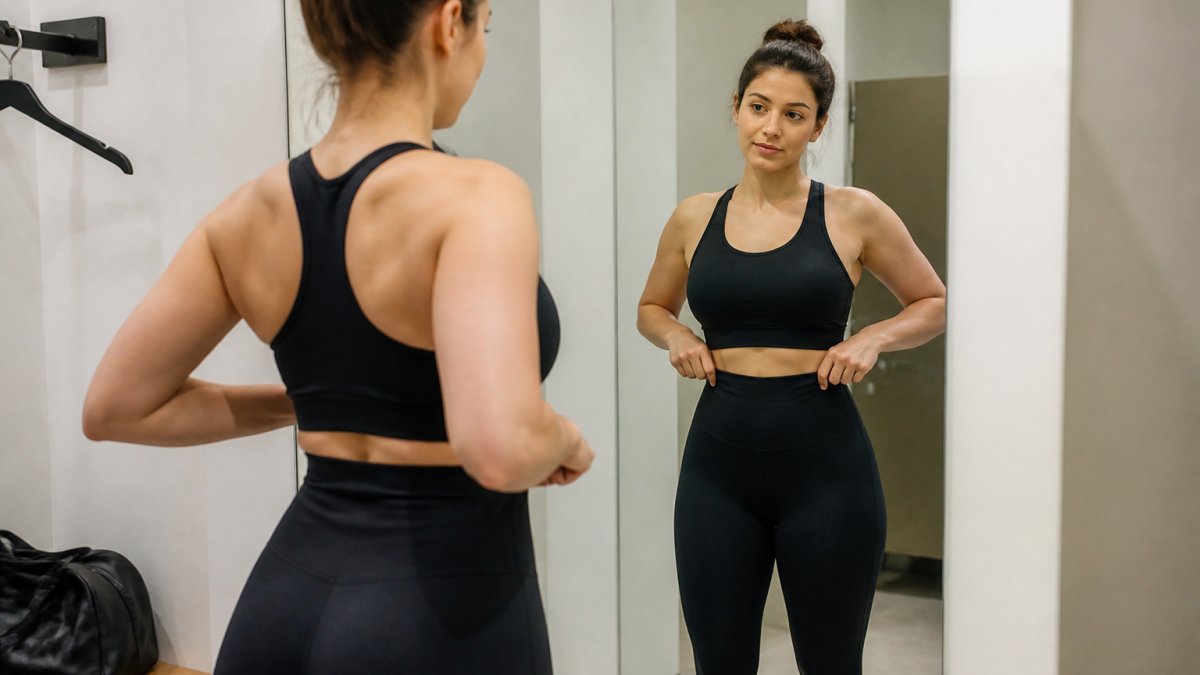
A common mistake is choosing a size based on the smallest number you can squeeze into.
Run a simple movement test in the fitting room. Squat fully, bend forward, raise your arms overhead, and walk a few steps. The garment should move with you, the waistband should stay put, and nothing should ride up, gap, or sag.
How to Choose Leggings for Your Body Type
Choose leggings by checking three things: the waistband, the rise, and the fabric's opacity under stretch. For a curated guide to the best yoga pants options, compare how each style is built around your shape. Body type affects all three, but the fit details matter more than the category label.
Waistband Rise, Support, and Stay-Put Fit
Rise is the distance from the crotch seam to the top of the waistband. A higher rise typically covers the midsection and keeps the waistband in place, while a lower rise can sit under the bust or below the navel and may roll down during squats. Test the waistband by bending forward and sitting down. If it rolls, slides, or pinches, look for a wider band or a different rise.
Squat-Proof Leggings: How to Check Before You Buy
Squat-proof leggings stay opaque when stretched. Check this by pulling the fabric taut over your thigh or by squatting in front of a mirror with light behind you. If you can see the skin or the outline of your underwear, the fabric is too thin for deep movement. Heavier knits and tightly woven fabrics generally perform better here than thin, shiny materials.
Choosing Tops and Sports Bras That Fit Your Proportions
Tops and sports bras should match your bust and torso length as closely as your bottoms match your hips. For ideas on styling leggings for everyday outfits, pair them with tops that share the same proportions.
For sports bras, fit comes down to the band and cup. The band should be snug enough to stay level when you raise your arms, and the cups should hold your shape without spilling or gapping.
Fabric, Compression, and Activity-Specific Support
Fabric is the single biggest predictor of whether activewear feels supportive or fights you mid-workout.
Moisture management. A wicking finish moves sweat to the fabric surface where it evaporates.
Opacity under tension. Squat-proofness is a function of fabric weight (measured in grams per square meter, or GSM) and knit density, not color alone.
Seam construction. Flatlock and bonded seams lie flatter against the skin and reduce chafing compared with standard overlock seams, which is why they show up in higher-end training tights.
Compression Levels by Activity
Compression is a spectrum, not a yes/no. Think of it in three practical tiers:
- Light compression (soft, four-way stretch, low spandex): best for yoga, pilates, walking, and recovery days. Prioritizes range of motion and breathability.
- Medium compression (moderate spandex, structured waistband): the everyday training tier for strength work, cycling, and general gym sessions. Balances support with comfort.
- High compression (firm knit, high spandex, often seamless or paneled): best for running, HIIT, and plyometrics, where reducing muscle oscillation and bounce matters. High compression is not automatically better, if it restricts breathing or leaves pressure marks, it is too firm for your activity.
Match the Garment to How You Actually Move
| Activity | Fit priority | Fabric priority | What to test |
|---|---|---|---|
| Running | Stay-put waistband, no ride-up | High compression, wicking, flat seams | 30-second jog in place; check waistband and inner-thigh seams |
| Strength training | Full squat coverage, unrestricted hips | Medium compression, high opacity | Deep squat and lunge; check for show-through and waistband roll |
| Yoga and pilates | Full range of motion, no dig | Light compression, soft hand-feel, breathable | Forward fold, twist, and overhead reach |
| Low-impact / walking | Comfort over support | Breathable, lighter weight | Walk and sit; check for bunching at the knee |
If you train across several modalities, buy for your most demanding activity and size for comfort in the rest. A high-compression running tight will feel restrictive in yoga; a soft yoga legging will roll and shift during sprints. Owning one pair per tier is more practical than expecting one garment to do everything.
Measuring Yourself and Testing Fit at Home
Measuring your bust, waist, and hips is a starting point. A repeatable process and a movement test can help you judge how a waistband or seam will behave before you commit.
A Repeatable Measurement Process
Use a soft tape measure and wear fitted clothing or underwear. Keep the tape level around your body and snug without compressing the skin. Measure twice and average the two readings.
- Bust: around the fullest part of the chest, tape parallel to the floor.
- Underbust: directly under the bust, snug, this is the number that determines sports bra band size.
- Natural waist: the narrowest point of the torso, usually just above the navel.
- High hip: about 3 inches below the natural waist, across the top of the hip bones.
- Full hip: around the fullest part of the seat.
- Inseam: from the crotch seam to the desired hem, measured on a pair of pants that already fit you well.
- Torso length: from the shoulder seam to the natural waist, this predicts whether a top will stay tucked or ride up.
Write these numbers down and compare them to each brand's own size chart, not to a generic size conversion. Cuts vary enough between brands that a medium in one label can match a large in another.
The Five-Minute Movement Test
Try garments on with the tags on and run this sequence in front of a mirror:
- Deep squat (10 reps): watch the waistband for roll-down and the seat for show-through.
- Forward fold: check whether the waistband gaps away from your lower back.
- Overhead reach: confirm the top hem stays down and shoulder seams stay on your shoulders.
Check the Return Policy Before You Order
Fit testing only works if you can return what does not pass. Before ordering, confirm the return window and terms for the brand you are buying from. Keep tags attached and try garments on over your own underwear until you have decided.
Booking Your Next Fit Check: Start With the AVERA7 Butt-Lifting Yoga Pants
If you want a pair to test these fit principles on, the AVERA7 Butt-Lifting Yoga Pants are built around a high waistband, contoured seaming, and a four-way stretch fabric. The listing describes them as a 90% nylon, 10% spandex blend, sized from S to XXL with a true-to-size, snug fit. Run the squat and waistband tests above when they arrive, and size up if you prefer a looser feel.

Frequently Asked Questions
How do I choose activewear for my body type?
Start by noting where you carry your weight and how your proportions sit, then shop for fit rather than a label. Look for a waistband that stays put without digging in, leggings that cover the seat and thighs without gaping, and tops that sit smoothly over the bust and midsection. Try pieces on and move through squats, lunges and reaches in a mirror. Fit and fabric matter more than any body-shape category, so choose what feels secure, comfortable and supportive for the workouts you actually do.
What activewear is most flattering for different body shapes?
Flattering activewear depends on fit more than cut. High-rise leggings with a smooth, non-rolling waistband suit most body shapes, while fitted tops that finish at the hip can balance proportions for people who prefer a defined silhouette. Some people prefer looser tops for coverage and comfort, which is equally valid. Choose pieces that support your movement and make you feel confident, and avoid buying a style only because it is labeled for a specific body type.
How should workout clothes fit?
Workout clothes should fit snugly enough to move with you without restricting motion or sliding out of place. Leggings should sit comfortably at the waist without rolling, stay in place through squats and lunges, and have no pinching at the seams. Tops should not ride up when you raise your arms. Sports bras should feel supportive with a firm band, straps that do not dig in, and cups that contain movement without causing discomfort. If you are between sizes, consider the activity and try the item in motion before deciding.
How can I tell if leggings are squat-proof?
Check the fabric opacity by stretching the material over your hand or a light source; if you can see through it, it is not squat-proof. Look for dense, opaque knits and a fabric blend with enough stretch and recovery to hold its shape. In a fitting room, perform several deep squats and bends while facing a mirror and in natural light. If the fabric stays opaque and the seat remains covered, the leggings are a good choice for active wear.
Should I size up or down in workout clothes?
Compression-style activewear is usually designed to fit snugly, so many shoppers stay true to their normal size. If you prefer a looser feel or fall between sizes, sizing up may be more comfortable, though it can reduce support. Check the size chart for your weight and measurements, and read the product fit notes. For the AVERA7 Butt-Lifting Yoga Pants, the listing describes a true-to-size, snug fit, and recommends sizing up for a looser feel or if you are between sizes.
How do I choose a sports bra that fits properly?
A properly fitting sports bra has a firm band that sits level around your ribcage, cups that fully contain breast tissue without spillage, and straps that stay in place without digging. Test the bra by raising your arms, jumping and bending forward. Choose the level of support based on your activity, since high-impact workouts need more structure than yoga. If the band rides up or the straps slide, try a different size or style rather than tightening them excessively.
What should I look for in comfortable, supportive activewear?
Look for fabrics that breathe and wick moisture, such as nylon-spandex blends with four-way stretch, which allow movement without restriction. Flat, well-placed seams reduce chafing, and a wide waistband distributes pressure more comfortably than a narrow elastic band. For support, prioritize a fit that holds your shape during movement. Care instructions also matter: cold washing and low-heat drying help fabric elasticity last longer and keep compression consistent over time.
How do I measure myself to choose activewear sizes?
Use a flexible tape measure to record your bust, waist, and hips, keeping the tape level and snug but not tight. Compare these numbers to the brand's size chart rather than relying on your usual size label. Measurements are especially useful for online orders, where you cannot try items on. Repeat the measurements if your body changes, since fit preferences shift over time. Use the size chart alongside the weight range provided in the product listing for a more accurate match.
