
Choosing Professional Denim Fabrics for All-Day Comfort
Table of Contents
- Why Denim Fabric Choice Decides All-Day Comfort
- Denim Weight Guide: Ounces per Square Yard Explained
- Stretch Denim vs Rigid Denim: What Each Does to Fit and Feel
- How Much Stretch Should Jeans Have for Work and Daily Wear?
- Fiber Composition, Weave, and What They Mean for Softness
- A Practical All-Day Comfort Testing Protocol
- Comfortable Jeans for Work: Breathability, Seams, and Shape Retention
- Conclusion
- Frequently Asked Questions
Last Updated: October 17, 2026
Why Denim Fabric Choice Decides All-Day Comfort
Denim fabrics are the cotton twill textiles jeans are cut from, and their weight, fiber blend, and weave decide whether you can wear a pair for ten hours or want them off by noon.
Comfort is not softness: a buttery-soft pair can still bag, twist, and dig in by mid-afternoon. Real comfort comes from four measurable traits: fabric weight, stretch recovery, breathability, and seam construction.
The American Society for Testing and Materials standards for textile testing define how mills measure these traits, which is why spec sheets matter more than marketing copy.
Denim Weight Guide: Ounces per Square Yard Explained
Fabric weight is measured in ounces per square yard (oz/yd²) and tells you how thick, warm, and stiff a denim will feel. Most jeans sit between 8 and 15 oz. The number refers to the fabric before washing, so a 12 oz denim may soften after a wash cycle. Weight is the best predictor of how a pair behaves across a ten-hour day, because it drives warmth, drape, and how the fabric resists or follows movement.
Lightweight, Midweight, and Heavyweight Ranges
- Lightweight denim (under 10 oz): Drapes easily, breathes well, feels softest on day one. Best for warm weather and desk jobs.
- Midweight denim (10 to 13 oz): The everyday sweet spot. Holds shape without stiffness and works across seasons.
- Heavyweight denim (14 oz and up): Durable and structured, with strong shape retention. Takes weeks to break in and runs warm.
For all-day wear, midweight is the safest bet: enough body to hold a silhouette and enough flexibility to sit, drive, and climb stairs. Lightweight wins in summer heat; heavyweight suits cool weather and rigid, vintage looks.
Matching Weight to Climate, Activity, and Wear Duration
Weight only works in context. A 14 oz denim that feels heroic on a cool morning becomes a liability in a heated office by 2 p.m., while a 9 oz pair that breathes on a commute can bag at the knees during a long desk session.
| Wear scenario | Recommended weight | Why it works | Watch out for |
|---|---|---|---|
| Climate-controlled office, 8-10 hours seated | 10-12 oz | Enough structure to resist knee bagging; breathes under desk heat | Below 10 oz can sag at the seat by afternoon |
| Warm climate or summer commute | 8-10 oz | Maximum airflow and drape; less heat retention | Lighter twill recovers more slowly after long sits |
| Cool climate or winter wear | 12-14 oz | Traps warmth, holds shape, layers over base pieces | Stiffer break-in; runs warm indoors |
| Standing or moving all day (retail, travel, site visits) | 11-13 oz | Balances flexibility with abrasion resistance | Too much stretch plus light weight equals sag |
| Travel and long-haul sitting | 10-12 oz with 1-2% elastane | Moves with hips and knees; recovers between legs of a trip | High-stretch lightweight fabrics bag fastest |
| Rigid, vintage look with strong fades | 13-15 oz | Develops character and holds creases | Needs a genuine break-in period; less forgiving on day one |
Two rules of thumb: if you sit most of the day, favor the middle of the midweight band and modest stretch so the fabric springs back after compression.
A final check: ask whether the weight is listed before or after wash. A 12 oz raw denim may feel closer to 10-11 oz after a wash, so compare like with like across brands.
Stretch Denim vs Rigid Denim: What Each Does to Fit and Feel
Stretch denim contains elastane or spandex blended into the cotton; rigid denim is 100% cotton with no elastic fiber. The difference shows in how each moves with you and ages.
Rigid denim molds to your body and develops unique fades, but starts stiff and can feel restrictive at a desk. Stretch denim bends with hips and knees immediately, which is why it dominates workwear and travel wardrobes. The trade-off is recovery: cheap stretch denim sags at the knees and seat by day's end.
[AVERA7's High-Waisted Wide Leg Jeans](https://avera7.com/products/high-waisted-wide-leg-jeans) use a cotton and polyester blend with high elasticity, so the fabric flexes through a full workday while the high waist holds its shape.

How Much Stretch Should Jeans Have for Work and Daily Wear?
The right amount of stretch for work jeans is 1 to 3 percent elastane. Below 1 percent, denim feels rigid and needs a break-in; above 3 percent, it behaves like knitwear and recovers poorly after long sitting.
Two percent is the practical middle: enough flexibility for stairs, commutes, and long meetings without the bagging that plagues high-stretch denim.
Also check the fabric's stretch recovery. A simple test: stretch a small section of the waistband or thigh, hold it for five seconds, and release. Good denim snaps back flat. Poor denim stays slightly stretched, which is exactly what happens to the seat of your jeans by 5 p.m.
Fiber Composition, Weave, and What They Mean for Softness
Fiber composition and weave determine hand feel, breathability, and how the fabric wears over months. Cotton provides breathability and structure, polyester adds durability and shape retention, and elastane supplies stretch. The twill weave's diagonal ribs give denim its strength and familiar texture.
Reading Cotton Blends and Elastane Percentages
- 100% cotton: Breathable, durable, zero stretch. Best for rigid, vintage-style fits.
- Cotton-polyester blend: Softer hand feel, better shape retention, less wrinkling. A common choice for all-day comfort.
- Cotton with 1 to 3 percent elastane: Flexible and forgiving, ideal for work and travel.
- High polyester content: Durable but less breathable, which matters in warm rooms.
Weave density matters too. Tighter twill resists abrasion and holds color, while looser weaves feel lighter and breathe better. For daily wear, a medium-density twill in a cotton-poly blend balances softness, durability, and airflow. The Cotton Incorporated's fiber and fabric research explains how these blends affect softness and wear.
A Practical All-Day Comfort Testing Protocol
Test jeans the way you'll actually wear them, not the way a fitting room allows. This one-day protocol reveals more than any mirror check.
Total time: One workday (about 8 hours) What you need: The jeans, a timer, and a notebook or phone note
- Morning fit check (5 minutes): Put the jeans on and note any pinch points at the waist, hips, or inner thigh. Sit down for two minutes. If the waistband digs when seated, size up or choose a higher-recovery fabric.
- The stair and squat test (5 minutes): Climb two flights and do five slow squats. Watch for fabric pulling across the seat or knees.
- Midday recovery check (2 minutes): After four hours of sitting and standing, look at the knees and seat. Note any bagging or sagging.
- Afternoon seam check (2 minutes): Feel the inner seams and waistband for rubbing. Red marks signal rough finishing or a poor fit.
- End-of-day review (5 minutes): Compare the jeans to how they looked at 8 a.m. Good denim looks nearly the same.
Comfortable Jeans for Work: Breathability, Seams, and Shape Retention
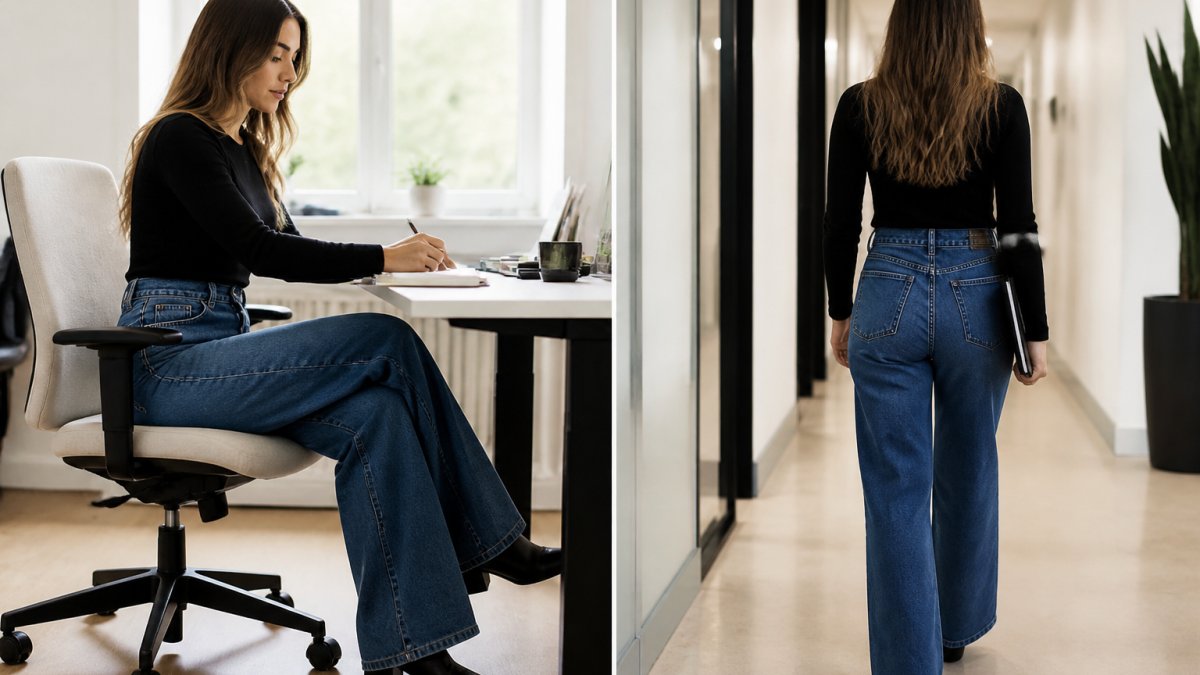
Comfortable jeans for work balance breathability, smooth seams, and shape retention, because an office day means hours of sitting followed by movement. Breathability, moisture management, and recovery are what separate a pair that feels fine at 8 a.m. from one that still feels fine at 6 p.m.
Breathability and Moisture Management
Breathability is the fabric's ability to let air and water vapor pass through, driven by fiber content and weave openness. Cotton is naturally breathable and absorbs moisture, so cotton-rich denim feels cooler against the skin than a polyester-heavy blend, which traps heat and holds odor if it dominates.
Moisture management matters most where you sit: the seat and backs of the thighs compress against a chair for hours, reducing airflow exactly where sweat accumulates. Choose a midweight cotton-rich twill rather than a tight, high-polyester weave, and favor a fit with room through the seat so fabric isn't pressed flat against skin.
Seams and Finishing That Prevent Irritation
Seams matter more than most shoppers realize. Flat-felled seams, where raw edges are folded and stitched inside the join, sit flatter against the skin and reduce chafing during long sits. Overlocked or serged seams are faster to produce but can leave a scratchy ridge along the inner thigh and seat.
Finishing chemicals deserve a mention too. Some denim treatments leave surface residue that irritates sensitive skin. Washing new jeans once before wearing removes much of that residue and softens the fabric. The U.S. Federal Trade Commission guidance on textile labeling requires accurate fiber content on labels, so you can confirm what you're buying rather than trusting marketing copy.
Shape Retention: Distinguishing Useful Stretch from Long-Term Bagging
Shape retention is the third pillar, and where cheap stretch denim fails. Useful stretch flexes with hips and knees, then returns to form; poor stretch stretches permanently, leaving baggy knees and a sagging seat by mid-afternoon.
Test recovery before you commit: stretch the waistband or thigh, hold five seconds, and release. Good denim snaps back flat within a second or two; poor denim stays slightly stretched.
High-waisted cuts add another layer of support: the waistband distributes pressure across the midsection instead of digging into one spot, which is why many professionals prefer them for long days.
AVERA7's wide-leg cut pairs this fabric logic with a relaxed, vintage-inspired fit and a hip-lifting effect, available in shades from light blue to black at $39.99.
Conclusion
Finding denim that stays comfortable from morning to evening is a real challenge, and most shoppers solve it by trial and error. You don't have to. Check weight, stretch percentage, fiber blend, and seam quality, then run the one-day test before committing.
At AVERA7, we built our high-waisted wide-leg jeans around exactly these priorities: a cotton-polyester blend with high elasticity, a tummy-control high waist, and a hip-lifting cut that holds its shape through long days. Get started with AVERA7 and find a pair that feels as good at 6 p.m. as it did at 8 a.m.
Frequently Asked Questions
What denim fabric is most comfortable for all-day wear?
A midweight cotton blend with a small amount of elastane tends to be the most comfortable for long days. Look for 10 to 12 oz denim with roughly 1 to 3 percent stretch fiber, which gives enough flexibility to sit, stand, and walk without sagging. A twill weave keeps the fabric breathable, and a soft hand feel matters as much as the spec sheet. High-waisted cuts with a wide leg, like AVERA7's cotton-polyester blend jeans, add coverage and ease for hours of wear.
How much stretch should comfortable jeans have?
For work and daily wear, 1 to 3 percent elastane or spandex is usually the sweet spot. Below 1 percent, denim behaves like rigid fabric and can feel restrictive when you sit for long stretches. Above 3 percent, jeans may feel great at first but tend to bag at the knees and seat by mid-afternoon. Check the label for stretch recovery language, and test by squatting and sitting for a few minutes to see whether the fabric springs back.
What denim weight is best for comfortable jeans?
Midweight denim, roughly 10 to 12 oz per square yard, balances structure and comfort for most people. Lightweight denim under 10 oz feels cool and soft but can wear thin and lose shape. Heavyweight denim above 12 oz holds its shape and resists abrasion but takes time to break in and can feel stiff in warm offices. If you want one pair that moves from desk to weekend, midweight is the safest starting point.
Are wide-leg jeans comfortable for sitting and walking all day?
Yes, wide-leg cuts are often more comfortable for long wear because they leave room through the thigh and knee, so fabric does not pull tight when you sit. The key is the waistband and hip fit: a high-waisted design with some stretch keeps the jeans in place without digging in. A cotton-polyester blend with high elasticity, like AVERA7's high-waisted wide-leg jeans, gives that relaxed leg shape while still holding a sculpted silhouette through the day.