
Comfortable Jeans for Long Office Shifts: A Fit Guide
Table of Contents
- What Makes Comfortable Jeans for Long Shifts Different
- Office Dress Code Jeans: Understanding What Works
- Fit Essentials: Jeans for Sitting at a Desk All Day
- Stretch Jeans for Work: Fabric and Flexibility
- Color, Wash, and Durability for Office Wear
- How to Style Jeans for Work Across Dress Codes
- Breaking In and Caring for Office Jeans
- Frequently Asked Questions
Last Updated: October 12, 2026
What Makes Comfortable Jeans for Long Shifts Different
The difference between jeans you can wear for eight hours straight and ones that leave you exhausted comes down to three things: how the waistband sits, whether the fabric moves with you, and if the fit actually accommodates sitting.
Most jeans are designed for standing and walking. They look sharp for two hours at a bar or an event. Then you sit down at your desk, and the waistband digs in, the thigh seam pulls, or the fabric feels stiff against your legs. By 3 p.m., you're counting down to quitting time.
Comfortable jeans for long shifts at the office solve this by prioritizing what your body actually does during a workday: sitting for hours, standing to walk to meetings, bending to reach files. The fabric needs to stretch without losing shape. The waistband needs to sit high enough to provide tummy control without restricting your breathing. The rise and thigh room have to accommodate the way your body changes position throughout the day.
This is why office jeans feel fundamentally different from regular denim. They're engineered for endurance, not just appearance.
Office Dress Code Jeans: Understanding What Works
Not every office allows jeans, but most now do, at least on certain days. The key is understanding where your workplace sits on the spectrum, because that determines which jeans actually work.
Business-casual dress codes typically allow dark-wash or black jeans with no distressing. These need to pair with structured pieces like blazers and collared shirts. The jeans themselves should look polished and intentional, not casual.
Smart-casual environments give you more flexibility. You can wear medium washes, and minor fading is acceptable. The styling matters less, a simple sweater or t-shirt works fine. Wide-leg jeans feel right at home here because they're on-trend and comfortable without sacrificing professionalism.

Creative or tech offices often have no real restrictions. You can wear any wash, any fit, any style. Comfort becomes the primary concern rather than formality.
The mistake most people make is buying one pair of jeans and trying to force it across all three settings. A pair of comfortable jeans for long shifts works best when it actually matches your dress code. If you're in business-casual, dark washes and straight-leg cuts are non-negotiable.
Fit Essentials: Jeans for Sitting at a Desk All Day
This is where most guides miss the mark. They talk about fit in abstract terms, "flattering" or "comfortable", without addressing how your body actually changes when you sit.
When you sit, three things happen: your waistband rides up slightly, your thighs compress against the seat, and your knees bend, which means the inseam needs room to accommodate that angle. A pair of jeans that fits perfectly while standing can feel completely wrong once you're at your desk for two hours.
Waistband and Rise
The waistband is everything. A low-rise waistband will dig into your abdomen when you sit, cutting off circulation and creating visible bunching under your shirt. A mid-rise waistband sits higher on your hips, distributing pressure more evenly. A high-waisted design, sitting at or above your natural waist, provides the most support and tummy control without restriction.
Here's the practical test: sit down while wearing the jeans. Your waistband should feel snug but not tight. You should be able to slip one finger comfortably between the fabric and your skin. If you can fit two fingers, they're too loose. If you can't fit any, they'll become painful by mid-afternoon.
The rise also determines how the jeans sit when you stand. A higher rise prevents the "gap at the back" that happens with low-rise jeans, and it keeps the jeans from sliding down as you move throughout the day.
Thigh and Seat Room
The thigh and seat are where comfort during a full workday becomes obvious. If the thigh is too tight, sitting compresses your legs and cuts off circulation. You'll feel the seam pulling by lunchtime. If it's too loose, the jeans look baggy and feel unstable when you stand.
The ideal fit has enough room in the thigh that you can pinch about an inch of fabric on each side when sitting. This gives you breathing room without excess bulk. The seat should feel supportive, snug enough that you're not sliding around, but loose enough that you're not being squeezed.
Wide-leg jeans naturally solve this problem because the thigh room is built in. They're comfortable for sitting because there's no compression, and they're currently on-trend, so you don't sacrifice style for comfort.
Inseam and Leg Opening
The inseam needs to account for the fact that your legs bend when you sit. If the inseam is too short, you'll feel tension in the back of your knee and calf. If it's too long, you'll get excess fabric bunching around your ankles and shoes.
The standard rule is that the hem should hit right at the top of your shoe when you're standing. When you sit, there should be no pulling sensation in the back of your leg. The leg opening, the width at the ankle, should match your overall silhouette. A straight-leg or wide-leg opening works for most office settings because it's professional and proportional.
Stretch Jeans for Work: Fabric and Flexibility
Stretch denim changed everything for office wear. Traditional 100% cotton denim is stiff, especially when new. It takes weeks to break in, and even then, it doesn't move with your body the way modern fabrics do.
Stretch jeans, typically a cotton-polyester blend with elastane, provide recovery. When you stand up after sitting for hours, the fabric bounces back to its original shape instead of staying creased. This is critical for all-day comfort and for maintaining the jeans' appearance throughout the day.
The amount of stretch matters. A small percentage, around 2-5% elastane, gives you gentle movement without making the jeans feel like leggings. Higher percentages feel more like activewear, which works if your office is very casual, but can read as too informal in business-casual settings.
The weight of the denim also affects comfort during long shifts. Lightweight denim (under 12 ounces) feels soft and breathable but can be less durable and may show wear faster.
Look for fabrics that explicitly mention stretch recovery or flexibility. The fabric should feel soft against your skin, not rigid. If new jeans feel stiff when you try them on, they'll only get more uncomfortable as the day goes on.
Color, Wash, and Durability for Office Wear
Dark washes and black denim are the safest choice for office environments because they look polished and intentional. They also hide stains better than lighter washes, which matters when you're wearing the same jeans multiple times per week.
A dark indigo or black wash pairs with almost anything, blazers, sweaters, t-shirts, cardigans. Medium and light washes work in more casual settings but require more intentional styling to avoid looking too casual for a professional environment.
Distressing, rips, tears, and fading, should be avoided entirely for office wear unless your workplace is explicitly creative or casual. A clean, non-distressed jean reads as more professional and works across more situations.
Durability matters for office jeans because you're wearing them frequently. Jeans that fade quickly or develop holes in high-stress areas like the thighs and inseam won't last through a season of regular wear. Look for substantial fabric and reinforced seams.
The AVERA7 High-Waisted Wide Leg Jeans come in multiple versatile colors including dark blue, black, and light blue. The cotton-polyester blend provides the stretch and recovery you need for sitting all day, while the high-waisted design offers tummy control and support without restriction.
How to Style Jeans for Work Across Dress Codes
The same pair of jeans can work across different dress codes, it's all about what you pair them with. This is where comfortable jeans for long shifts becomes truly versatile.
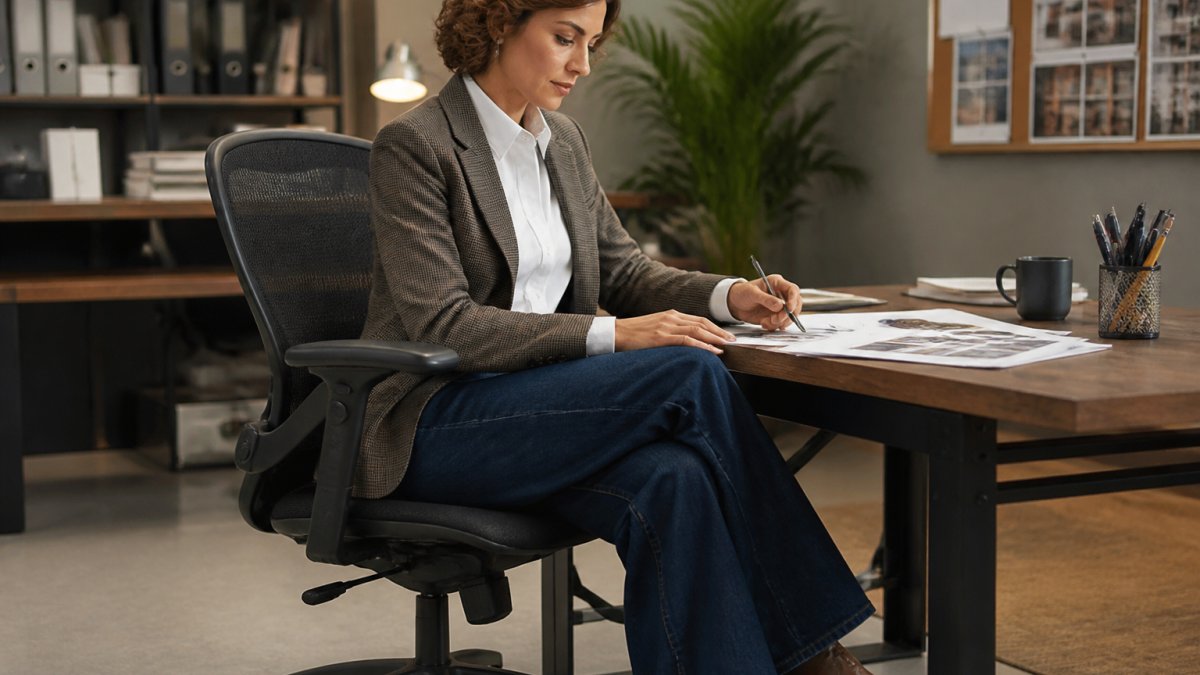
Business-Casual Styling
In a business-casual environment, your jeans are the casual element, so everything else needs to be structured and intentional. Pair dark-wash or black jeans with a blazer and a collared shirt or sweater. A simple white button-up under a neutral blazer is the most reliable formula. Add a belt to define your waist and elevate the look.
Footwear matters here. Loafers, flats, or professional ankle boots work. Sneakers generally read as too casual for business-casual, even if your office is relaxed about jeans.
Accessories should be minimal and professional, a simple watch, small earrings, a structured bag. The goal is to show that you put thought into your outfit, even though you're wearing jeans.
Smart-Casual Pairing
Smart-casual gives you more freedom. You can wear a sweater, a casual button-up, or a structured t-shirt. A cardigan over a simple top works well. Wide-leg jeans feel especially at home here because they're on-trend and comfortable without sacrificing professionalism.
Footwear can be more relaxed, sneakers work if they're clean and intentional, as do flats, loafers, or casual boots. The styling is less about formality and more about looking put-together.
Layering works well for smart-casual. A denim jacket, a cardigan, or a lightweight sweater over a t-shirt creates visual interest without feeling overdressed.
Breaking In and Caring for Office Jeans
New jeans are stiff. The fabric hasn't softened, and the dye is still setting. This is normal, but it means your first few wears might feel less comfortable than they will after a few weeks.
Wash new jeans inside-out in cold water before wearing them for the first time. This helps set the dye and prevents excess indigo from transferring to your skin or other clothes.
The fabric will soften with each wash. Stretch fibers relax slightly, making the jeans feel more comfortable.
To preserve durability, wash in cold water, use gentle detergent, and air-dry whenever possible. High heat from the dryer breaks down elastic fibers and can cause shrinkage.
Avoid excessive washing. Frequent washing fades denim faster and breaks down stretch fibers. Spot-clean minor stains and air out your jeans between wears instead of washing after every wear.
Store jeans flat or folded to prevent stretching. Hanging them by the waistband can cause the fabric to stretch out over time, especially in the hips and thighs.
Finding comfortable jeans for long shifts at the office means prioritizing fit over trends. A high-waisted, stretch-fabric pair with a dark wash and straight or wide-leg cut solves most office comfort problems.
Frequently Asked Questions
What should you look for in jeans for a long workday?
Prioritize comfort features: a mid-to-high rise waistband that doesn't dig in when sitting, stretch fabric (at least 2-5% elastane) for movement, and adequate thigh room to prevent circulation issues during extended sitting. Look for mid-weight or thick denim that holds its shape throughout the day. Dark washes and straight-leg or wide-leg silhouettes maintain a polished look for office environments. Test the fit by sitting down in the fitting room, your jeans should feel the same when seated as when standing.
Are stretch jeans comfortable enough to wear all day at the office?
Yes, when chosen correctly. Stretch denim with high elasticity (typically 3-5% elastane blended with cotton and polyester) provides flexibility without feeling restrictive. The key is finding jeans with balanced stretch recovery, meaning they hold their shape after movement rather than sagging by midday. Quality stretch jeans allow you to sit, stand, and move naturally while maintaining a professional appearance. Avoid over-stretchy fabrics that feel clingy or lose their structure quickly.
Which jean cuts are most comfortable for sitting at a desk?
High-waisted and mid-waisted straight-leg or wide-leg cuts work best for desk jobs. High-waisted designs sit above your natural waistline, preventing the waistband from digging in when you bend or sit. Wide-leg jeans offer more room through the hip and thigh without excess fabric bunching at the ankles. Straight-leg cuts provide a clean, professional silhouette while allowing comfortable movement. Avoid low-rise or overly slim fits, which restrict movement and create discomfort during long sitting periods.
How can you make jeans look professional for work?
Pair dark-wash or black jeans with structured pieces like a blazer, cardigan, or collared shirt to elevate the look. Ensure your jeans are non-distressed and fit well through the waist and hips without excess fabric. Tuck in your top or wear an oversized sweater to create clean lines. Add professional accessories like a belt, simple jewelry, or a structured bag. Choose footwear that complements your outfit, loafers, flats, or professional sneakers work well. A polished appearance depends as much on fit and styling as on fabric quality.