
Do Sculpting Jeans Feel Restrictive All Day? Facts
Table of Contents
- Why Some Sculpting Jeans Feel Restrictive
- Fabric and Stretch: What Determines All-Day Comfort
- Signs Your Jeans Are Too Tight
- How to Choose Comfortable Sculpting Jeans
- Best Tummy Control Jeans for Office Wear
- Care Tips to Maintain Stretch and Fit
- The Bottom Line on Sculpting Jeans Comfort
- Frequently Asked Questions
Last Updated: September 9, 2026
Why Some Sculpting Jeans Feel Restrictive
Yes, many sculpting jeans feel restrictive all day, but that discomfort is rarely intentional. It usually stems from poor fabric engineering and waistband construction rather than the concept of shaping itself. A well-made pair uses compression strategically, while a poorly made pair simply squeezes everything uniformly.
The core tension in this category is between structure and give. Jeans that rely on rigid denim with a high spandex content often create a corset effect that becomes unbearable by mid-afternoon. A well-designed pair uses compression strategically, while a poorly made pair simply squeezes everything uniformly.
Most discomfort traces back to three fixable issues: waistbands that dig into the stomach, seams that press against the hip bones when you sit, and fabric that lacks proper stretch recovery. The distinction between a jean that sculpts and one that merely constricts comes down to how the garment distributes pressure across your torso.
Fabric and Stretch: What Determines All-Day Comfort
Comfort in sculpting jeans is determined almost entirely by the fabric blend and how the stretch is engineered into the weave. The goal is compression that smooths without restricting movement or breathing.
The Role of Spandex and Lycra Content
Spandex content is the single most important factor in whether sculpting jeans feel restrictive. Most rigid jeans contain 1-2% spandex, which provides minimal give (peer-reviewed research). Comfortable sculpting jeans typically need 3-5% spandex or lycra integration to allow for natural body movement throughout the day.
The quality of the stretch matters more than the percentage. Elastane fibers properly twisted into the cotton yarn recover their shape after each wear, preventing bagging at the knees and gaping at the waist. Cheap stretch fabrics lose elasticity within hours.
Fabric Weight and Seasonal Breathability
Denim weight, measured in ounces per square yard, directly affects how restrictive a jean feels. Lightweight denim around 9-10 oz breathes well and moves with you, making it ideal for summer wear. Heavier denim at 12 oz or more offers structure but can feel stifling and stiff by comparison.
Sculpting panels add another layer of fabric that can trap heat. Look for shaping technology that uses breathable, moisture-wicking materials in the tummy control panel rather than a solid block of thick compression fabric.
Signs Your Jeans Are Too Tight
Knowing how to tell if sculpting jeans are too tight prevents a day of misery. Beyond obvious discomfort, your body sends clear signals that the fit is wrong. The real test is how they perform across a full day of movement, meals, and posture changes.
The Post-Meal 'Bloat Factor'
Most fit guides ignore what happens after lunch, yet that's when restrictive jeans fail most visibly. Your waist circumference naturally expands by 1 to 2 inches after a meal as your stomach and intestines fill (the NIH). A sculpting jean with rigid compression, especially one with a non-contoured waistband, will not accommodate this shift. Instead, it presses inward on your abdomen, causing discomfort, visible bloating, and that urgent need to unbutton by 3 PM.
A well-designed jean uses graduated compression: firmest at the waistline, loosening slightly toward the lower abdomen. This allows for natural expansion after eating while still smoothing your silhouette. Dreading meals or loosening your jeans in the bathroom stall is a design flaw, not a personal failing.
The Sitting Test: A 4-Hour Office Simulation
Standing in a dressing room tells you almost nothing about all-day wearability. When you sit, your hips widen slightly and your abdomen compresses, changing how the fabric pulls across your midsection. A jean that feels fine at the mirror can create a tight band across your lower belly by 10 AM.
Try this: wear the jeans at home for a full workday simulation. Sit at a desk, drive, bend to pick something up, and eat a normal meal. Pay attention to these specific signals:
- Waistband rolling: If the back of the waistband folds over or digs in when you sit, the rise is too short or the waist is too small.
- Seam pressure on hips: Seams that press into your hip bones while seated indicate the hip measurement is too narrow, regardless of how the waist fits.
- Restricted breathing: You should be able to take a full, deep breath while seated. If you cannot, the compression is excessive and will fatigue your core muscles by evening.
- Numbness or tingling: This indicates nerve compression and means the fit is dangerously tight, do not buy these jeans.
The Crouch Test: The Ultimate Wearability Check
The crouch test is the most reliable indicator of all-day wearability. If you cannot squat fully without the waistband rolling down or the fabric feeling like it will split, those sculpting jeans will feel worse after four hours of wear. A proper sculpting jean should allow a full range of motion, bending, squatting, and reaching, without shifting or binding.
The 'Second Wear' Test
Many sculpting jeans feel fine on the first wear but become restrictive after a few hours because the fabric lacks proper stretch recovery. Cheap elastane fibers fatigue quickly, causing sagging at the knees and gaping at the waist. A quality pair snaps back to its original shape after each wear, maintaining consistent compression.
How to Choose Comfortable Sculpting Jeans
Choosing comfortable sculpting jeans requires evaluating the construction details that determine full-day performance. Focus on the waistband design, the shaping panel, and how the jean behaves when sitting and standing.
Waistband Design and Tummy Control Panel
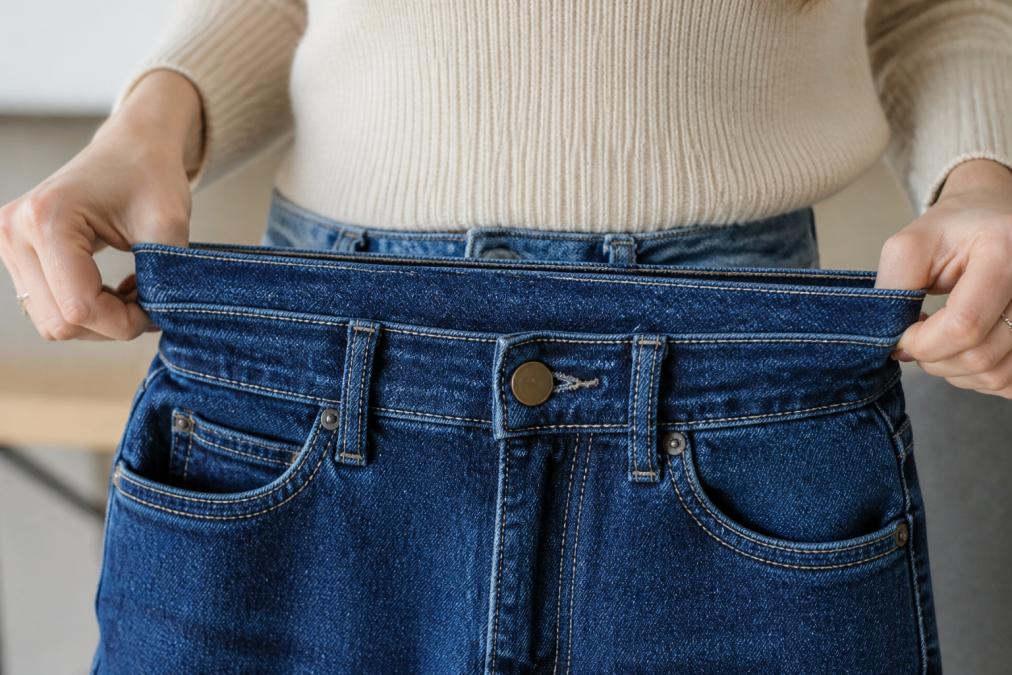
The waistband is where most sculpting jeans succeed or fail. A contoured waistband that curves to follow your natural body shape prevents the dreaded gaping at the back while avoiding excessive pressure on the front. Straight waistbands, by contrast, create pressure points that cause digging.
The tummy control panel should provide midsection support through targeted compression, not uniform squeezing. Quality shaping technology uses a graduated compression panel that is firmest at the waistline and loosens toward the lower abdomen, allowing natural expansion after meals.
Sitting vs. Standing Ergonomics
A jean that fits perfectly while standing can become unbearable when you sit. Your waist circumference expands by roughly an inch when seated, so the fabric needs enough give to accommodate this shift.
Sculpting jeans that feel restrictive all day often fail this test. The compression panel is too rigid to stretch with your seated posture. Ergonomic fit means the jean moves with your body through its full range of motion.
| Fit Check | Standing | Sitting for 4+ Hours | Verdict |
|---|---|---|---|
| Waistband | Flat, no gaping | No rolling or folding | Pass |
| Tummy panel | Smooths midsection | Allows natural expansion | Pass |
| Hip area | No pulling across hips | No seam pressure | Pass |
| Thighs | Comfortable movement | No pinching or binding | Pass |
| Stretch recovery | Snaps back | No bagging at knees | Pass |
Best Tummy Control Jeans for Office Wear
For office environments where you sit for hours, the best tummy control jeans combine a high-rise silhouette with flexible shaping technology. Our top pick is the High-Waisted Wide Leg Jeans from AVERA7, priced at $39.99.

The high-waisted design provides tummy control without a punishing compression panel. The hip-lifting effect enhances curves naturally, while the straight wide leg moves freely through the hips and thighs. You get the sculpted look without the denim fatigue of tighter cuts.
The balance between structure and give makes these jeans suitable for all-day wear. The fabric blend delivers enough stretch for sitting comfort while maintaining fit retention. Available in eight colors from light blue to black, they transition from the office to weekend errands.
Care Tips to Maintain Stretch and Fit
Proper care is essential for maintaining the stretch and fit of sculpting jeans over time. Elastane fibers degrade with heat and harsh detergents, turning a comfortable pair into a rigid one. The problem isn't just the dryer, it's the cumulative effect of everyday washing habits.
Why Heat Destroys Stretch Recovery
Spandex and elastane are polyurethane-based fibers that regain their shape after stretching. Heat is their enemy. Dryer heat, typically 130°F to 160°F, breaks down the polymer bonds in elastane, permanently reducing their ability to snap back. After a few dryer cycles, the waistband loses its flex and the tummy control panel bags out. This is the most common reason sculpting jeans start feeling restrictive after a few months.
The Washing Routine That Preserves Compression
To maintain the sculpting technology, follow this specific routine:
- Turn jeans inside out before washing. This protects the shaping panel and the outer dye from friction against other garments.
- Wash in cold water (below 60°F) on a gentle cycle. Hot water accelerates elastane breakdown just like the dryer does.
- Skip the fabric softener entirely. Fabric softeners coat the elastane fibers with a waxy residue that reduces their ability to stretch and recover. This coating also traps moisture against your skin, making the jeans feel hotter and less breathable.
- Use a mild, liquid detergent without optical brighteners or bleach alternatives, which can degrade both the cotton and the elastane.
- Hang to dry, never use the dryer. If you must use a dryer, use the lowest heat setting and remove the jeans while still slightly damp.
The 'Wear Rotation' Strategy
Even with perfect washing, elastane fibers fatigue with repeated wear. Wearing the same pair every day gives the fibers no time to recover. Denim experts recommend rotating between two or three pairs, allowing each at least 24 hours to rest between wears.
When to Know the Stretch Is Gone
If your sculpting jeans feel restrictive in the waist but baggy in the knees, the elastane has likely fatigued beyond recovery. No amount of washing will restore it. This typically happens after 12 to 18 months with proper care, or after just a few months with improper care.
Following these care guidelines maintains the graduated compression and contoured waistband that keep sculpting jeans comfortable from morning to night, and extends their lifespan beyond the typical fast-fashion cycle.
The Bottom Line on Sculpting Jeans Comfort
Sculpting jeans do not have to feel restrictive all day, but many do because of poor design choices. The deciding factors are fabric quality, spandex content, waistband construction, and how the shaping panel responds to sitting versus standing.
A jean that passes the crouch test, uses a contoured waistband, and employs graduated compression will sculpt your silhouette without punishing your midsection. The High-Waisted Wide Leg Jeans from AVERA7 deliver this balance through a high-rise design, hip-lifting effect, and relaxed wide-leg cut that prioritizes genuine comfort alongside the sculpted look.
The market for sculpting jeans has matured beyond the corset mentality. Modern shaping technology, as documented in textile engineering research on stretch denim, focuses on graduated compression and ergonomic fit rather than uniform tightness. Understanding the difference between shaping and squeezing is what separates a jean you wear once from your everyday favorite.
Frequently Asked Questions
Can you wear sculpting jeans for a full workday without discomfort?
Yes, but the experience depends on the specific pair. The jeans' fabric composition and the design of the waistband determine comfort. Look for a high spandex or Lycra content for flexibility and a contoured waistband that sits flat against your skin. A relaxed wide-leg cut reduces pressure on your midsection when you sit for long hours. If you plan to wear a pair for 8-plus hours, opt for a sculpting jean that uses soft-touch denim and a smoothing panel that does not dig in.
How do I know if my jeans are too restrictive?
Common signs your jeans are too tight include red marks on your skin after removing them, a visible bulge or 'muffin top' at the waist, and difficulty buttoning the top closure. You should also notice restricted movement when you sit or bend. A simple test is the crouch test: if the denim limits your ability to squat comfortably, the fit is too tight. Discomfort that builds through the day, like bloating or a numb feeling, means the jeans are compressing your midsection too much.
Do high-waisted jeans provide better tummy control than mid-rise?
Yes, high-waisted styles generally offer more effective tummy control. A high-rise waistband extends above the natural waist, covering the entire midsection and providing a longer, smoother panel. This design distributes compression more evenly, which reduces the risk of the waistband digging in and creating a ridge. Mid-rise jeans sit lower and often create a 'muffin top' effect because they cut into the widest part of the abdomen. For a smooth silhouette under office attire, a high-waisted sculpting jean is the better choice.
What is the 2-finger test for jeans?
The 2-finger test is a quick way to check if your jeans are too tight at the waist. After buttoning your jeans, try to slip two flat fingers between the waistband and your stomach. If you cannot fit two fingers, the jeans are likely too restrictive. If you can fit more than two fingers easily, the waist is probably too loose and may gap. This test helps you find a balance between a secure fit that will not sag and enough room for all-day comfort, especially after meals.
Finding sculpting jeans that stay comfortable from morning meetings to evening plans comes down to prioritizing construction over hype. AVERA7 designs high-waisted denim with built-in tummy control and a hip-lifting effect, using a relaxed vintage-inspired fit that moves with you. With a 4.8 out of 5 customer rating and a 30-day money-back guarantee, you can test the all-day comfort for yourself. Get started with AVERA7 and find jeans that sculpt your silhouette without restricting your day.