
How to Find High Quality Denim Jeans: 2026 Guide
Table of Contents
- Signs of High Quality Denim You Can Spot in Seconds
- Best Denim Fabric Composition: What to Look For on the Label
- Understanding Denim Weight (Oz) and What It Means for Comfort
- Raw vs. Washed Denim: Which One Belongs in Your Closet?
- How to Find Flattering Jeans for Hourglass Body Shape
- Why High Quality Denim Jeans Are Worth the Investment
- Caring for High Quality Denim Jeans So They Last for Years
- Frequently Asked Questions
Last Updated: September 12, 2026
Signs of High Quality Denim You Can Spot in Seconds
Knowing how to find high quality denim jeans comes down to a handful of details you can check before you ever try them on. This guide walks through the construction markers, fabric specs, and fit logic that separate denim built to last from denim built to sell.
Start with the seams. Flip the jeans inside out and look at the side seam: a single clean line means the fabric was woven on a narrow shuttle loom, which is the hallmark of selvedge denim. A serged, overlocked edge means the fabric was cut from a wide roll and finished cheaply.
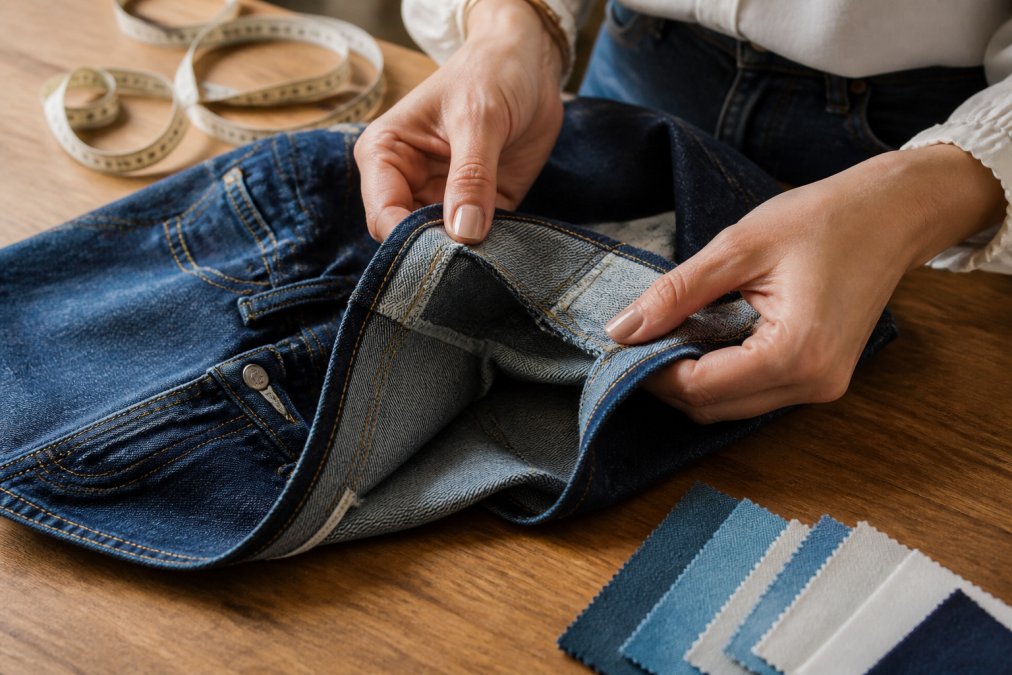
Stitching and Construction Quality Indicators
Stitch density tells you almost everything about how a pair of jeans was made. Count the stitches per inch along the inseam: eight or more per inch signals a slow, durable seam, while five or six is fast production.
Look for chain stitching at the hem, which allows the fabric to flex without snapping. Bar tacks at the pocket corners and belt loops reinforce the points that tear first. Any loose thread, skipped stitch, or puckered seam is a warning sign.
Hardware Quality: Buttons, Rivets, and Zippers
Hardware durability separates a pair that survives a decade from one that loses a button in month two. A solid brass shank button feels heavy and cool to the touch; a hollow stamped button flexes under your thumb and will eventually pop off.
Copper rivets at pocket corners should sit flush and tight. For zippers, a metal-toothed zipper from a known maker outlasts nylon coils, though nylon is smoother and lighter for stretch denim. Test the pull: it should glide without catching.
Best Denim Fabric Composition: What to Look For on the Label
The best denim fabric composition is 98 to 100 percent cotton, with no more than 2 percent elastane for stretch. Anything beyond that trades longevity for temporary comfort.
Here is how to read the tag:
- 100% cotton: No stretch, maximum durability, develops the sharpest fading patterns
- 98% cotton / 2% elastane: Slight give, holds shape, the sweet spot for all-day wear
- 92% cotton / 6% polyester / 2% elastane: Faster to sag, prone to pilling, cheaper to produce
- Under 90% cotton: Essentially a poly-blend; expect crotch blowout and knee bagging within a year
Cotton fiber length matters too. Long-staple and extra-long-staple cotton produce a smoother, stronger yarn with fewer exposed fiber ends, which is why premium denim feels denser and resists pilling.
Understanding Denim Weight (Oz) and What It Means for Comfort
Denim weight is measured in ounces per square yard, and it is the single fastest way to predict how a pair of jeans will feel, drape, and age. Most shoppers never check it, then wonder why a pair feels stiff as cardboard or flimsy as pajama pants. Weight is not the same as thickness, a tight weave at 12 oz can feel denser than a loose weave at 14 oz, but it is the best starting signal you have.
The number is usually printed on the hangtag, the product page, or the inside waistband label. If it is not listed, ask the brand directly. A retailer that cannot tell you the weight of its own denim is usually not selling denim worth weighing.
| Weight | Feel | Best For | Fading | Break-In |
|---|---|---|---|---|
| 8-10 oz | Light, soft, almost shirt-like | Summer, stretch denim, travel | Minimal | None |
| 11-13 oz | Mid-weight, versatile, holds a crease | Year-round wear, first raw pair | Moderate | Days |
| 14-16 oz | Substantial, structured, stands on its own | Raw denim, sharp creases, cool weather | Strong | 2-4 weeks |
| 17-21 oz | Stiff, armor-like, slow to soften | Enthusiasts, dramatic fades | Dramatic | 1-3 months |
| 22 oz+ | Extremely rigid, niche | Collectors, competition denim | Extreme | Months |
For everyday wear, 11 to 13 oz hits the balance between structure and comfort. Lighter than 10 oz tends to lose shape quickly and bag at the knees; heavier than 16 oz needs a real break-in period and will feel uncomfortable for the first few wears.
Why Weight Changes Everything Else
Weight affects more than comfort. Heavier denim uses thicker yarns, which means the fabric abrades more slowly and the indigo sits closer to the surface, that is why 14 oz+ raw denim produces the high-contrast fades enthusiasts chase. Lighter denim uses finer yarns that fade softly and evenly, which looks cleaner but less dramatic.
Weight also changes fit. A 15 oz jean will stretch about half an inch at the waist after a week of wear and snap back after a wash. A 10 oz stretch jean may stretch a full inch and never fully recover. If you are between sizes on a heavy pair, size down; on a light pair, stay true to size.
How to Test Weight Without a Scale
You do not need a fabric scale to get a read. Hold the jean by the waistband and let it hang: a 14 oz+ pair will hold a stiff, almost conical shape, while a 10 oz pair will collapse and drape. Pinch the fabric between thumb and forefinger, heavy denim resists folding and springs back, light denim folds flat. Finally, check the hem: heavy denim produces a thick, chunky chain-stitched roll, while light denim lies almost flat.
Seasonality and Weight
A common mistake is treating one weight as a year-round answer. In humid summers, 10-12 oz breathes noticeably better than 15 oz, which traps heat. In cold months, 14 oz+ blocks wind and holds warmth in a way light denim cannot. Many denim wearers keep a 12 oz pair for warm months and a 15-16 oz pair for cool ones, the same logic as rotating between a linen shirt and a flannel.
Raw vs. Washed Denim: Which One Belongs in Your Closet?
Raw denim is denim that has never been washed after dyeing, so it is stiff, dark, and shrinks slightly with its first soak. Washed denim has been pre-shrunk and softened, usually through sanforization, so it arrives ready to wear.
Choose raw if you want personal fading patterns that develop from your own movement over months. Choose washed if you want comfort on day one and predictable sizing.
How to Find Flattering Jeans for Hourglass Body Shape
Fit is where denim quality becomes personal. A perfectly constructed jean in the wrong cut will still sit in your closet, so the goal is to match construction to your proportions. The hourglass shape, defined waist, hips and bust roughly balanced and fuller than the waist, has specific fit levers worth understanding before you buy.
The right cut for an hourglass figure balances a defined waist against fuller hips and bust. A high-waisted wide-leg jean is often the answer because it anchors at the narrowest point and skims rather than clings through the hip and thigh. But the cut is only half the equation; the fabric and construction have to cooperate.

Three things to check:
- Rise: A high rise that sits at or just above the natural waist keeps proportions balanced. A low rise on an hourglass figure creates a horizontal break at the widest point of the hip, which visually shortens the leg.
- Hip fit: The fabric should follow your curves without pulling across the front pockets. If you see horizontal tension lines radiating from the fly, the hip is too tight, size up or look for a curvy-specific block.
- Leg opening: A straight or wide leg creates a column that visually lengthens the leg. A skinny leg on a fuller hip creates a triangle silhouette that draws the eye outward.
Fabric and Stretch Matter More Than You Think
An hourglass figure usually needs a small amount of stretch to accommodate the hip-to-waist differential without gaping at the back waistband. A 98% cotton / 2% elastane blend is the sweet spot: enough give to move, enough cotton to hold shape. Anything above 3% elastane will stretch out by mid-day and require constant hiking.
Look for a contoured waistband, one cut on a curve rather than a straight strip, which is the single most effective construction fix for back-waist gaping. Brands that specialize in curvy fits build this in; brands that do not will gap no matter how you size.
Quick Fit Checks for Other Shapes
- Pear (hips wider than bust): Balance with a mid-to-high rise and a straight or bootcut leg. Avoid heavy distressing at the hip, which adds visual weight.
- Rectangle (waist close to hip measurement): Create curve with a high rise and a tapered or straight leg. Pocket placement slightly angled inward helps.
- Apple (fuller midsection): A mid rise with a straight leg and a slightly longer inseam elongates. Avoid low rises and tight waistbands.
- Inverted triangle (bust wider than hips): A wide or flared leg adds visual weight at the bottom and balances the frame.
How to Test Fit in the Dressing Room
Squat, sit, and step up onto a low stool. A jean that passes all three without digging, gaping, or riding down is the right fit. Check the back waistband by sliding two fingers under it, if you can fit more than two, the waist will stretch out further with wear. Finally, look at the crotch: a clean, flat fit with no pulling means the rise and hip are correctly matched to your body.
This is where AVERA7's High-Waisted Wide Leg Jeans fit the brief. The high-waisted design provides tummy control, the hip-lifting effect enhances curves, and the straight wide leg delivers that vintage feel without looking boxy. Available in light blue, dark blue, black, gray, white, and several washed blues, they carry a 4.8 out of 5 rating.
Why High Quality Denim Jeans Are Worth the Investment
A cheap pair costs less up front and more over time. Once you know the signs of high quality denim, the math becomes obvious: denser fabric, reinforced seams, and solid hardware mean fewer replacements and better fading over the years.
Denim aging is the payoff. Quality cotton develops patina at the stress points, whiskers at the hips, and honeycombs behind the knees. Cheap blends fade flat and gray instead. There is also a sustainability angle: buying fewer, better pairs can contribute to keeping denim out of landfills.
Environmental Protection Agency facts on textile waste
Caring for High Quality Denim Jeans So They Last for Years
Wash less than you think. Spot-clean between wears and wash every 8 to 10 wears, inside out, in cold water on a gentle cycle. Hot water and dryer heat break down elastane and shrink cotton, so air-dry flat or hang.
Skip fabric softener, which coats the fibers and dulls indigo. Turn jeans inside out before washing to protect the surface dye. For raw denim, wait at least six months before the first wash to let fading patterns set.
Frequently Asked Questions
What are the signs of high-quality denim jeans?
Look for tight, even stitching with no loose threads, metal hardware that feels solid, and a fabric composition of at least 98% cotton. Check for chain stitching at the hem and bar tacks at stress points. High quality denim also has a dry, dense hand-feel and holds its shape after wearing. If the label lists high elastane content or the fabric feels thin and slick, it likely won't last more than a season.
Does price always correlate with denim quality?
No. Price often reflects brand marketing, not construction. Check the fabric composition, stitching, and hardware before assuming a higher price means better quality. Some affordable brands use similar mills and construction methods as luxury labels.
What is the difference between raw denim and treated denim?
Raw denim is unwashed and untreated, so it fades uniquely to your body over months. Treated denim has been washed, distressed, or chemically softened for immediate comfort and a broken-in feel. Raw denim requires more care and may shrink, while treated denim is ready to wear. For everyday comfort with a vintage look, treated denim is often the practical choice.
How should high-quality jeans fit on an hourglass figure?
High-quality jeans for an hourglass shape should hug your waist without gaping, skim your hips without pulling, and have enough stretch to accommodate curves. Look for a high rise that sits at or above your natural waist. A wide-leg or straight cut balances proportions. Avoid low-rise styles that dig in. The best denim fabric composition for hourglass figures includes 2% to 3% elastane for recovery.
What fabric composition indicates premium denim?
Premium denim is typically 98% to 100% cotton with 0% to 2% elastane. This blend gives you durability, breathability, and shape retention. Stretch denim with more than 3% elastane tends to bag out quickly. Also look for selvedge or sanforized denim, which indicates tighter weave and less shrinkage. Avoid poly-blends over 20% if you want denim that ages well.
How can I tell if jeans are durable just by looking at them?
Hold the jeans up to light. If you can see through the fabric, the weave is too loose. Check the crotch seam for reinforced stitching and the pockets for rivets. Feel the fabric: it should have a dense, slightly rough texture, not a slick or thin feel. Look for bar tacks at the belt loops and pocket corners. These small details signal a pair built to last.
Finding denim that holds its shape, flatters your figure, and lasts past a single season is harder than it should be. AVERA7 built its high-waisted wide-leg jeans to solve exactly that: tummy control, a hip-lifting effect, all-day soft comfort, and a vintage-inspired cut in multiple colors, backed by a 30-day money-back guarantee. Get started with AVERA7 and find the pair that keeps its shape from morning to night.