
How to Stop Jeans from Bunching at Waist
Table of Contents
- Why Jeans Bunch at the Waist
- Diagnose Your Fit Problem
- Temporary Fixes: Quick Solutions for Everyday Wear
- How to Fix Waist Gap in Jeans Permanently
- Jeans with Tummy Control: Choosing the Right Fit
- Best Jeans for Hourglass Figure: Fit Solutions
- Posture and Movement: How You Wear Matters
- References & External Sources
- Frequently Asked Questions
Last Updated: August 31, 2026
Why Jeans Bunch at the Waist
Jeans bunching at the waist stems from a mismatch between your body shape and the garment's construction. Rise mismatch is the most common culprit, when a jean's rise (the distance from the crotch seam to the top of the waistband) is too long, excess fabric pools at your waist instead of sitting flush against your skin.
Fit misalignment and rise issues
Body type matters significantly. An hourglass figure needs a higher rise to accommodate curves while maintaining a smooth fit at the waist. If you're buying jeans designed for a straighter body type, the waistband sits too low on your natural waist, creating bunching and folds. The center-front seam position also plays a role, when it doesn't align with your body's natural contours, it creates tension points that force fabric to bunch.
Fabric composition and elasticity
Rigid, 100% cotton denim has zero give and won't conform if it doesn't fit perfectly. Stretch denim, typically a cotton-elastane blend, adapts to your body more readily and reduces bunching. Premium denim with quality elastane maintains its shape throughout wear, while cheap stretch denim loses elasticity quickly.
Denim weight also influences how fabric drapes. Lightweight denim (under 12 ounces) bunches more easily due to less structural integrity. Heavier denim (14+ ounces) holds its shape better and resists bunching, though it requires a longer break-in period.
Diagnose Your Fit Problem
Before fixing bunching, identify exactly what's happening. Different problems require different solutions.
Identifying waist gap versus crotch bulge
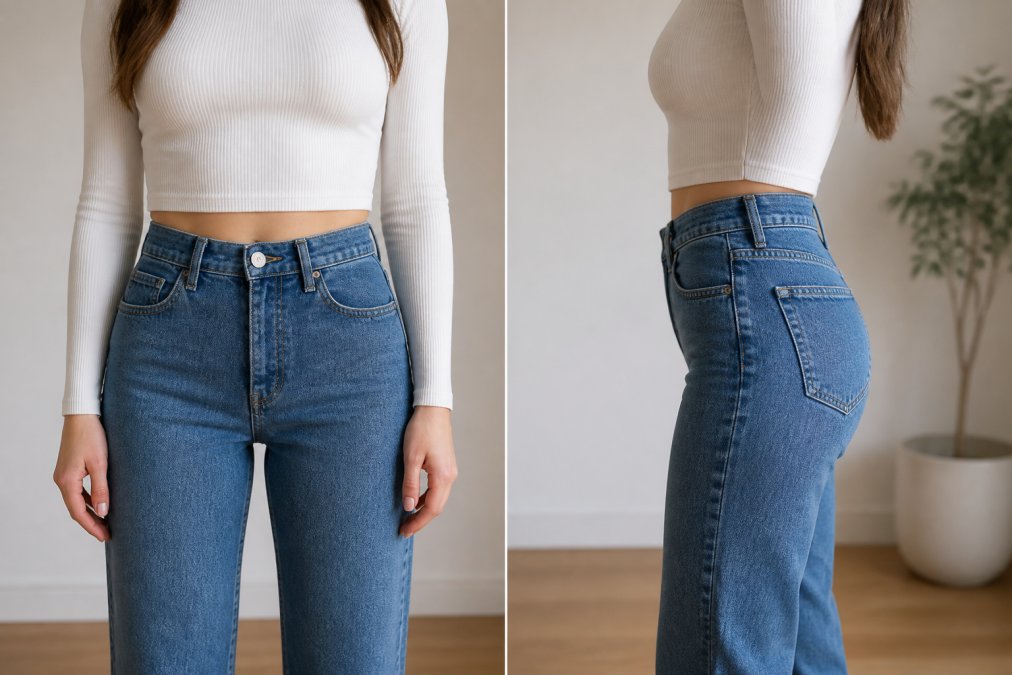
Waist gap occurs when space appears between your body and the waistband at the back, signaling the waist measurement is too large or the rise is too short. Crotch bulge is excess fabric pooling in your lap or at the top of your thighs, indicating a rise that's too long.
To diagnose, look in a mirror from the side and back. Pinch the fabric at your waist; if you can grab more than an inch without the jean moving, you have waist gap. If fabric bunches visibly across your lap when you sit, you have a rise problem. You might have both issues, requiring a two-part fix.
Testing for proper waistband tension
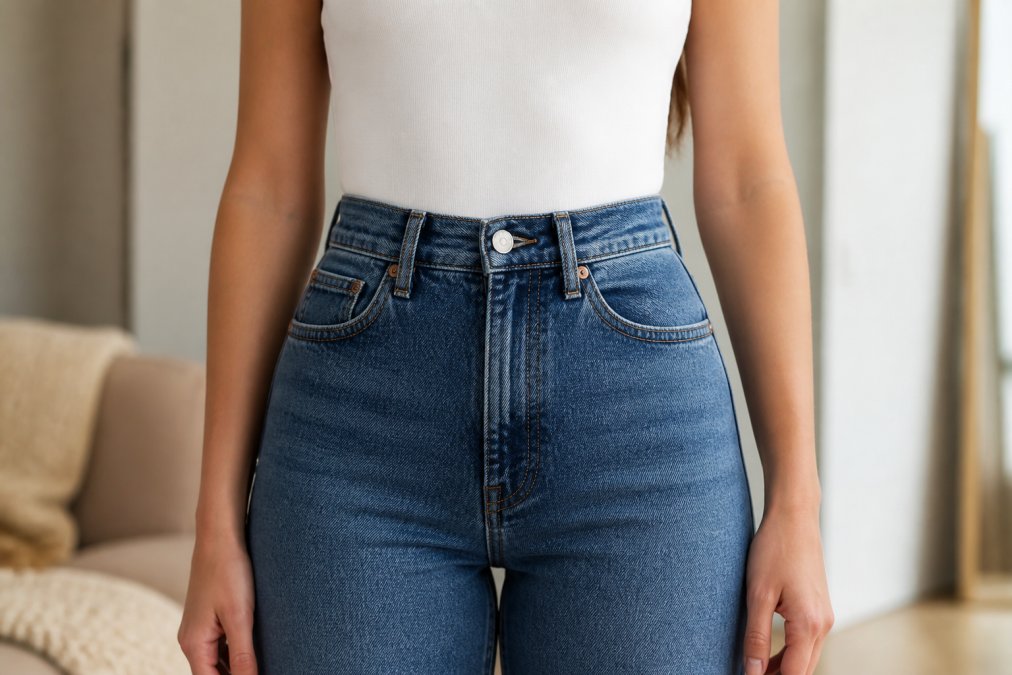
Button the jeans and try to slide one finger between your waist and the waistband. If you can fit exactly one finger comfortably, the tension is right. If you can fit two fingers, the waist is too large. If you can't fit a finger at all, it's too tight.
A structured waistband with interfacing holds its shape better than a flimsy one. When testing fit, press on the waistband; it should feel firm and supportive, not soft and collapsible.
Temporary Fixes: Quick Solutions for Everyday Wear
These temporary solutions work when bunching is minor and you want to wear the jeans today without tailoring.
Belt loops and belt tension adjustment
A quality belt is the simplest temporary fix. Thread it through the belt loops and tighten it enough to hold the waistband snug against your body. Choose a wider belt (1.5-2 inches) that distributes pressure evenly. Leather belts maintain tension throughout the day better than fabric.
Makeshift fasteners and emergency cinching
If your jeans gap slightly at the waist but fit everywhere else, a small safety pin or hair tie can temporarily close that gap. Pin the inside of the waistband together at the center back, or wrap a hair tie around the button and loop to tighten the closure. This works for gaps under half an inch and lasts a few hours.
Adjusting waistband position for your body type
Your natural waist might not be where standard jeans expect it to be. If you have an hourglass figure, pulling the jeans up so the waistband sits at your actual natural waist, the narrowest point of your torso, often eliminates bunching immediately. For pear-shaped bodies, a slightly lower rise prevents the waistband from cutting into your narrower waist while providing room for your hips.
How to Fix Waist Gap in Jeans Permanently
If you love a pair of jeans, tailoring solves the problem permanently. A skilled tailor can adjust your jeans to fit your specific body without sacrificing comfort or style.
Tailoring the center-front seam
The most effective permanent fix is adjusting the center-front seam. A tailor takes in this seam on both sides, reducing the overall waist measurement while maintaining the jean's original rise and proportions. The process typically takes 1-2 weeks and works best for gaps under 2 inches. Larger adjustments require taking in multiple seams, which becomes expensive and risks distorting the fit elsewhere.
Adjusting waist width and structural integrity
Some tailors can adjust the waistband itself by removing a section and restitching it. The tailor removes a section of the waistband (usually 0.5-1 inch), shortens the zipper if necessary, and reattaches the waistband. When adjusting the waistband, the tailor must ensure belt loops remain evenly spaced and functional. This is why you need an experienced tailor; denim tailoring requires specific skills.
Jeans with Tummy Control: Choosing the Right Fit
Some jeans are designed specifically to minimize bunching and provide a smooth silhouette. Understanding what makes these jeans different helps you choose options that won't bunch in the first place.
What to look for in denim weight and fabric recovery
Heavier denim (14-16 ounces) provides more structure and resists bunching better than lightweight fabric. Look for jeans with at least 5% elastane (also called spandex), which provides noticeable stretch without making the jeans feel cheap. Premium brands use higher-quality elastane that maintains recovery after dozens of washes.
A tighter weave (more threads per inch) creates denser fabric that resists bunching. When shopping, feel the fabric; dense denim should feel substantial and slightly stiff, not soft and drapey.
High-waisted designs that prevent bunching
High-waisted jeans sit at your natural waist instead of below your hip bones. This design alone prevents most bunching because the waistband aligns with where your body is narrowest. The fabric doesn't have excess room to pool or fold.
High-waisted designs also provide built-in tummy control through their construction. Look for high-waisted options with a rise of 10 inches or higher. A 10-inch rise works for most body types; anything higher (11-12 inches) suits taller frames or those with longer torsos. AVERA7 offers high-waisted designs with premium fabric that maintains its shape all day, eliminating the bunching that plagues cheaper alternatives.
Best Jeans for Hourglass Figure: Fit Solutions
Hourglass bodies have defined waists with fuller busts and hips. Standard jeans often don't accommodate this shape, resulting in bunching at the waist or pulling across the chest and hips.
Natural waist versus low-rise: which works for you
Natural waist jeans sit at your narrowest point, typically 1-2 inches above your hip bones. For hourglass figures, this positioning is crucial because it allows the waistband to sit where your body naturally curves inward, eliminating waist gap and bunching.
Low-rise jeans sit below the hip bones and were designed for straighter body types. On an hourglass figure, low-rise jeans create a gap at the natural waist because the waistband misses the narrowest part of your body entirely. If you have an hourglass figure, choose natural waist or high-waisted jeans to eliminate most bunching problems.
Body type-specific tailoring approaches
If you find jeans you love but they bunch slightly, tailoring can customize them for your hourglass shape. A skilled tailor can adjust the side seams to follow your curves more closely. Some tailors specialize in fitting curvier body types; if standard tailoring isn't solving your bunching problem, seek out a tailor with this experience.
Posture and Movement: How You Wear Matters
Bunching isn't always about the jeans themselves. How you sit, stand, and move affects whether jeans bunch and how noticeable the bunching is.
Posture plays a significant role. When you slouch or round your lower back, you're changing your torso's shape. Jeans that fit perfectly when you stand upright will bunch when you sit with poor posture. Maintaining good posture, shoulders back, spine neutral, core engaged, keeps your body in the shape the jeans were designed for.
Movement patterns matter too. Reaching, bending, and twisting all change how fabric drapes. The goal is choosing jeans that minimize bunching during your most common activities.
Jeans bunching at the waist is frustrating, but it's entirely solvable. Whether you need a quick temporary fix or a permanent tailoring solution, the key is understanding why bunching happens in your specific case. AVERA7's high-waisted wide-leg jeans are engineered to eliminate bunching through thoughtful rise placement, premium fabric with excellent recovery, and construction designed for curvier body types. With the right fit and a few strategic adjustments, you can wear jeans that feel smooth, comfortable, and confident all day long.
| Problem | Root Cause | Solution Type | Timeline |
|---|---|---|---|
| Waist gap | Waist too large or rise too short | Belt, tailoring side seams, or size down | Immediate (belt) or 1-2 weeks (tailoring) |
| Crotch bulge | Rise too long | Tailor inseam or choose higher rise | 1-2 weeks (tailoring) or next purchase |
| Bunching across lap | Rise misalignment with body | Adjust waistband position or tailor | Immediate (position) or 1-2 weeks (tailoring) |
| Fabric pooling at waist | Low-quality elastane or lightweight denim | Choose heavier weight with better recovery | Next purchase |
| Persistent bunching despite fit | Body type mismatch with cut | High-waisted or custom tailoring | Next purchase or 2-3 weeks (custom tailoring) |
References & External Sources
According to the American Apparel & Footwear Association, denim remains one of the most purchased garment categories, with fit and comfort as primary purchase drivers.
Research into fabric performance from the Textile Exchange's fiber sustainability report shows that durable denim construction, including proper elastane blending and weave density, significantly extends garment lifespan while maintaining fit integrity through repeated wear and washing.
For tailoring guidance, the American Sewing Guild provides resources on finding qualified tailors and understanding alterations.
Frequently Asked Questions
Why do my jeans bunch at the waist even when they fit everywhere else?
Jeans bunch at the waist when there's a mismatch between your natural waist shape and the garment's construction. This happens when the rise is too high or low for your proportions, or when the waistband width doesn't match your body's width. Fabric composition matters too, rigid denim without stretch creates bunching more easily than stretch fabrics with good elasticity. The fit issue is usually a combination of waist width, rise, and fabric recovery working against your body type.
Can I prevent waist bunching by sizing down?
Sizing down can help if your jeans are genuinely too large, but it often makes bunching worse. When you size down, you're changing the rise and waist width proportionally, which may shift the fit problem from bunching to uncomfortable tension or crotch bulge. The real solution is finding the correct waist size for your measurements and then addressing bunching through tailoring the center-front seam or choosing jeans designed for your body type. Temporary fixes like belts and cinching can work while you find the right fit.
What's the difference between temporary fixes and permanent tailoring for waist bunching?
Temporary fixes like belts, zip ties, and waistband adjustments work immediately but require you to manage them throughout the day and they don't address the underlying fit issue. Permanent solutions involve tailoring the center-front seam or adjusting the waist width at a tailor, which takes 1-2 weeks but fixes the bunching structurally. For jeans with tummy control, proper fit from the start prevents bunching without extra effort. Choose temporary fixes for occasional wear or while finding the right fit, and invest in tailoring for jeans you wear regularly.
How do I know if my jeans need tailoring or if I should just buy a different size?
If your jeans fit well everywhere except the waist, no crotch bulge, proper inseam length, and comfortable through the hips, tailoring is worth it. A tailor can adjust the center-front seam and waist width without affecting the rest of the fit. If bunching happens alongside crotch bulge, thigh tightness, or inseam issues, you likely need a different size or fit altogether. For hourglass figures, high-waisted jeans with built-in tummy control often eliminate bunching entirely because they're designed for your proportions from the start.
This article was written using GrandRanker