
Styling High Waisted Jeans for Maximum Comfort
Table of Contents
- How to Choose High Waisted Jeans That Actually Feel Comfortable
- Best Tops for High Waisted Jeans: What Balances Your Silhouette
- How to Tuck in Shirts with High Waisted Jeans Without the Bulk
- Comfortable Jeans for All Day Wear: Fabric, Fit, and Breathability
- Fixing Waist Gaps and Fit Issues Without a Tailor
- Layering High Waisted Jeans for Every Season
- Transitioning High-Waisted Looks Between Seasons
- Frequently Asked Questions
Last Updated: September 20, 2026
How to Choose High Waisted Jeans That Actually Feel Comfortable
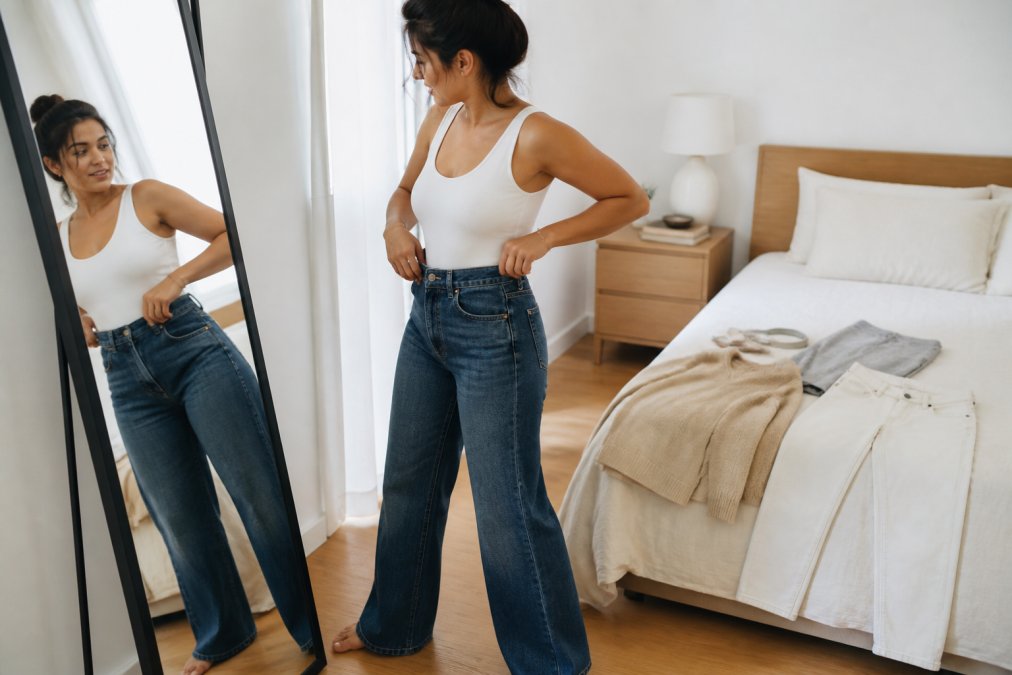
Comfort starts with the fabric and the rise, not the size on the tag. Styling high waisted jeans for maximum comfort comes down to two choices: how much stretch the denim has, and where the waistband sits on your torso. Get those right, and everything else, from tucking to layering, gets easier.
At AVERA7, we build jeans around this exact idea. The waistband should support you, not squeeze you. A high-waisted design with true tummy control does both, but only when the rise and fabric match your body. The Cotton Incorporated fabric and fit research confirms what most shoppers already feel: fabric blend and construction decide how a garment wears over a full day.
Below, we'll show you how to pick the right pair, then how to style it so you look polished and stay comfortable from morning to night.
Stretch vs. Rigid Denim: What Your Day Demands
Stretch denim is woven with a small amount of elastic fiber, so it moves with you and holds its shape. Rigid denim has no stretch and breaks in over time, molding to your body.
For all-day wear, stretch wins. A common mistake is buying rigid denim for a long workday. It looks sharp at 8 a.m. and feels tight by 2 p.m.
Here's how to match fabric to your day:
- Office and commuting: stretch denim with high elasticity
- Weekends and errands: mid-stretch or rigid
- Long events: stretch denim, always
- Postpartum or sensitive mid-section: soft stretch with a wide waistband
The AVERA7 High-Waisted Wide Leg Jeans use a cotton and polyester blend with high elasticity. That blend gives you softness plus shape retention.

Finding the Right Rise for Your Torso Length
Rise is the distance from the crotch seam to the top of the waistband. It decides where the jeans sit on your body.
- Short torso: a mid-to-high rise keeps proportion balanced
- Long torso: a true high rise reaches your natural waist
- Average torso: anything from 10 to 11 inches usually works
The goal is a waistband that lands at or just above your belly button. That spot is the narrowest part of most waists, so the jeans stay put without digging in.
Best Tops for High Waisted Jeans: What Balances Your Silhouette
The best tops for high waisted jeans end at or just below the waistband. That single rule protects your proportions and keeps the high rise visible.
Crop tops, tucked button-ups, and fitted knits all work. The trick is where the hem lands.
- Cropped tees: end right at the waistband
- Button-up shirts: tuck fully or do a half-tuck
- Fitted knits: tuck in for a clean line
- Oversized shirts: half-tuck to keep the waist defined
- Bodysuits: smooth and stay tucked all day
A shacket or structured blazer over a tucked top adds polish without hiding your waist.
How to Tuck in Shirts with High Waisted Jeans Without the Bulk
Bulk comes from too much fabric at the waist, not from tucking itself. Fix the fabric, and the tuck lies flat.
Follow these steps:
- Choose a top that is not too long. Extra length means extra bunching.
- Tuck the front first, then smooth the sides.
- Use the fold-under method: fold the hem up once before tucking.
- For a half-tuck, tuck only the front center and let the sides drape.
- Add a belt if the waistband needs grip.
- Smooth the fabric flat with your hands, front to back.
Comfortable Jeans for All Day Wear: Fabric, Fit, and Breathability
Most style guides treat comfort as a look. Real all-day comfort is mechanical: how the waistband distributes pressure, how the fabric moves air, and how seams behave against skin after four hours of sitting. That is the part almost no guide explains, and it is the part your mid-section notices by lunch.
Why High Waisted Jeans Dig In (And How to Stop It)
Digging is a pressure problem, not a size problem. When a narrow waistband concentrates force on a small strip of skin, the edge presses into the soft tissue above the hip bone. Sitting makes it worse because your torso compresses and the waistband rides up into the ribcage.
Three fixes change the physics:
- Waistband width: a band of 1.5 inches or more spreads pressure across a larger area, so no single point bears the load. This is the single biggest comfort upgrade.
- Rise height: a band that lands at your natural waist (the crease when you bend sideways) sits on the narrowest part of your torso, so it needs less tension to stay up.
- Elastic recovery: fabric that snaps back holds its shape without needing to be tight. Denim that stretches out and sags forces you to buy smaller, which is how digging starts.
Breathability: What Actually Moves Air
Denim weight is measured in ounces per square yard, and it sets the baseline for airflow:
- Lightweight (under 10 oz): breathable, best for warm weather
- Midweight (10 to 13 oz): the all-season standard
- Heavyweight (14 oz and up): durable but warm and stiff
Sensory Comfort: Seams, Waistbands, and Skin
Sensory comfort is about what you feel when you are not thinking about your jeans. Rough inner seams, a scratchy waistband lining, and metal hardware that presses into the stomach are the usual culprits.
What to look for:
- A smooth, flat inner waistband with no exposed overlock stitching
- Seams that are pressed flat rather than raised
- A button that sits flush, not one that digs when you bend
- Soft, garment-washed denim rather than raw, stiff fabric for sensitive skin
Fixing Waist Gaps and Fit Issues Without a Tailor
A waist gap means the jeans fit your hips but not your waist. You can fix most gaps at home in minutes.
Try these fixes:
- Button trick: loop a hair tie through the button and around the buttonhole to pull the waist in.
- Belt: a slim belt adds grip and looks intentional.
- Waistband grip tape: stick-on strips stop shirts and waistbands from sliding.
- Tailoring: a tailor can take in the back waistband for a permanent fix.
- Size up, then adjust: if the gap is small, a slightly larger size with a belt often feels better.
Layering High Waisted Jeans for Every Season
Layering keeps high-waisted looks working all year. The key is choosing layers that respect the waistline instead of covering it.
Spring and summer:
- Cropped tees and tanks
- Light button-ups, half-tucked
- A linen blazer for cool evenings
Fall and winter:
- Turtlenecks tucked in
- A shacket or long coat over a fitted base
- Ankle boots with a straight or wide leg
Transitioning High-Waisted Looks Between Seasons
The same pair can shift from casual to professional with a few swaps.
| Setting | Top | Layer | Footwear |
|---|---|---|---|
| Office | Fitted button-up, tucked | Structured blazer | Loafers |
| Weekend | Cropped tee | Denim shacket | Sneakers |
| Evening | Silk camisole, tucked | Cropped jacket | Heels |
| Travel | Soft knit, tucked | Long cardigan | Flats |
Frequently Asked Questions
How do you make high waisted jeans more comfortable?
Start with fabric: a cotton-polyester blend with high elasticity moves with you instead of digging in. Check the rise-height sits at or just above your belly button, not across your ribs. If the waistband gaps, add a small elastic loop inside the buttonhole rather than sizing up. For all-day wear, choose a wide-leg or straight-leg cut over a skinny fit, since less fabric clings to the knee and thigh. A jeans style with a soft, thick fabric and tummy control panel, like AVERA7's high-waisted wide-leg pair, can help with comfort.
What tops go best with high waisted jeans for a relaxed look?
Cropped button-ups, boxy tees, and shacket layers work best because they end at or just above the waistband, so you get the proportions benefit without constant re-tucking. A fitted ribbed tank tucked in with a loose button-up worn open is another reliable combo. For a casual-chic feel, try a half-tucked oversized shirt with a straight-leg or wide-leg jean. Avoid tops that hit at the widest part of your hip, since that breaks the silhouette and adds visual bulk.
How do you tuck in shirts with high waisted jeans without creating a bulge?
Use the French tuck: tuck only the front inch or two of your shirt into the waistband and let the back and sides hang loose. This defines your mid-section without adding fabric bulk at the back. For full tucks, choose a thin, stretchy fabric over a stiff cotton, and smooth the shirt flat against your stomach before you zip. A high-rise waistband that sits at your natural waist gives the fabric somewhere to anchor, which keeps the tuck from shifting as you move.
What body shape should wear high waisted jeans?
High-waisted jeans suit most body shapes because the higher rise elongates the leg line and supports the mid-section. If you have a shorter torso, look for a rise that stops just below the ribs so you don't lose proportion. If you're postpartum or want tummy control, a wide-leg cut with a built-in panel smooths the front without squeezing. Pear shapes often prefer wide-leg or straight-leg styles that skim the hip, while apple shapes do well with a firm waistband and a looser leg. The fit-check matters more than the label.