
How to Keep Wide-Leg Jeans From Dragging
Last Updated: November 11, 2026
Quick Summary
The fastest way to stop wide-leg jeans from dragging is to fix the hem length, not the shoe. Wide-leg jeans should rest about 0.25 inches above the ground when you wear your intended shoes, so anything lower catches under your heel. Diagnose it by standing in your jeans and shoes on a hard floor and checking whether the back hem pools.
- Measure your inseam in your shoes, then subtract shoe height and a quarter inch.
- Cuff only 0.5 to 1 inch and press each fold flat so it sits crisp.
- Pin the inside back hem at a seam, never through the face of the fabric.
- Sew three to five small stitches through the inner fold only to lift the back hem.
- Choose denim with about 2% elastane so it keeps shape instead of sagging.
Table of Contents
- Why Wide-Leg Jeans Drag and How to Diagnose the Cause
- Should Wide-Leg Jeans Touch the Floor? The Right Hem Length
- Quick Fixes: Cuffing, Tucking, and Pinning the Back Hem
- Clips to Keep Pants From Dragging: Do They Actually Work?
- How to Stop Baggy Pants From Going Under Your Shoe
- Sewing a Few Stitches to Shorten the Back Hem Yourself
- Permanent Tailoring That Preserves the Wide-Leg Shape
- Fabric, Stretch, and Shoe Choices That Prevent Heel Drag
- Frequently Asked Questions
Why Wide-Leg Jeans Drag and How to Diagnose the Cause
The fastest way to stop wide-leg jeans from dragging is to fix the hem length, not the shoe. When we fit customers at AVERA7, we start with one question: where does the hem actually sit? Denim should rest about 0.25 inches above the ground when you wear your intended shoes, according to Alvin Valley's wide-leg styling guide. Anything lower will catch under your heel with every step.
Most drag comes from three causes:
- Too much length. The inseam is longer than your leg plus your shoe height.
- Too much stretch. Fabric with high elasticity sags as the day goes on.
- The wrong shoe. Flat soles let the back hem drop lower than heels or platforms do.
Diagnose it in 30 seconds. Stand in your jeans and shoes on a hard floor. Look at the back hem. If fabric pools on the ground, it is too long. If it sags only by afternoon, the fabric is stretching out.
Should Wide-Leg Jeans Touch the Floor? The Right Hem Length
No, wide-leg jeans should not touch the floor. The correct hem hovers just above the ground, roughly a quarter inch when you stand in your shoes. That small gap keeps the fabric off the floor while preserving the long, relaxed line that makes wide-leg denim look right.
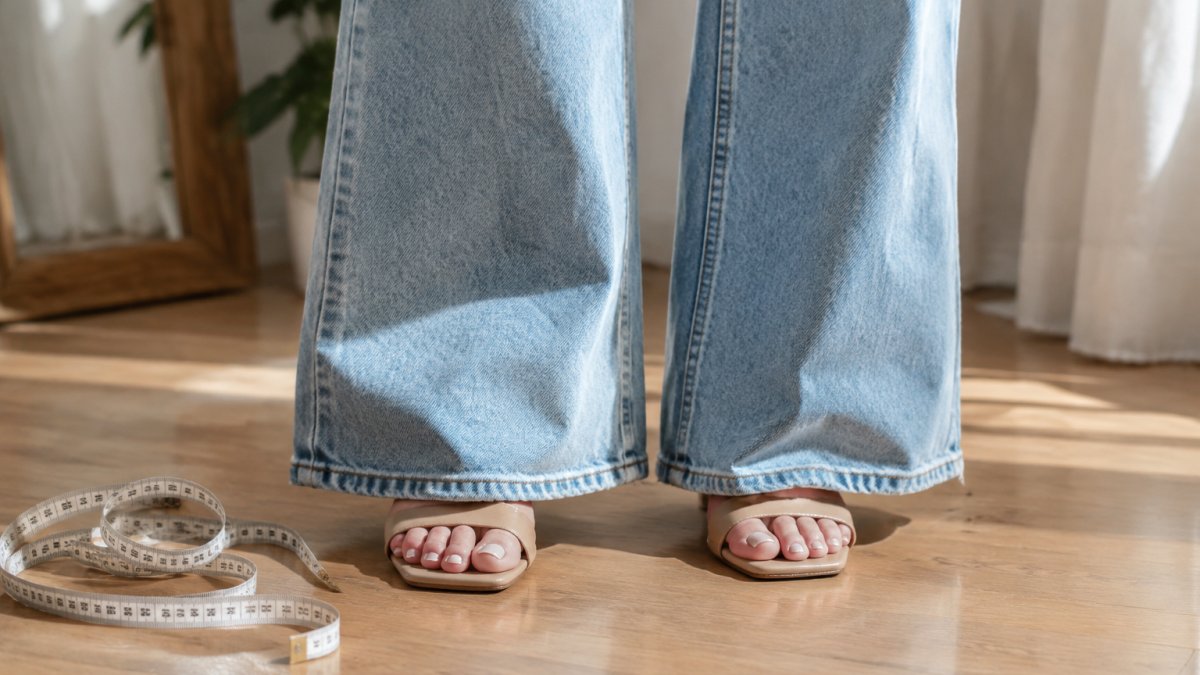
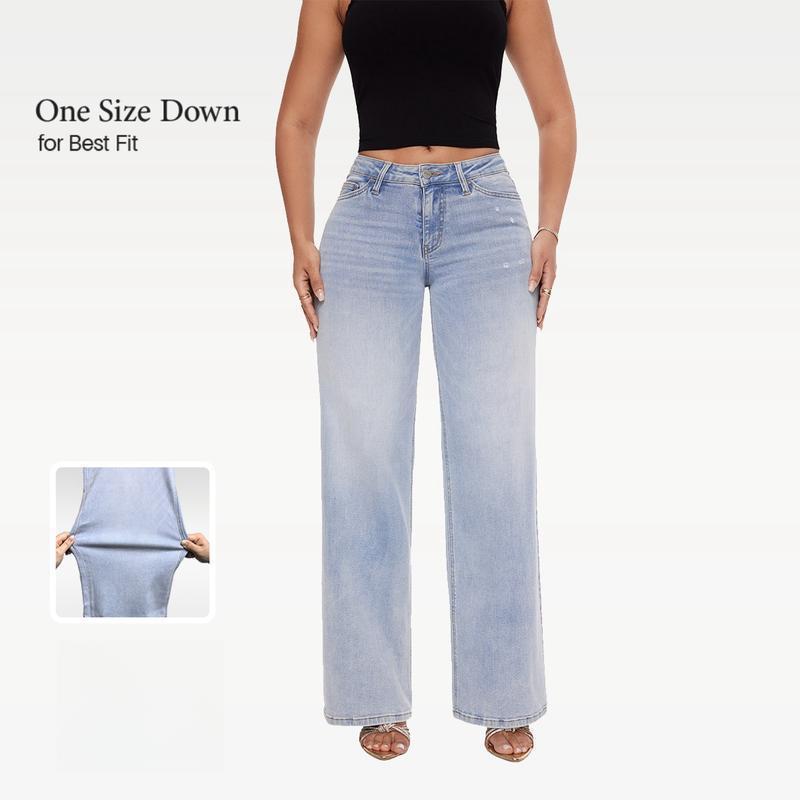
A floor-grazing hem looks intentional in photos and becomes a problem in real life. Fabric picks up dirt, frays at the back edge, and trips you on stairs. If your jeans already pool at the floor, a properly proportioned pair solves it faster than any fix. Our high-waisted wide-leg jeans feature a high waist that helps hold the fit in place.
How to Measure Your Ideal Inseam and Hem Clearance
Measure your inseam while wearing the shoes you plan to pair with the jeans. Stand straight, have someone run a tape from your crotch seam to the floor, then subtract your shoe height and a quarter inch.
- Flat sneakers: subtract about 0.5 inches for sole height
- Ankle boots: subtract about 1.5 inches
- Platforms or heels: subtract 2 to 3 inches
Write the number down before you shop. Most sizing charts list inseam, and matching it beats guessing from photos. Common inseam mistakes, like measuring barefoot or in socks, throw the number off by an inch or more, so check our guide to avoiding inseam mistakes that ruin trouser fit before you order.
Sole height to subtract when measuring inseam, by shoe type
Quick Fixes: Cuffing, Tucking, and Pinning the Back Hem
Cuffing is the fastest fix and takes five seconds. Fold the hem up once or twice so the fabric clears the floor, then check the back in a mirror. A single deep cuff looks cleaner than two thin rolls on thick denim. The trade-off is that a cuff adds visual weight at the ankle and can make a wide leg look shorter, so cuff only as much as you need, usually 0.5 to 1 inch, and press each fold flat with your fingers so it sits crisp instead of bulging.
Tucking the back hem into your shoe works for a quick walk, not a full day. It hides the excess but bunches at the ankle and can stretch the fabric.
Pinning is the middle ground: a safety pin through the inside back hem shortens it temporarily without a needle. Pin at the side seam or the center back seam, not through the face of the fabric, and use a small pin with a secure clasp so it cannot work open against your ankle.
Which fix works depends on your shoe. With flat sneakers, a single cuff or a back-hem pin is usually enough because the sole adds little height. With ankle boots, tucking the back hem into the boot shaft hides the excess and keeps the wide leg falling straight.
Watch out: a pin left in the same spot for days can rust in the wash or leave a small hole in the hem, so remove pins before laundering and rotate the placement.
How to Keep Wide-Leg Jeans Rolled Up Without Unrolling
A rolled cuff stays put when you anchor it. Try these, in order of how well they hold:
- Roll the hem twice, pressing each fold flat with your fingers.
- Pin the inner fold with a small safety pin at the side seam.
- Add a hidden stitch at the back seam for all-day wear.
Stylists also point to banded-hem styles, which keep fabric from dropping to the floor, per Wardrobe Oxygen's denim fit notes. If you cuff often, our guide to styling wide-leg jeans shows how to make the rolled look deliberate rather than temporary.
Clips to Keep Pants From Dragging: Do They Actually Work?
Clips work for short stretches, not all day. Binder clips, hem clips, and cuff bands hold fabric off the floor while you walk to the car or stand at a desk. They slip on smooth denim and can leave crease marks if you leave them on for hours.
Use clips when:
- You are testing a hem length before sewing
- You need a fix for one event or photo shoot
- You are breaking in new jeans and want to avoid floor damage
Skip them for full workdays. The clip edge presses into the fabric and can wear a line into the hem over time.
How to Stop Baggy Pants From Going Under Your Shoe
The back hem slides under your heel because it sits too low and too loose. Two changes stop it: shorten the back hem slightly, and add grip at the heel.
Try this order:
- Check the shoe. A heel or platform lifts the hem clear of the floor.
- Cuff the back only, leaving the front long for the wide-leg drape.
- Pin or stitch the back hem up a half inch.
- Choose a shoe with a defined heel counter so fabric cannot slide over it.
Baggy jeans and wide-leg cuts both need this back-hem attention. The front can stay long. The back is what catches.
Sewing a Few Stitches to Shorten the Back Hem Yourself
A hidden stitch at the back hem takes about ten minutes and holds better than any pin. Turn the jeans inside out, fold the back hem up by your measured amount, and sew three to five small stitches through the inner fold only. Keep the needle inside the hem so nothing shows on the outside.
Fashion creators use this same trick with hidden stitches to lift the back hem, per The Self Styler's hem fix guide. It is temporary and easy to undo. For a full step-by-step walkthrough, follow our guide on how to hem wide-leg jeans at home.
Watch out: sewing through both layers by mistake locks the leg shut and leaves visible thread on the outside. Test on the inside fold first.
Permanent Tailoring That Preserves the Wide-Leg Shape
A tailor should shorten the hem, never narrow the leg. Tell them to keep the original hem finish if you love the faded edge, or to re-hem straight across so the leg opening stays wide. Ask for a hem that clears your shoe by a quarter inch.
Bring your shoes to the fitting. A tailor who measures you barefoot will cut too long. Wear the exact pair you plan to style the jeans with most often, and if you split time between flats and heels, have the hem set for the lower shoe and plan to cuff for the taller one.
Common hemming approaches include a standard re-stitched hem and, for some denim, re-attaching the original hem. Fusible alteration tape is a home option, though it can stiffen the hem.
Tailoring costs and turnaround vary by shop, so ask for a quote and timeline before you commit.
When you visit a tailor, ask them to check the back hem while you stand in your shoes, not just the front.
For a full step-by-step walkthrough of the at-home version, follow our guide on how to hem wide-leg jeans at home.
Fabric, Stretch, and Shoe Choices That Prevent Heel Drag
Fabric decides whether your fix holds. Look for jeans with about 2% elastane, which helps the denim keep its shape instead of sagging into a drag, according to Putting Me Together's stretch test. Higher stretch feels soft but loses structure by afternoon.
| Fabric | Stretch Level | Drag Risk | Best For |
|---|---|---|---|
| 100% cotton denim | Low | Low | Structured wide legs |
| Cotton with 2% elastane | Medium | Low to medium | All-day wear |
| High-stretch blend | High | High | Soft, close fits |
Shoe choice matters just as much. A defined heel, a platform sole, or a chunky boot lifts the hem and stops the slide. Flat sandals and thin soles let the back hem drop. Match the shoe to the hem, not the other way around. Our denim stretch guide walks through picking the right percentage for your body and your wardrobe.
Wide-leg denim should drape, not drag. The fix starts with the right hem length and the right fabric, and it ends with a pair cut to fit from the start. At AVERA7, our high-waisted wide-leg jeans combine a hip-lifting effect with a relaxed vintage cut, built-in tummy control, and all-day soft comfort in eight versatile colors. Every pair comes with a 4.8 out of 5 rating and a 30-day money-back guarantee. Get started with AVERA7 and find a pair that clears the floor without losing its shape.
Frequently Asked Questions
How do I keep wide-leg pants from dragging without sewing?
Cuff the hem, tuck the back edge inside your shoe, or pin the hem at the back of the heel with a safety pin. A hidden stitch at the back hem is another option that takes minutes and no machine. Whichever you pick, check the result in the shoes you plan to wear, since a flat sandal and a boot change the clearance by half an inch or more. Temporary fixes work well for a single outing but need redoing after washing.
Should wide-leg jeans touch the floor?
No. Denim should sit a small distance above the ground when you wear your intended shoes. That small gap stops the hem from dragging, fraying, and soaking up whatever is on the ground. A hem that fully touches the floor also catches under your heel as you walk, which pulls the jeans down and stretches the fabric over time.
Why do my baggy jeans slide down when I walk?
Two things usually cause it: a hem that is too long and fabric with too little stretch. Looking for jeans with some elastane can help them hold their shape and avoid the sagging that leads to dragging. If your jeans have no stretch and a long inseam, the weight of the extra fabric pulls them down with every step. Tailoring the hem fixes the root cause.
Can I shorten wide-leg jeans without losing the wide-leg shape?
Yes. A tailor should shorten from the hem rather than tapering the leg, keeping the full width intact. Ask for a straight hem, which keeps the leg opening even. If you sew at home, fold the hem up evenly around the whole leg opening rather than pinning just the back.
