
7 Inseam Mistakes That Ruin Work Trouser Fit
Last Updated: October 30, 2026
Quick Summary
Choosing the right work trouser inseam means measuring from the crotch seam to the finished hem, not guessing from a size label. Measure a pair that already fits, match the number to your job and footwear, and go longer if you are between sizes so you can hem after one wash.
- Measure from the crotch seam straight down to the top of your ankle bone, then repeat to confirm.
- A 28-inch inseam suits petite frames and 31 or 32 inches suits taller wearers as a starting range.
- Between two inseams in stretch fabric, take the shorter one because it relaxes with wear.
- A labeled 32-inch inseam can differ by half an inch to one inch between brands.
- Do a five-minute squat, step and sit test in your work footwear before committing to a length.
Table of Contents
- Why the Wrong Work Trouser Inseam Undoes an Otherwise Good Pair
- What the Inseam Actually Measures
- How to Measure Inseam for Pants at Home
- How to Measure Inseam on Pants That Fit
- Work Pants Inseam Length: Matching the Number to the Job
- Read the Cut Before You Trust the Number
- Between Sizes, Shrinkage, and Hemming: What to Do Next
- Build Your Work Trouser Inseam Into Your Next AVERA7 Order
- Frequently Asked Questions
Why the Wrong Work Trouser Inseam Undoes an Otherwise Good Pair
Choosing the right inseam for work trousers comes down to one number, measured from the crotch seam to the finished hem, and most people get it wrong by guessing.
Here is the uncomfortable truth most fit guides skip: inseam is not a vanity number, and it is not the same across brands.
Below, we walk through how to measure inseam for pants, how to read the cut before you trust a size chart, and how to match length to the job you actually do.
What the Inseam Actually Measures
The inseam is the distance from the crotch seam down the inner leg to the finished hem of the trouser. It is not your full leg length, and it is not your outseam, which runs from waistband to hem along the outside of the leg.
Two numbers matter here:
- Rise: waistband to crotch seam, front and back
- Inseam: crotch seam to hem, the crotch-to-hem distance
A high-rise trouser can share an inseam with a low-rise pair and still sit completely differently on your body. That is why comparing measurements beats comparing size labels.
How to Measure Inseam for Pants at Home
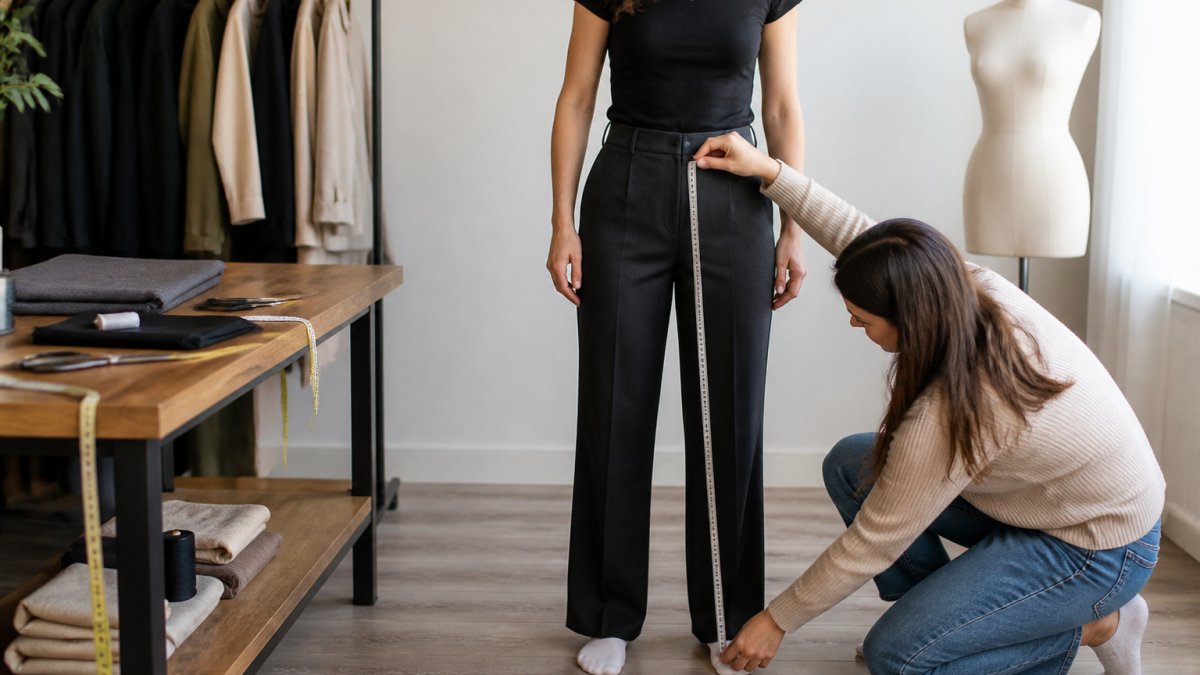
To measure inseam for pants at home, stand upright in flat shoes or bare feet and run a soft measuring tape straight down from your crotch seam to the bone at your ankle.
Tools You Need (and the Ones That Cause Errors)
A soft measuring tape is the only tool you need. A metal tape measure or ruler gives a stiff, inaccurate read along a curved leg.
- Soft fabric tape, at least 30 inches long
- A full-length mirror
- A helper, ideally
The Four-Step Body Measurement
- Stand upright with weight even on both feet and legs straight.
- Find the crotch seam point where the inner leg meets the rise, at the top of the inner thigh.
- Measure straight down along the inner leg to the top of your ankle bone, keeping the tape vertical.
- Record the number in inches and repeat once to confirm.
If you are also measuring your waist for a full fit picture, our guide on how to measure waist for jeans covers that step in detail.
How to Measure Inseam on Pants That Fit
The fastest way to get a reliable number is to measure inseam on a pair of trousers that already fit you well.
Do this with two or three pairs you love. The measurements usually cluster within half an inch, and that cluster is your true work trouser inseam.
Watch out: a stacked or cuffed hem adds length that is not really there. Measure to the actual finished hem, not the fold.
Work Pants Inseam Length: Matching the Number to the Job
Work pants inseam length should match how you move, not just how tall you are. A desk job and a job that involves climbing call for different finished lengths.
What most fit guides skip is that the finished length you want depends on three variables at once: your body inseam, your on-the-job footwear, and how much your leg flexes during the shift. Use the guidance below as a starting point, then adjust as needed.
Match Finished Length to Work Activity
- Desk and office work: a slight break at the shoe with no pooling. Aim for a hem that touches the top of the shoe with one soft fold. Too long and the hem drags and frays on carpet and chair casters; too short and you show sock when seated with a crossed leg.
- Standing and walking all shift (retail, hospitality, healthcare): hem just grazing the top of the foot. This keeps the hem clear of the floor when you crouch to stock a shelf or reach for a chart, and it avoids the constant heel-catch that comes with a full break.
- Climbing, bending, lifting (warehouse, trades, maintenance): go a touch shorter so the hem clears the top of your boot when you squat or climb a ladder. A hem that catches under a boot heel is a genuine trip risk, and a hem that drapes over a ladder rung can snag on the way up.
The Mechanism Behind the Number
- Snag risk. A hem that pools at the ankle catches on pallet edges, cart wheels, ladder rungs, and thresholds.
- Trip risk. A hem that drags under a heel or boot sole is a fall hazard, especially on stairs and loading docks.
- Coverage loss. A hem that rides above the boot top exposes the ankle to cold, abrasion, and debris, and in safety-footwear environments, that gap is where debris enters the boot.
Fabric Changes the Equation
Heavier work fabrics hold their shape and drape cleanly, so the hem break stays put through a shift. Readers choosing work trousers can learn which professional denim fabrics hold up and feel comfortable through a full shift. Lightweight or high-stretch fabrics can sag at the knee and pool at the ankle by mid-shift, effectively lengthening the leg. Between two inseams in a stretch fabric, take the shorter one; for rigid cotton twill or denim, take the longer one and plan to hem.
Boots, Shoes, and the Hem Break
The hem break is where the trouser hem meets your shoe. A full break folds over the shoe, a half break touches lightly, and no break sits just above it.
Measure your inseam wearing the footwear you wear most on the job. For fit guidance on staying comfortable through extended shifts, see this guide to comfortable jeans for long office shifts.
Read the Cut Before You Trust the Number
A number on a size chart tells you almost nothing without the cut. A narrow leg and a straight leg with the same inseam hang differently, and a tapered leg pulls the hem in toward the ankle. Fabric stretch changes the drape too, which is why our breakdown of how to pick the right denim stretch percentage matters when you compare trousers.
Judge the cut and the fabric first, then use the inseam to fine-tune.
| Cut | How the Hem Falls | Best For |
|---|---|---|
| Narrow leg | Sits close, minimal break | Clean office look |
| Straight leg | Even drape, light break | All-day wear |
| Tapered leg | Draws in at ankle | Boots and movement |
| Wide leg | Full drape, soft break | Vintage-inspired styling |
Between Sizes, Shrinkage, and Hemming: What to Do Next
Between two inseams, go with the longer one and plan to hem. That rule holds for most work trousers, but the other half of the answer is why the number on the label and the number on your tape measure so often disagree, and how to plan for the change after the first wash.
Why Labeled Inseams Vary Across Brands
A labeled 32-inch inseam is not a universal 32 inches. Brands differ in where they start the measurement (crotch seam versus a point slightly forward of it), whether they measure to the finished hem or the raw edge, and how much they allow for the hem fold.
When you compare a size chart to a real garment, measure the garment flat and compare crotch-seam-to-hem, not waistband-to-hem. If the chart lists a finished inseam, match that number.
Shrinkage: What to Expect by Fabric
- Cotton-rich denim and twill: can shrink noticeably after the first wash, especially in hot water and a hot dryer. Most shrinkage happens in the first one or two cycles, then stabilizes.
- Stretch blends with elastane: shrink less in length but can relax back out with wear, so the effective inseam can drift by a quarter inch over a shift.
- Synthetic work fabrics (polyester blends, ripstop): typically shrink very little, making them more predictable for a work uniform.
Always check the care label and wash according to it before your first wear. If you plan to hem, wash and dry once first so the fabric settles before you cut.
Hemming: When to Do It and What to Ask For
Hemming is simple, but the finish matters for work trousers. Ask for a hem that preserves the original stitch style where possible, and specify the finished length measured from the crotch seam, not the floor.
If the length needs fixing, our complete guide on how to hem wide leg jeans at home walks through the steps with a clean finished result.
A Simple Decision Sequence
- Measure a pair that fits and note the crotch-seam-to-hem number.
- Compare that number to the size chart's finished inseam, not its body inseam.
- If you are between sizes, take the longer one and plan to hem after one wash.
- If the fabric is stretch-heavy, take the shorter one, because it will relax with wear.
- Hem with a generous allowance so you can adjust if the fabric shrinks or your footwear changes.
Build Your Work Trouser Inseam Into Your Next AVERA7 Order
Getting the inseam right is the difference between trousers you tolerate and trousers you reach for every morning. Measure your body, measure a pair that fits, match the number to your job and shoes, then read the cut.
AVERA7's high-waisted wide-leg jeans feature a high-waisted design for tummy control, a hip-lifting effect for a sculpted look, and a relaxed, vintage-feel wide-leg cut.
Get started with AVERA7 and build a pair of work trousers around a number that finally fits.
Frequently Asked Questions
How do you measure your inseam for work trousers?
Stand upright in the shoes you wear to work, with your feet about hip-width apart. Have someone hold a soft measuring tape at your crotch seam and run it straight down the inner leg to the point where you want the hem to land, usually the top of your shoe or just above it. Write the number down in inches. Measuring barefoot or sitting down shifts the result, so keep the tape vertical and your posture neutral for an accurate work trouser inseam.
Where should work trousers fall on your shoes?
Most work trousers should land at or just above the top of the shoe, with a slight break where the fabric meets the foot. A full break that pools on the shoe catches dirt and wears out the hem faster. If your job involves climbing ladders or walking on uneven ground, aim for a shorter finished length so the hem clears the shoe and you are not stepping on fabric. Try the trousers on with your actual work boots before deciding.
How do you choose an inseam if you are between sizes?
Go with the longer option if the fabric is cotton or a cotton blend, since work trousers can shrink after washing. A longer inseam can always be hemmed by a tailor, while a short one cannot be lengthened. If the trousers are pre-shrunk or a synthetic blend, pick the shorter number for a cleaner drape. Check the brand's care label for shrinkage guidance before you commit.
Can work trousers be hemmed if the inseam is too long?
Yes, and hemming is usually the smarter move. A tailor can shorten the leg and keep the original hem finish, which preserves the look of the trouser. Bring the shoes you wear to work to the fitting so the hem lands at the right height. Expect the job to take a few days and cost a modest fee. Hemming also lets you adjust the break, so you can go from a full break to a slight one without buying a new pair.
