
Best Jeans for Lifting and Shaping: A Fit Guide
Table of Contents
- What Makes Jeans Lift and Shape Your Body
- Butt-Lifting Jeans: Design Features That Enhance Your Curves
- Tummy Control Jeans: How High-Waisted Design Provides Support
- Jeans for a Lower Belly Pooch: Fit and Fabric Considerations
- Best Jeans for Weightlifters: Durability and Stretch Performance
- How to Test Fit and Evaluate Shaping Claims
- Silhouette, Wash, and Care: Maximizing Shape Retention
- Frequently Asked Questions
Last Updated: October 20, 2026
What Makes Jeans Lift and Shape Your Body
The difference between ordinary jeans and ones that genuinely lift and shape comes down to intentional construction. It's not magic, it's engineering. When you understand how specific design features work together, you can evaluate any pair critically instead of relying on marketing claims alone.
Back yoke and seam construction are where the real work happens. The yoke is the curved piece of fabric that sits across your back. A strategically shaped yoke with the right curve pulls fabric upward and inward, creating a lifted effect. Paired with curved back seams that follow your natural contours rather than running straight down, this construction physically repositions how the denim sits on your body. The seams essentially act as a gentle lift mechanism, they're not just stitching, they're sculpting.
The fabric blend matters equally. Cotton alone has minimal elasticity and won't recover well after wear. A blend that includes elastane (also called spandex) gives jeans the stretch they need to hug your curves without feeling restrictive. More importantly, quality elastane has better shape retention, it bounces back after you sit, bend, and move throughout the day. A 2-3% elastane content is often the sweet spot: enough stretch for comfort and recovery, not so much that the jeans feel like athletic wear.
Butt-Lifting Jeans: Design Features That Enhance Your Curves
Butt-lifting jeans work through a combination of back pocket placement, pocket stitching, and the overall curve of the back pockets themselves. These aren't subtle details, they're the primary visual mechanism that creates the lifted appearance.
Back pocket placement and heart-shaped stitching are the most visible features. When pockets are positioned higher on the back of the jeans and angled slightly inward, they naturally draw the eye upward. Heart-shaped stitching, where the pocket seams form a subtle heart outline, adds visual lift by creating a focal point that enhances curves. This isn't just aesthetic; the pocket placement actually affects how the fabric drapes over your body. Higher pockets mean less fabric bunching below them, which creates a smoother, more lifted line.
High-rise and curved back pockets work together to maximize the shaping effect. A high-rise waistband (typically 10-11 inches from the crotch seam to the top of the waist) provides coverage and support across your lower belly while the curved back pockets enhance what's below. The curve of the pocket, rather than a flat, straight pocket, follows your natural shape and hugs your curves instead of flattening them. This is why curved back pockets are a hallmark of jeans designed for lifting and shaping. AVERA7's high-waisted wide-leg jeans feature a high-rise cut, creating a comprehensive shaping effect from waist to hip.

Tummy Control Jeans: How High-Waisted Design Provides Support
Tummy control isn't about compression fabrics that squeeze uncomfortably, it's about strategic waistband construction and fabric choice that provides gentle, all-day support without creating visible ridges under your shirt.
Waistband construction and firm hold fabric blends are the foundation. A well-constructed waistband sits securely without rolling down or digging in. The fabric blend in the waistband area is often denser than the rest of the jeans, providing more stability. When combined with a high-rise cut, this creates a supportive band across your lower belly that smooths your silhouette without the restrictive feeling of shapewear.
A common mistake is assuming tummy control requires thick, rigid fabric throughout. The opposite is true. Jeans that provide tummy control while remaining comfortable all day use a cotton-polyester blend with strategic elastane placement. The elastane gives you the stretch you need to move freely, while the fabric weight and waistband design do the actual supporting. This is why fabric composition matters so much, a high-quality blend with 2-3% elastane will provide support and maintain its shape through an eight-hour workday without feeling restrictive.
Jeans for a Lower Belly Pooch: Fit and Fabric Considerations
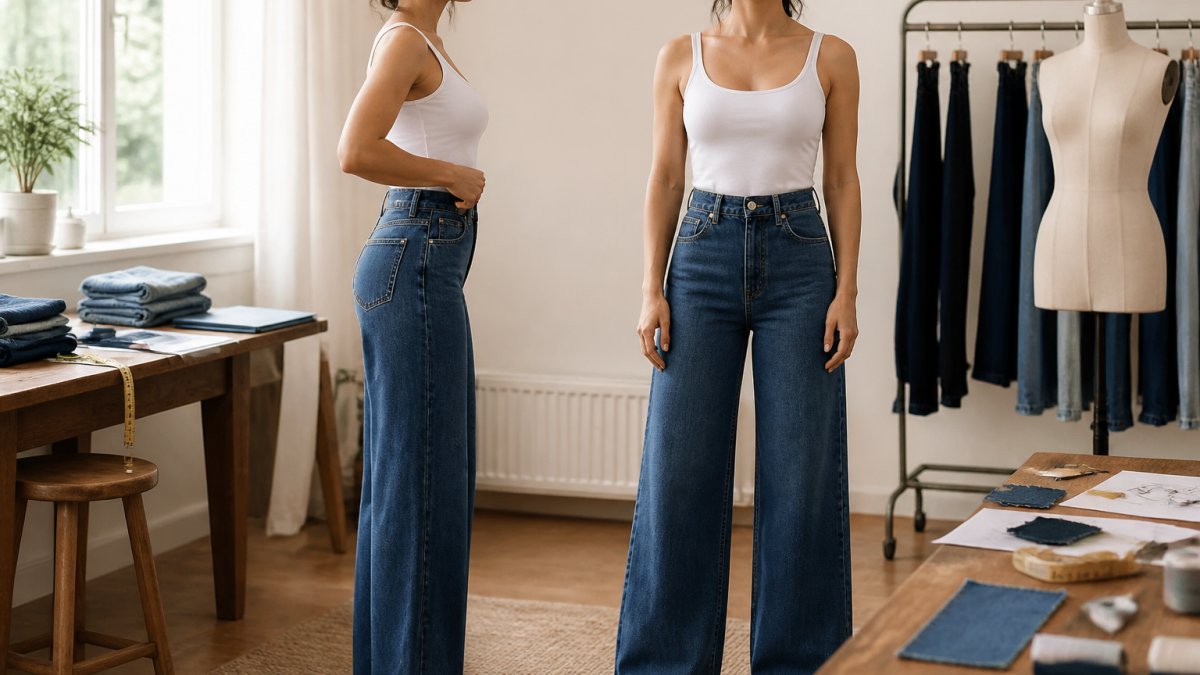
The lower belly area requires a different approach than general tummy control. This is where fit becomes more important than any single fabric feature. Jeans that address lower belly concerns combine a mid-to-high rise with a slightly roomier cut through the lower abdomen, then taper gently through the hips and thighs.
The key distinction is that you need enough room in the lower belly area to avoid creating a ridge or bulge, while still maintaining shaping through the hips and curves. A straight-leg or wide-leg silhouette works better here than a skinny fit, because the fabric has room to drape smoothly rather than clinging. When paired with a high waistband, this creates support without compression.
Fabric recovery becomes critical for this fit. If the denim doesn't have adequate elastane and stretch recovery, it will gradually bag out in the lower belly area throughout the day. A blend with good shape retention will maintain its smooth appearance from morning through evening. This is why testing long-term wear, not just the initial try-on, matters when evaluating jeans for lower belly support.
Best Jeans for Weightlifters: Durability and Stretch Performance
Weightlifters have specific demands that standard jeans don't always meet. Heavy lifting puts stress on fabric in ways that regular wear doesn't, particularly through the thighs, hips, and seat area where movement is most intense.
Elastane content and shape retention through wear are non-negotiable for this use case. A higher elastane percentage, 3-5% rather than the standard 2-3%, provides the stretch needed for full range of motion during workouts and training. More importantly, premium elastane retains its recovery properties through repeated stretching. Budget elastane degrades faster, losing its bounce and leaving you with saggy jeans after a few months of regular heavy lifting.
The fabric weight also matters. Heavier denim (14-16 ounces) resists pilling and tearing better than lighter weights, but it needs to be paired with quality elastane to remain comfortable. A mid-weight denim (12-14 ounces) with premium elastane often provides the best balance, durable enough for heavy use, flexible enough for intense movement, and comfortable enough for all-day wear on rest days.
How to Test Fit and Evaluate Shaping Claims
Transparent testing criteria separate genuine shaping features from marketing hype. When you know what to look for, you can evaluate any pair of jeans objectively.
Comfort, contour, and long-term recovery are the three dimensions that matter most. Comfort means the jeans don't dig in, bunch up, or create visible ridges under your clothing after four to six hours of wear. Contour refers to how the jeans shape your silhouette, do they smooth your lines and enhance your curves, or do they flatten or bunch? Long-term recovery means the jeans maintain their shape through a full day of wear and multiple washes.
Common mistakes when assessing lift and shape include judging jeans based solely on the initial try-on, ignoring fabric composition, and assuming higher price always means better construction. The most common error is not wearing the jeans long enough before deciding. Shaping jeans need at least four to six hours of real-world wear to show their true performance.
Another mistake is overlooking the importance of size and fit over design features. A pair of jeans with perfect back pocket stitching won't lift or shape if the overall fit doesn't work for your body. The best approach is to start with fit, finding a rise, waist, and length that work for your proportions, then evaluate the design features that add shaping on top of that foundation.
| Evaluation Criteria | What to Test | How It Affects Shaping |
|---|---|---|
| Waistband stability | Does it roll down or stay in place after 6+ hours? | Unstable waistband undermines tummy control and lift |
| Fabric recovery | Does the denim maintain its shape after sitting and moving? | Poor recovery means sagging and loss of lift by midday |
| Pocket placement | Are back pockets positioned high and curved? | Higher, curved pockets enhance visual lift and contour |
| Elastane quality | Does the stretch bounce back or feel loose after wear? | Low-quality elastane loses recovery and leaves jeans saggy |
| Rise height | Does the waistband sit at your natural waist? | Proper rise is essential for tummy control and overall shaping |
Silhouette, Wash, and Care: Maximizing Shape Retention
The silhouette you choose, skinny, straight-leg, or flare, directly affects how the shaping features work and how long they last. Each silhouette has different implications for lift and shape.
Skinny jeans create a sleek line but can emphasize rather than smooth lower belly concerns because the tight fit shows every contour. Flare jeans, including the vintage-inspired wide-leg cut offered by AVERA7, create visual balance by adding volume at the ankle and leg, which can make the hips and curves appear more proportional.
Washing and shrinkage directly impact how long your jeans maintain their shaping properties. Most quality denim shrinks 3-5% in the first wash, which is why fit matters at purchase. Washing in cold water and air-drying preserves elastane elasticity far better than hot water and machine drying. Each wash cycle stresses the elastane fibers; excessive heat accelerates that breakdown.
Finding the best jeans for lifting and shaping requires understanding how construction, fabric, and fit work together, not just chasing the latest trend. The challenge most people face is distinguishing genuine shaping features from marketing language designed to sound impressive.
AVERA7's high-waisted wide-leg jeans combine the key design elements that create real shaping: a high-rise waistband for tummy control, curved back pockets positioned for lift, a cotton-polyester blend with elastane for stretch recovery, and a vintage-inspired wide-leg silhouette that flatters a range of body types.
Frequently Asked Questions
What jeans are best for lower belly pooch?
High-waisted jeans with a firm-hold fabric blend and a mid-to-high rise provide the most support for lower belly coverage. Look for a waistband that sits above your natural waist and jeans made from cotton-polyester blends with elastane for shape retention. The AVERA7 High-Waisted Wide Leg Jeans feature both tummy control and a high-waisted design specifically engineered to smooth and support without bunching or creating ridges under clothing.
Do high-waisted jeans help lift and shape your butt?
Yes, when designed correctly. High-waisted jeans with curved back pockets create a lifted, sculpted effect by repositioning how fabric sits on your body. The back pocket stitching and placement draw attention upward and inward, enhancing curves. Stretch denim with elastane helps the fabric conform to your shape and maintain that contour throughout the day, so the lift doesn't flatten with wear.
What are the best jeans for weightlifters?
Weightlifters need jeans with high elastane content (at least 2-5% spandex) and a fabric blend that recovers after stretching. The waistband should be sturdy enough to stay in place during activity, and the rise should sit comfortably without digging into your hips. Test the fit after a full day of wear to ensure the jeans maintain their shape.
Are stretch jeans better for lifting and shaping than non-stretch denim?
Stretch jeans offer more comfort and conform better to your body's contours, making shaping features more effective. Elastane (spandex) in the fabric allows the jeans to hug curves without restricting movement. However, stretch recovery matters: quality stretch denim should bounce back to its original shape after wear, maintaining lift and contour. Non-stretch denim can provide a firmer hold but may feel restrictive. For all-day wear with a sculpted look, a cotton-polyester blend with elastane typically delivers the best balance of comfort and shape retention.